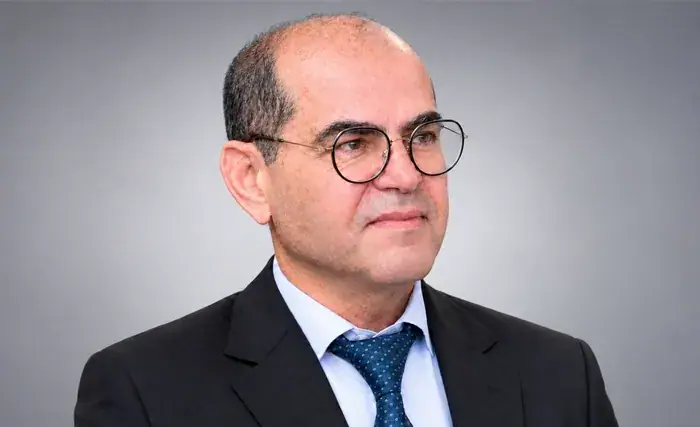
Tunisia's industrial landscape is undergoing significant changes, driven by global economic trends and the need for sustainable development. Minister of Industry, Mines and Energy, Slah Zouari, recently addressed the Tunisia Industry Talks, highlighting the country's strengths, including a diversified industrial base, recognized expertise and proximity to European markets. With a focus on progress in the value chain, Zouari emphasized the need for transformation from subcontracting to design, execution to engineering and technological adaptation to innovation.
According to the 2025 industrial report, Tunisia's mechanical and electrical industries saw an 8.7% increase in exports, with nearly 2.5 billion dinars in industrial investments declared, corresponding to around 3,900 projects and over 37,000 potential jobs. These results need to be consolidated to ensure competitiveness, as geographical proximity alone is no longer sufficient. The minister stressed that the goal is not simply to produce more but to create sustainable value-added jobs and strengthen Tunisia's international positioning.
To achieve this, Zouari identified three key areas for development: modernization, financing and energy transition. The national program for Industry 4.0 aims to support small and medium-sized enterprises in integrating digital tools, automation and advanced technologies. This transformation requires investment in qualifications, applied research and collaboration between universities and businesses.
Financing is another crucial aspect, with many enterprises, particularly SMEs, struggling to access funding for modernization and growth. The minister highlighted the need to improve the accessibility and complementarity of existing financing mechanisms, such as the Program for upgrading, guarantee mechanisms and financial restructuring tools. This can be achieved by mobilizing banks, investors and financial institutions around viable industrial projects.
The third area of focus is energy transition, with a focus on securing supplies, controlling costs and improving energy efficiency. The development of renewable energies and industrial decarbonization are no longer just environmental imperatives but also essential for accessing markets and enhancing competitiveness. These priorities align with the goals of attracting investment and expanding partnerships.
Zouari emphasized the importance of partnerships and international cooperation, highlighting the need for collaboration with European, African and Mediterranean partners. Tunisia aims to be a production platform and a hub for industrial services and technological partnerships. To achieve this, the country must prioritize partnerships that promote co-production, technology transfer and research and development.
The minister expressed his hope that the Tunisia Industry Talks will become a regular event, providing a platform for discussion and action. The initiative aims to create a dynamic of dialogue, with a shared diagnosis, operational recommendations and a roadmap for competitiveness. The Ministry of Industry, Mines and Energy will follow up on the proposals and recommendations emerging from these talks.
Key points
- The three main areas of focus for Tunisia's industrial development are modernization, financing and energy transition.