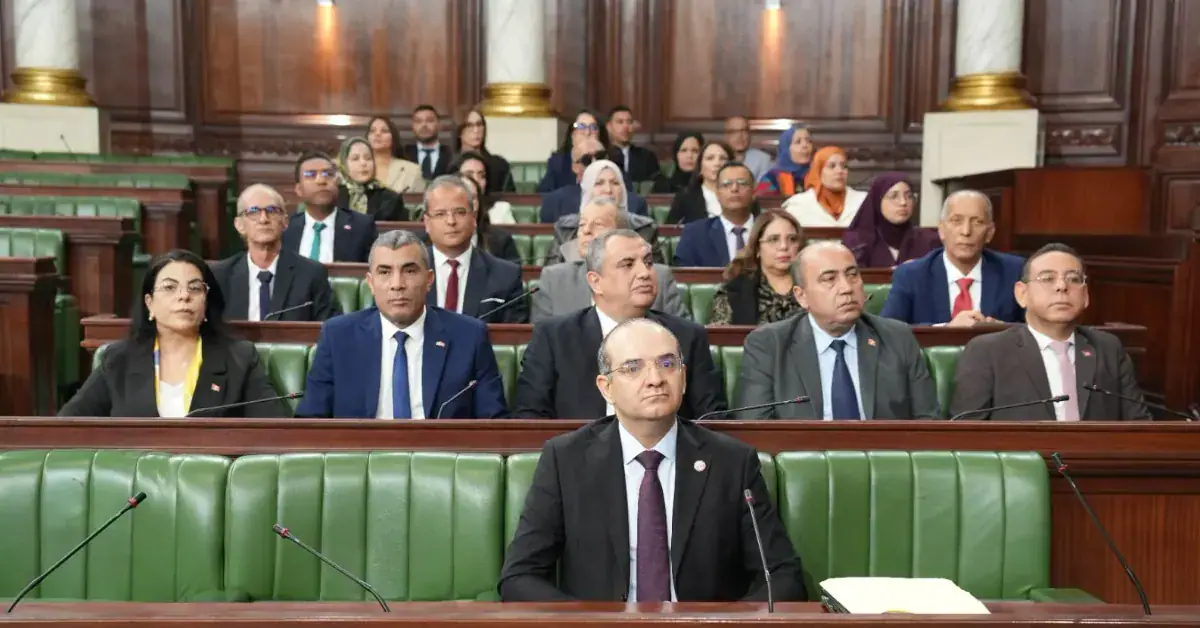
Tunisia's Independent High Commission for Elections (ISCE) head, Farouk Boussker, firmly stated that the commission is a constitutional institution independent of the executive branch and not a member of the government. This assertion was made during a joint parliamentary session on November 25, 2026, discussing the state's 2027 budget. Boussker's comments aimed to clarify the commission's role and refute perceived attempts to undermine its authority.
The controversy arose from a parliamentary deputy who implied that the ISCE was accountable to the parliament in the same way as government ministers. Boussker countered that parliamentary oversight is constitutionally designated for the executive branch and government members, not independent constitutional institutions like the ISCE. He emphasized that his presence in the parliamentary session did not signify membership in the government.
Boussker expressed his refusal to accept "lectures" from parliamentarians, stressing that the ISCE is not in a subordinate position. He highlighted the commission's critical role since the 2022 elections, overseeing electoral processes and managing candidate nominations. Boussker also pointed out that the deputy in question had a personal stake in the matter, with judicial cases pending against her.
The ISCE head revealed that one of the cases involved a former commission member who was dismissed by presidential decree. Boussker noted that progress in these cases was hindered by the parliamentary immunity claimed by the individuals involved. He reiterated that the commission applies the law impartially and that judicial decisions, not parliamentary debates, should resolve such matters.
Boussker's stance underscores the tension between Tunisia's legislative and electoral institutions. The ISCE's independence is guaranteed by the 2022 constitution, which outlines its role in managing elections and referendums. By asserting this independence, Boussker aimed to protect the commission's autonomy and decision-making authority.
The confrontation reflects broader concerns about the balance of power in Tunisia's post-2022 constitutional landscape. The country's political actors have been navigating the new institutional framework, with some pushing for greater parliamentary oversight and others defending institutional independence. Boussker's statements clarify the ISCE's position within this framework.
The incident highlights the challenges facing Tunisia's democratic transition, particularly regarding the delineation of powers and institutional roles. As the country moves forward with its 2027 budget and electoral preparations, the ISCE's independence and effectiveness will remain crucial. Boussker's leadership and the commission's impartiality will be closely watched by domestic and international observers.
Key points
- The ISCE is an independent constitutional institution not part of Tunisia's executive branch.
- Farouk Boussker rejected parliamentary attempts to interfere with the commission's operations.
- The controversy reflects broader tensions about power balance and institutional roles in post-2022 Tunisia.