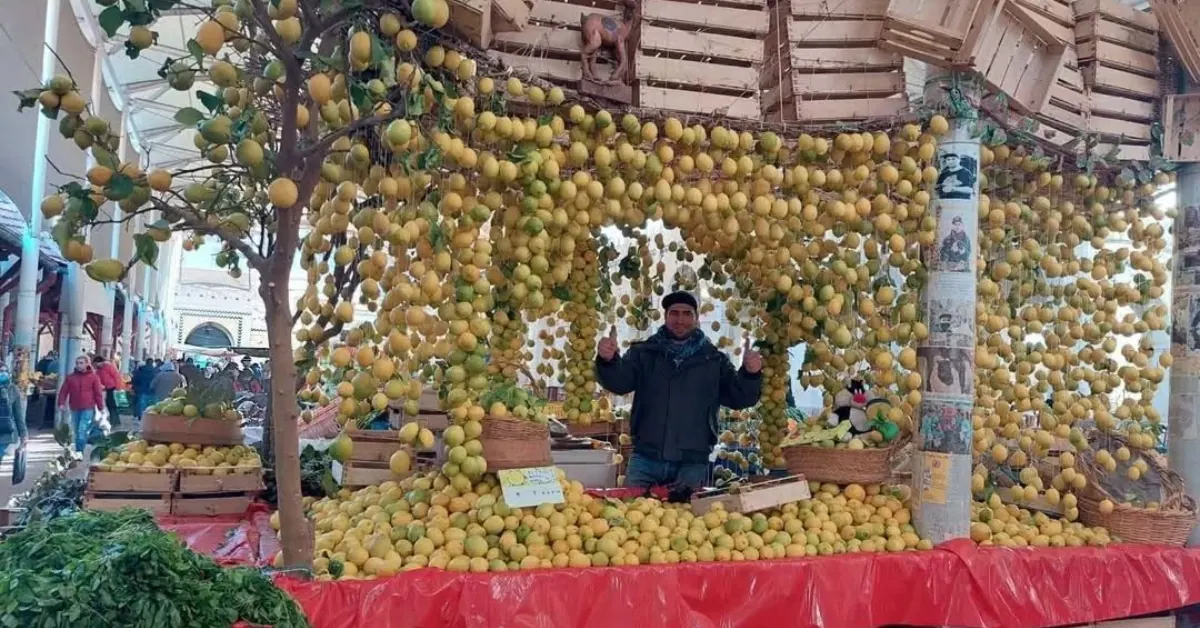
A controversy surrounding the removal of a famous lemon stand in Tunisia's capital market has been resolved. The stand, known for its artistic display, had sparked fears of demolition after a local police officer objected to its decorative design. However, following intervention from local authorities, the stand's owner, Hamza Ayari, confirmed that he can continue operating without disruption.
Ayari, a photographer by profession and part of a family with a long history of trading in the market, had been showcasing his lemons in a unique, three-dimensional display. The stand has become a popular attraction, drawing visitors from around the world, including diplomats, celebrities, and tourists. According to Ayari, the stand has been recognized by UNESCO as part of Tunis' tourist itinerary and has been featured on postal stamps and in international publications.
The stand's significance extends beyond its commercial value, as it has become a cultural and symbolic representation of Tunisia's heritage. Ayari explained that his display is not just about selling lemons but also about promoting Tunisian products and traditions. He expressed gratitude to the public, media, and officials who supported him during the controversy, ensuring that the stand can continue to operate and participate in national and international events.
The incident had sparked widespread debate on social media, with many expressing concern about the potential loss of the iconic stand. Ayari revealed that he had been subjected to individual actions that threatened his business, but the authorities had ultimately intervened to resolve the issue. The stand's future has been secured, allowing Ayari to focus on promoting Tunisian products and culture.
According to Ayari, the stand has become an informal art gallery, showcasing his photography skills and creativity. The display has evolved over time, incorporating various elements that reflect Tunisian culture and traditions. As a result, the stand has attracted a diverse range of visitors, including foreigners who appreciate its unique charm.
Local authorities have confirmed that Ayari has their support to continue operating the stand. The incident highlights the importance of preserving cultural and artistic expressions in public spaces. The stand's popularity and recognition by international organizations underscore its value as a cultural asset.
The resolution of the controversy has been welcomed by the public, with many expressing relief that the iconic stand can remain in operation. Ayari's efforts to promote Tunisian culture and products have been acknowledged, and his stand is expected to continue attracting visitors from around the world.
Key points
- The iconic lemon stand in Tunis market has been saved from potential demolition.
- The stand's owner, Hamza Ayari, had been facing challenges from local authorities.
- The stand has become a cultural and symbolic representation of Tunisia's heritage.