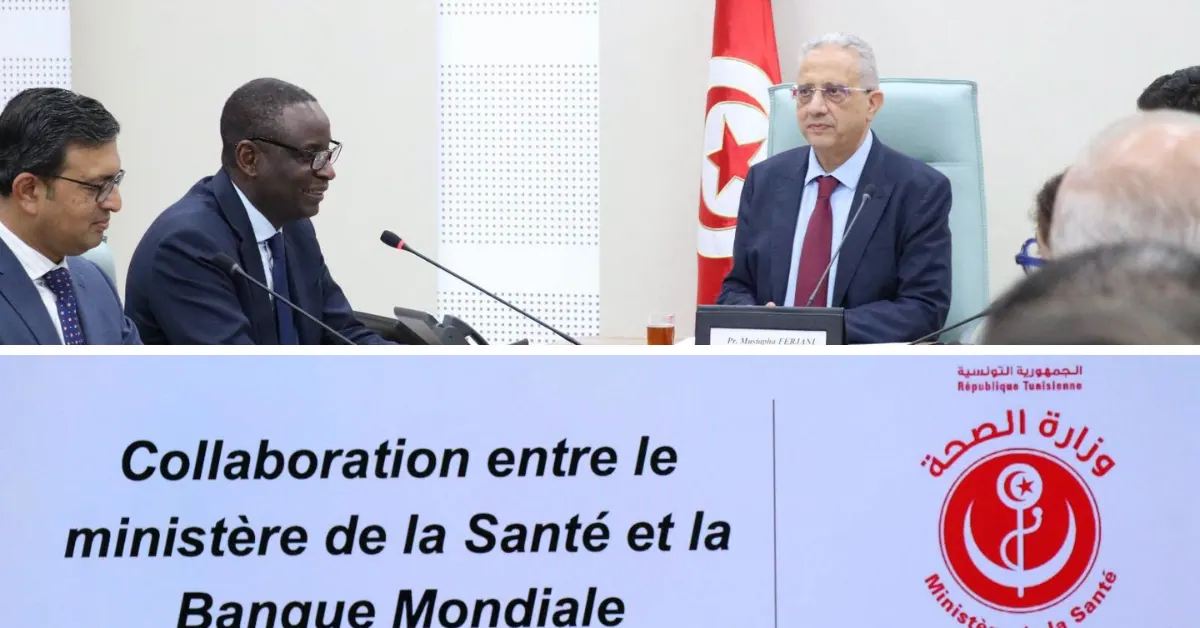
On September 25, 2026, Tunisia's Health Minister, Mustafa Al-Ferjani, held a meeting with Ahmadou Mustafa Ndiaye, Regional Director for the World Bank's Maghreb Arab and Malta region. The discussion focused on digital health, the "One Health" approach, the pharmaceutical industry, and biotechnology. Also on the agenda were support for research, innovation, and start-ups, as well as linking these efforts to investment and African markets.
During the meeting, which took place at the Ministry of Health, Al-Ferjani emphasized the need to accelerate healthcare project implementation, ensure comprehensive coverage, and guarantee equitable access to treatment. He also stressed the importance of enhancing coordination and follow-up. The Minister highlighted that the next phase requires transforming projects into tangible results that serve the path of healthcare system reform and embody President Kais Saied's vision of achieving health justice.
Al-Ferjani's discussion with Ndiaye aligns with Tunisia's efforts to strengthen its healthcare system. The meeting also reflects the World Bank's commitment to supporting Tunisia's health priorities. As a key partner, the World Bank has expressed its readiness to continue accompanying Tunisia in the next phase.
Earlier on September 25, 2026, the Minister of Higher Education and Scientific Research met with Ndiaye to review cooperation projects and programs between Tunisia and the World Bank in higher education and scientific research. This meeting demonstrates the World Bank's interest in supporting Tunisia's development across various sectors.
On September 24, 2026, Ndiaye also met with Tunisia's Minister of Finance. These meetings indicate the World Bank's ongoing engagement with Tunisia's government to discuss development priorities and potential partnerships.
The discussions between Al-Ferjani and Ndiaye highlight the significance of international cooperation in addressing healthcare challenges. Tunisia's health sector stands to benefit from the World Bank's expertise and financial support in implementing digital health solutions and supporting the local pharmaceutical industry.
The collaboration between Tunisia and the World Bank aims to improve healthcare outcomes and promote sustainable development in the country. By working together, both parties seek to address pressing health challenges and create a more equitable healthcare system for all Tunisians.
Key points
- The meeting between Al-Ferjani and Ndiaye focused on digital health, pharmaceutical industry support, and healthcare project implementation in Tunisia.
- The World Bank has expressed its readiness to continue supporting Tunisia's health priorities in the next phase.
- The discussions between Tunisia's government and the World Bank reflect a broader effort to strengthen cooperation and address development challenges in the country.