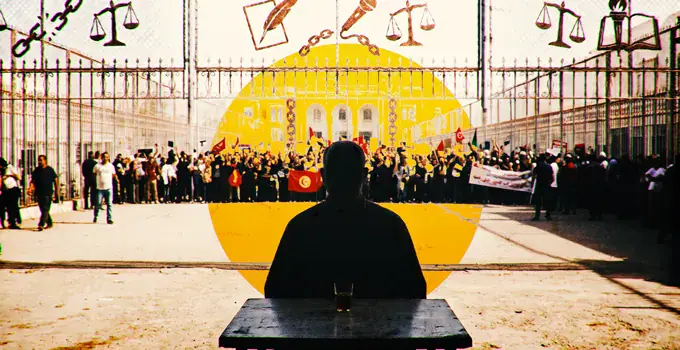
In Tunisia, the slogan "Freedom, Freedom, End Police State" became a rallying cry for protesters after the 2011 revolution, symbolizing the rejection of police control and the demand for freedoms, particularly freedom of expression, assembly, and organization. Despite its significance, the slogan has become a subject of ridicule among some who raise it, due to the reality of ongoing political trials and crackdowns on freedoms. Many have been prosecuted and imprisoned for expressing their opinions on social media, sparking concerns about the erosion of free speech.
Individuals who have been prosecuted for exercising their right to free speech or participating in peaceful protests face significant challenges, including imprisonment and continued persecution after their release. According to the organization "Disengage" (تقاطع), 59 trials were conducted against Tunisians between 2020 and 2026 for exercising their right to express themselves or protest peacefully, resulting in 21 individuals still being detained and 38 others released. Those who have been imprisoned report experiencing harsh treatment, including isolation and denial of basic rights.
The consequences of being prosecuted for free speech or peaceful protest in Tunisia extend beyond imprisonment, with many individuals facing social and economic ostracism after their release. Some have reported being shunned by their families and communities, while others have struggled to regain employment or access basic services. The psychological impact of these experiences can be severe, with some individuals reporting anxiety, depression, and feelings of isolation.
The Tunisian legal system has been criticized for its harsh treatment of individuals who express dissenting opinions or participate in peaceful protests. The decree-law 54, which regulates online content, has been used to prosecute individuals for expressing themselves on social media. The law has been criticized for its broad and vague provisions, which can be used to silence dissenting voices. In September 2026, a group of individuals were arrested and charged with participating in a peaceful protest in support of prisoners who had been detained for exercising their right to free speech.
The international community has expressed concerns about the erosion of free speech and assembly in Tunisia. In September 2026, the US Ambassador to Tunisia met with the Minister of Justice, Leila Jaffel, to discuss issues related to digital security and freedom of expression. The meeting took place amid concerns about the Tunisian government's increasing crackdown on dissenting voices. Human rights organizations have also expressed concerns about the use of arbitrary detention and prosecution to silence critics.
One individual who was imprisoned for his artistic expression is Rchad Tamboura, a graffiti artist who was sentenced to two years in prison for creating a mural that was deemed critical of the government. Tamboura reported experiencing harsh treatment in prison, including isolation and intimidation by prison authorities. After his release, he faced social ostracism and struggled to regain his footing in his community. Despite these challenges, Tamboura remains committed to using his art to express dissenting opinions and advocate for human rights.
The Tunisian government's crackdown on free speech and assembly has had a chilling effect on civil society, with many individuals and organizations self-censoring or avoiding public criticism of the government. However, some individuals and groups continue to resist, using various forms of creative expression and activism to advocate for human rights and freedoms. As the situation continues to evolve, it remains to be seen whether the Tunisian government will take steps to address concerns about free speech and assembly.
Key points
- Tunisia's laws and courts are leading to prison sentences and continued persecution of individuals who express themselves freely or participate in peaceful protests.
- The consequences of being prosecuted for free speech or peaceful protest in Tunisia extend beyond imprisonment, with many individuals facing social and economic ostracism after their release.
- The international community has expressed concerns about the erosion of free speech and assembly in Tunisia.