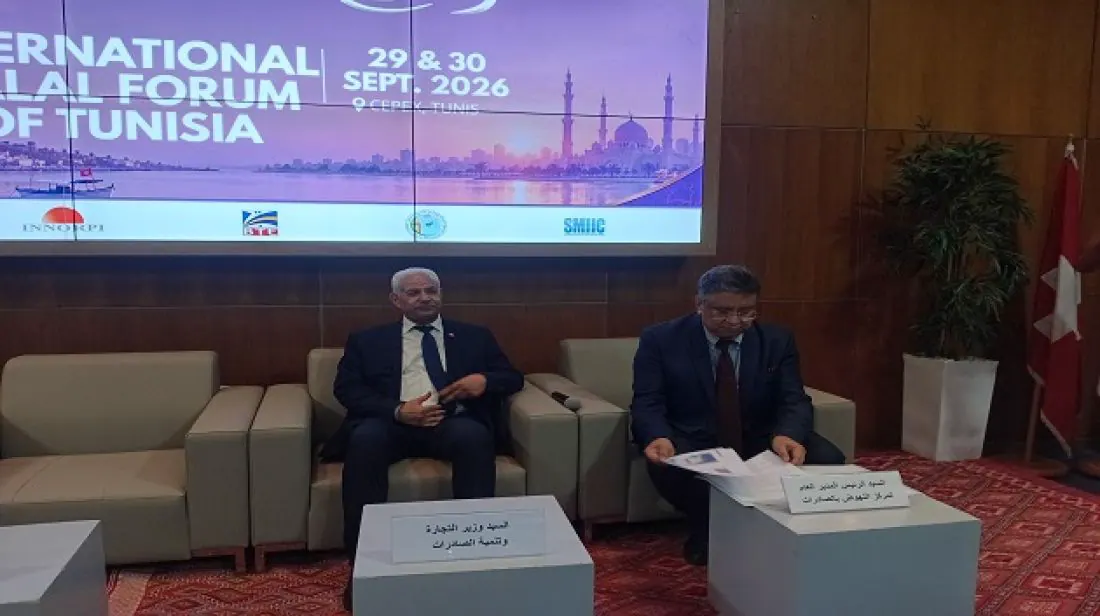
The halal trade sector has evolved into a comprehensive global economic system, extending beyond Islamic countries. According to Murad Ben Hussein, CEO of the Export Promotion Center, this market offers substantial opportunities for Tunisian businesses. The global halal market was valued at $2.6 trillion in 2024 and is projected to grow to $3.6 trillion by 2029, at an annual rate of 6.5%. This growth reflects the vast potential for businesses to tap into the halal sector.
The halal sector has expanded to include various industries such as medical supplies, pharmaceuticals, and services related to Islamic finance and tourism. Ben Hussein noted that countries like Malaysia and Indonesia are leading the way in halal trade, while Tunisia still requires more attention in this area. Despite this, Tunisia has a guarantee of trust in products and proof of conformity to adopted standards and conditions. Obtaining a halal certification requires respecting precise conditions and possessing the necessary competence in product tracking and conformity.
Tunisia has opportunities to develop its presence in the halal economy, particularly given its strategic location as a bridge between European and African markets. An agreement between the organizer of the Global Halal Trade Forum and the Tunisian Emirati Bank aims to facilitate access to financing for small and medium-sized enterprises. This financing is crucial for the development of businesses, enabling them to invest, expand, and meet halal requirements.
Currently, around 40 Tunisian businesses have obtained halal certification. The National Institute of Standards and Industrial Property (INNORPI) is the government body responsible for accrediting and awarding product conformity certificates to halal standards. The number of businesses involved in the halal sector has grown in recent years, with a significant increase from 20 certified businesses in 2023 to 40 currently.
Efforts are underway to encourage more Tunisian businesses to engage with the halal sector and capitalize on the opportunities offered by the global halal market. Ben Hussein emphasized the importance of continuing to promote the halal sector and supporting businesses in obtaining certifications. This support will enable them to access external markets and benefit from the growing demand for halal products.
Tunisia is bidding to host the 2027 Global Halal Conference, organized by the International Organization for Standardization and Islamic Metrology. The event, typically held in Istanbul, would provide Tunisia with an opportunity to strengthen its presence in the halal economy, promote its businesses and products, and open up new markets in Europe, Africa, and the Islamic world.
The growth of the halal sector in Tunisia is contingent upon the country's ability to develop its infrastructure and provide support to businesses seeking to engage with the global halal market. With the right strategies and investments, Tunisia can capitalize on the vast potential of the halal trade and become a significant player in the industry.
Key points
- The global halal market is projected to reach $3.6 trillion by 2029.
- Tunisia has around 40 businesses with halal certification.
- Tunisia is bidding to host the 2027 Global Halal Conference.