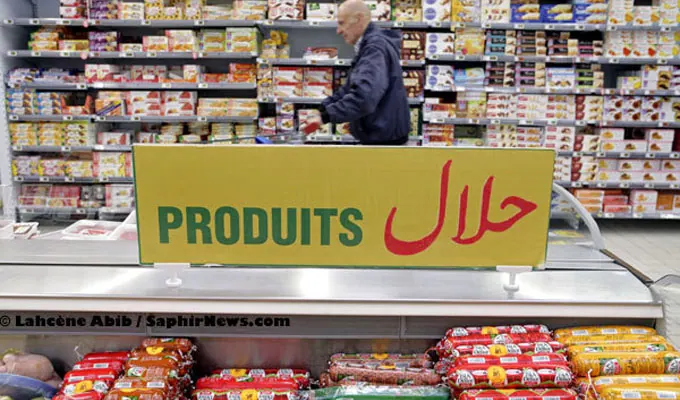
Tunisia's halal sector has achieved significant growth, with exports reaching 1.3 billion dinars, according to Kais Belaid, president of FIBGN Global Business Network. This figure is primarily driven by food products. While this is a notable milestone, it is essential to clarify that this data is an estimate by FIBGN and not an official customs statistic. The sector's growth is a positive indicator for Tunisia's economy.
The number of active enterprises in Tunisia's halal sector has increased to approximately 40, up from 20 in 2023, according to Mourad Ben Hassine, CEO of CEPEX. This doubling of operators demonstrates growing interest in the market. However, it is crucial to note that this growth does not necessarily translate to an equal distribution of exports among these enterprises.
If the export value of 1.3 billion dinars is divided by the number of active enterprises (40), the result is approximately 32.5 million dinars per enterprise. However, this calculation should not be considered an average turnover, as the parameters of the two data sets are not identical, and exports may be concentrated among a few operators.
To further develop the sector, access to financing is essential. A memorandum of understanding between FIBGN and the Banque de Tunisie et des Émirats (BTE) aims to facilitate financing for small and medium-sized enterprises (SMEs) and tiny enterprises (TEs) to obtain halal certifications and grow their businesses.
The global market for halal products is substantial, with Muslim consumer spending estimated at $2,600 billion in 2024 and projected to reach $3,560 billion by 2029, according to Kais Belaid. While this data represents global consumption and not solely Tunisian exports, it highlights the potential for growth in the sector.
For Tunisia to capitalize on this growth, it is crucial to accurately document the 1.3 billion dinars in exports and measure the actual contribution of halal-certified enterprises. This will enable the country to better understand its position in the global market and make informed decisions to support the sector's development.
The CEPEX and FIBGN will likely play important roles in promoting and supporting Tunisia's halal sector. By working together with financial institutions and other stakeholders, Tunisia can unlock the full potential of its halal industry and increase its presence in the global market.
Key points
- Tunisia's halal exports have reached 1.3 billion dinars, driven by 40 active enterprises.
- The sector has growth potential, with Muslim consumer spending projected to reach $3,560 billion by 2029.
- Access to financing and accurate documentation of exports are crucial for the sector's continued development.