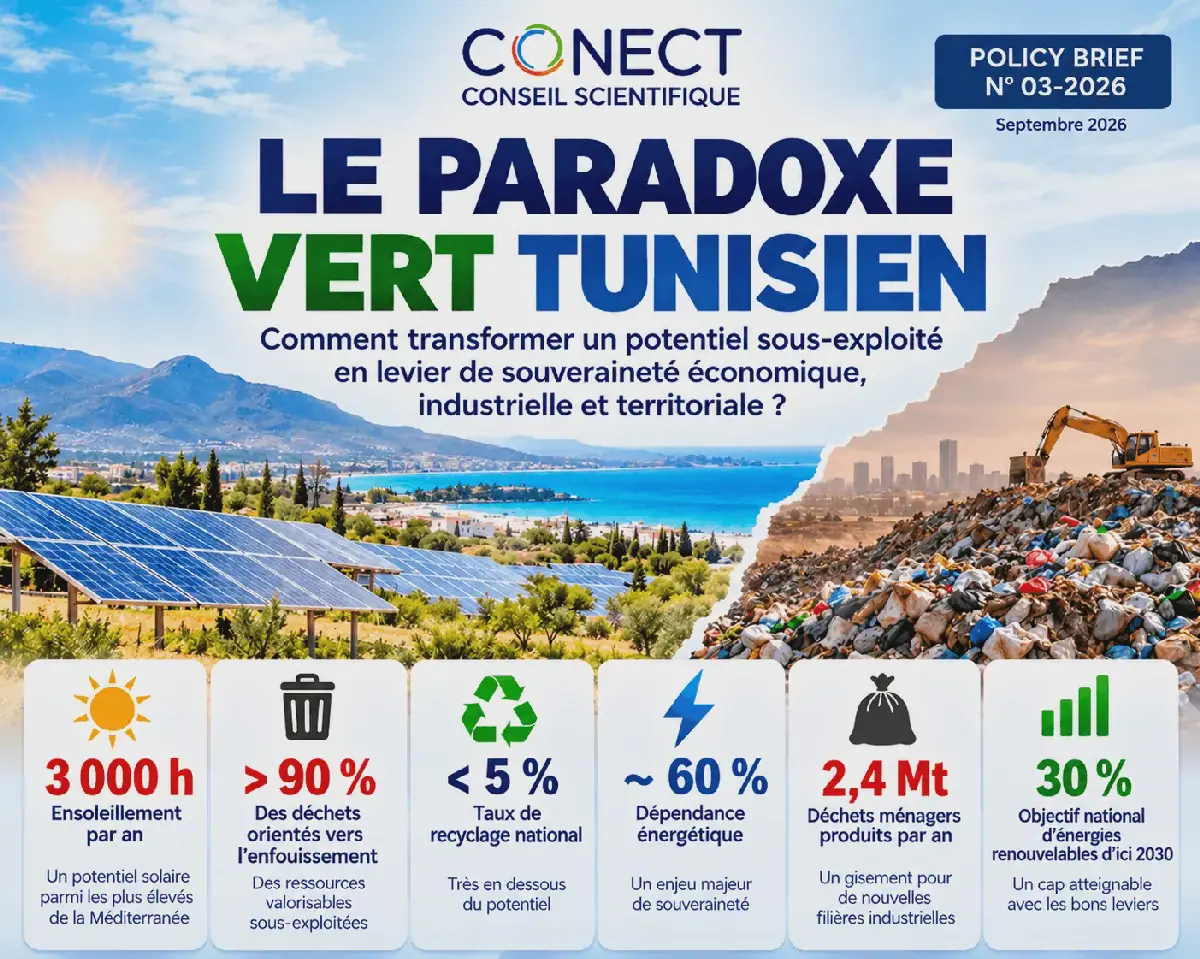
Tunisia's environmental potential is not being fully utilized, despite the country's rich resources. The country receives nearly 3,000 hours of sunshine per year and generates around 2.4 million tons of household waste annually. However, most of this waste is sent to landfills, with over 90% not being recycled. This underutilization is a concern, as the country's goal is to reach 30% renewable energy by 2030.
The country's dependence on energy is around 60%, which highlights the need for a shift towards renewable energy sources. In contrast, countries like Sweden, Norway, and Denmark have made significant progress in waste management and recycling. These countries have implemented an integrated approach that combines regulation, ecological taxation, extended producer responsibility, private sector involvement, and municipal competency development.
A recent study by the Confederation of Citizen Enterprises of Tunisia (CONECT) identified several structural obstacles to Tunisia's transition to a green economy. These obstacles include fragmented governance, inadequate regulatory frameworks, limited application of the polluter-pays principle, restricted access to green financing, infrastructure deficits, and the prevalence of informality. The study also noted that small and medium-sized enterprises (SMEs) are not sufficiently integrated into the green economy.
The CONECT study examined three possible trajectories for Tunisia's transition to a green economy: a minimal adjustment, an organized transition, and a green sovereignty scenario. The study recommended that the country pursue an organized transition while aiming for green sovereignty as a long-term strategic objective. To achieve this, the study formulated seven priority recommendations, including revising the waste law to prioritize resource valorization and introducing extended producer responsibility.
The study also suggested establishing a green financing mechanism dedicated to SMEs, strengthening municipal competencies, and integrating the circular economy into national industrial policy. These recommendations aim to shift the focus from waste collection and disposal to a system based on waste valorization, the development of new industrial sectors, and job creation. The goal is to reduce the country's energy and material dependencies.
The CONECT study drew on the experiences of Nordic countries, which have achieved significant results in waste management and recycling. In Sweden, Norway, and Denmark, landfill rates are around 1%, 2%, and 3%, respectively, while recycling rates are around 49%, 42%, and 45%. These countries' success is attributed to their integrated approach, which combines regulation, taxation, and private sector involvement.
The study's recommendations aim to support Tunisia's transition to a green economy and promote sustainable development. By implementing these recommendations, the country can unlock its green economy potential, create jobs, and reduce its energy dependencies. The study's findings and recommendations are detailed in the CONECT Policy Brief, which is available online.
Key points
- One of the key challenges facing Tunisia's green economy is the lack of effective waste management, with over 90% of waste sent to landfills.
- The country's dependence on energy is around 60%, highlighting the need for a shift towards renewable energy sources.
- The CONECT study recommends an organized transition to a green economy, with seven priority recommendations to support this goal.