Tunisia's Ministry of Cultural Affairs has embarked on a project to preserve the country's unique oasis ecosystem, with Gabes Oasis chosen as the pilot site. The project, which is being implemented in collaboration with UNESCO's Rabat office, the National Committee for Education, Culture, and Science, and various other ministries, aims to develop a cultural and developmental approach to preserving the oasis ecosystem. The project was showcased to regional authorities and civil society components during a visit from September 30 to October 3, 2026.
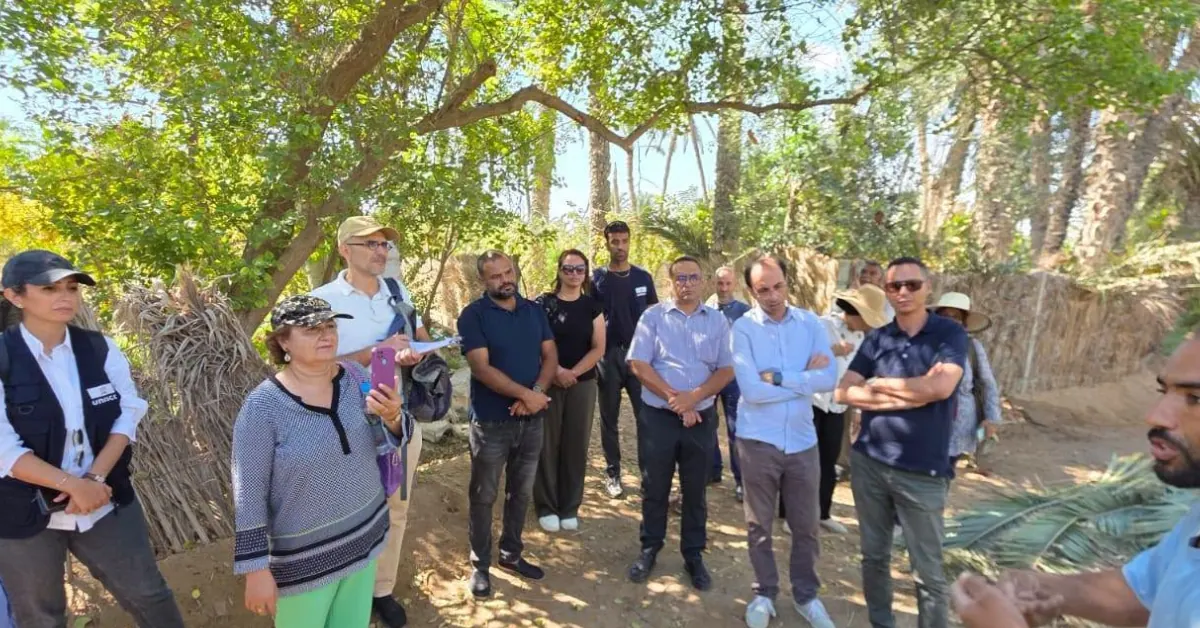
A delegation comprising representatives from the General Directorate of Heritage, the National Institute of Heritage, the Agency for the Revival of Heritage and Cultural Development, UNESCO's Rabat office, and the National Committee for Education, Culture, and Science visited Gabes Oasis to present the project and propose a collaborative action plan for its implementation. The team also conducted a field visit to several oasis models in Gabes, examining the experiences of associations, university institutions, and organizations working to preserve the oasis ecosystem and its tangible and intangible heritage.
Gabes Oasis is the only coastal oasis in the Arab Maghreb and Mediterranean regions, boasting a rich and unique heritage. The project's goal is to develop a model for preserving this ecosystem, which is considered a vital part of Tunisia's cultural and environmental identity. The Ministry of Cultural Affairs has emphasized the importance of preserving the oasis ecosystem, highlighting its significance for the country's cultural and environmental heritage.
The project aims to promote a cultural and developmental approach to preserving the oasis ecosystem, involving various stakeholders, including local communities, associations, and government agencies. The Ministry of Cultural Affairs has stressed the need for a collaborative approach to preserving the oasis ecosystem, which requires the involvement of multiple sectors and stakeholders.
During their visit, the delegation examined various aspects of the oasis ecosystem, including its natural and cultural significance, and explored ways to promote its preservation and development. The team also discussed the importance of raising awareness about the importance of preserving the oasis ecosystem and promoting sustainable development practices in the region.
The preservation of Gabes Oasis is considered a priority for the Tunisian government, which has recognized the importance of protecting the country's cultural and environmental heritage. The project is part of a broader effort to promote sustainable development and preserve Tunisia's unique cultural and natural resources.
The project's success will depend on the collaboration and commitment of various stakeholders, including local communities, government agencies, and civil society organizations. The Ministry of Cultural Affairs has expressed its commitment to working with all stakeholders to ensure the project's success and promote the preservation of Tunisia's unique oasis ecosystem.
Key points
- Tunisia's Ministry of Cultural Affairs has chosen Gabes Oasis for a pilot project to preserve the country's unique oasis ecosystem.
- The project aims to develop a cultural and developmental approach to preserving the oasis ecosystem.
- The preservation of Gabes Oasis is considered a priority for the Tunisian government.