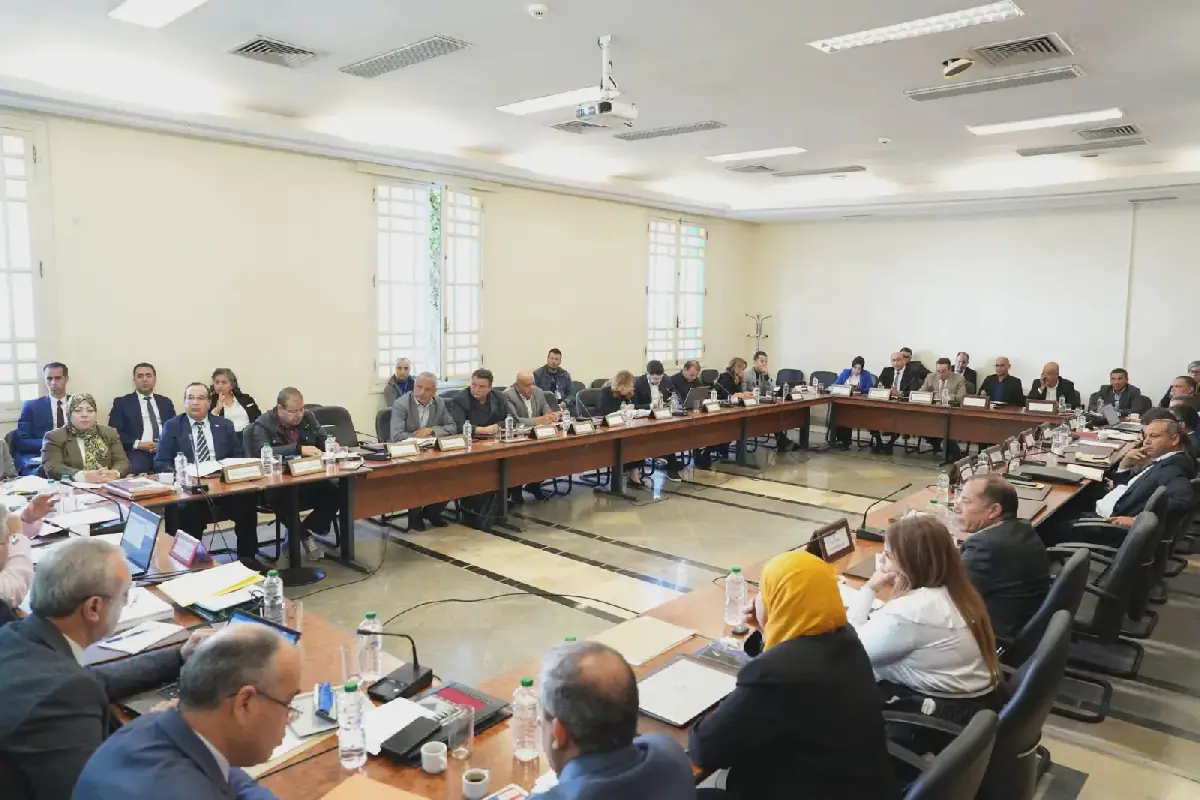
Tunisia's Financial Committee has given the green light to seven bills aimed at financing strategic projects to boost the country's water security and improve its water supply infrastructure. The approval was made during a hearing session attended by representatives from various ministries, including Economy, Planning, Agriculture, Water Resources, and Fisheries, as well as the CEO of the National Company for Water Exploitation and Distribution.
The bills are related to agreements on loans and guarantees with international financial institutions, including the European Investment Bank and the French Development Agency. These agreements aim to finance projects that will improve the production, transportation, and distribution of drinking water in Tunisia. The projects are expected to enhance the country's water security and ensure a reliable supply of clean drinking water.
One of the approved bills is for a loan agreement worth an undisclosed amount with the European Investment Bank to finance a project to build a water treatment plant in Bjaoua and connect it to the existing water network. Another bill is for a guarantee agreement with the French Development Agency to finance a project to upgrade the country's water transportation infrastructure.
The approved bills also include a financing agreement with the Islamic Development Bank to fund a project to build two dams, Sadia and Kalâa, and related water transportation infrastructure. Additionally, a bill was approved for a guarantee agreement with the African Development Bank to finance a project aimed at improving the efficiency of Tunisia's drinking water network.
The projects are part of Tunisia's efforts to improve its water security and ensure a reliable supply of clean drinking water. The country's water infrastructure has faced challenges in recent years, including aging pipes and limited water resources. The approved bills are expected to help address these challenges and improve the overall water supply situation in Tunisia.
The Financial Committee's approval of these bills is seen as a significant step towards addressing Tunisia's water security challenges. The country's water resources have been under pressure due to various factors, including climate change, population growth, and limited infrastructure. The approved projects are expected to help alleviate these pressures and ensure a more reliable supply of clean drinking water for Tunisians.
The implementation of these projects is expected to have a positive impact on the lives of Tunisians, particularly in rural areas where access to clean drinking water is limited. The projects will also help to improve the overall efficiency of Tunisia's water supply system and reduce water losses.
Key points
- The approved bills are expected to help Tunisia address its water security challenges and improve its water supply infrastructure.
Reporting sources
- Radio Gafsa · Radio Gafsa