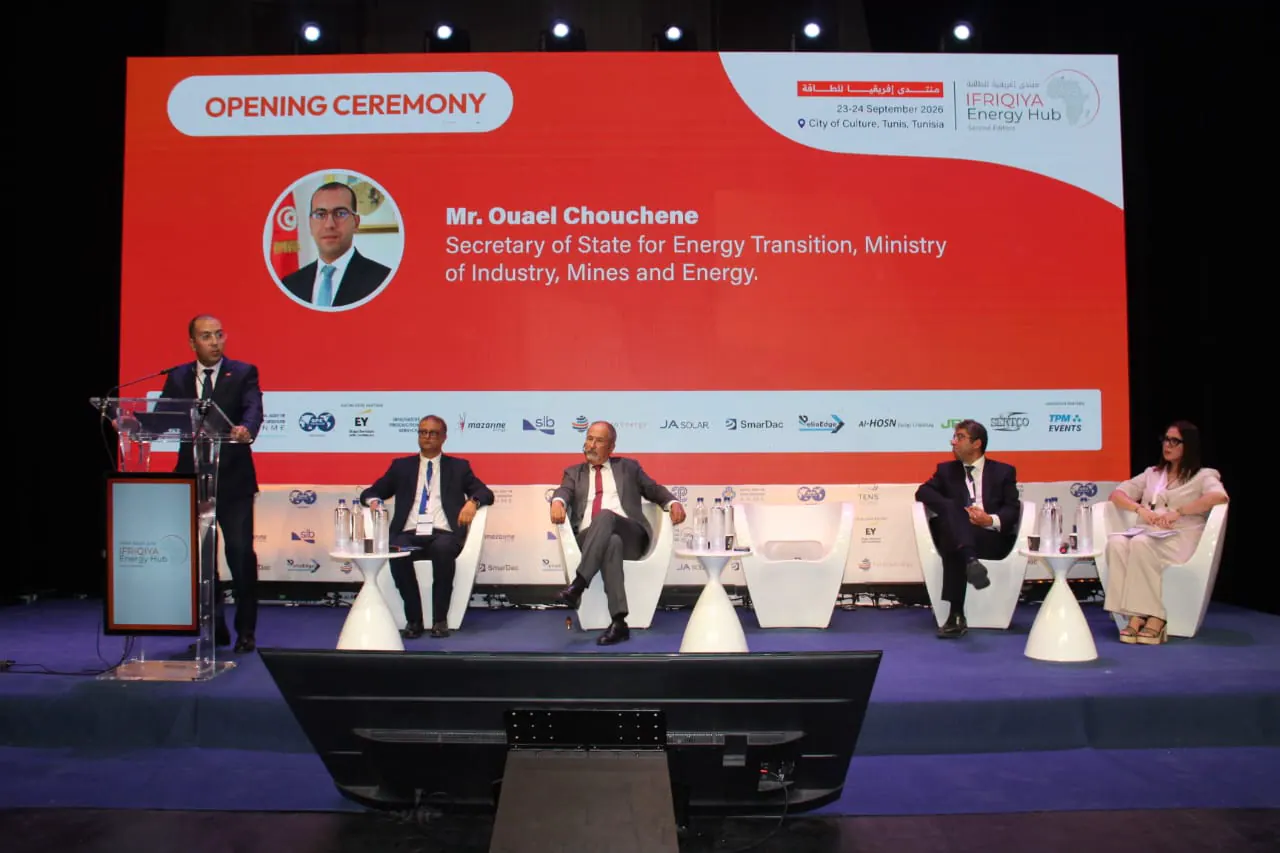
Tunisia's Minister of Energy Transition, Wail Chouchane, has emphasized that the country's energy transition is a strategic priority. This priority is driven by Tunisia's structural energy deficit and its heavy reliance on imports. The energy sector has become a key element of economic sovereignty, industrial competitiveness, and investment attraction. Chouchane made these remarks during the opening of the second edition of the "African Energy Forum" in Tunis.
The global energy landscape is undergoing significant changes, driven by geopolitical transformations, fluctuations in energy markets, and climate commitments. These changes are set to redefine the world's energy balances. Tunisia has initiated a gradual transformation of its energy system, focusing on two complementary pillars: developing renewable energies and controlling energy demand through energy efficiency. The goal is to make the energy transition a driver of economic development, enhancing Tunisia's attractiveness and supporting the competitiveness of its industrial fabric.
The energy transition requires substantial investments in production capacities, networks, infrastructure, storage solutions, and new technologies. Mobilizing these investments necessitates close cooperation between public authorities, institutions, companies, financial institutions, and technical partners. Clear regulatory frameworks, suitable financing mechanisms, and a comprehensive vision are essential to encourage long-term investment in energy transition projects. Chouchane highlighted the importance of these elements in facilitating the country's energy transition.
Rania Merzouki, General Manager of the Tunisian Petroleum Activities Company, emphasized that energy security is no longer based on a single pillar. Instead, it depends on the ability to diversify energy sources, develop national production, improve energy efficiency, enhance infrastructure, and ensure the integration of various energy sources. She noted that Tunisia's institutional framework is a significant asset, with the Tunisian Petroleum Activities Company playing a pivotal role in developing national resources.
Merzouki highlighted Tunisia's strategic location in the Mediterranean, close to Algeria, Libya, Europe, and the Arab world. This location enables Tunisia to leverage its geographic position to strengthen its role as a regional energy platform. The participation of several African and Arab countries in the forum reflects the desire to consolidate cooperation, bridge markets, and share experiences. Merzouki stressed the importance of transitioning from ambitions to concrete projects in the energy field.
The second edition of the "African Energy Forum" takes place on September 23-24, 2026, under the theme "Leadership and Cooperation for a Secure and Sustainable Energy Future." The forum focuses on energy security, diversification of energy sources, and good governance. It also explores the development of research and exploration activities, accelerating the energy transition towards clean energies, and enhancing energy interconnection between Tunisia, Europe, and neighboring countries.
The forum prioritizes cooperation in the energy sector, particularly in developing cross-border electricity networks, promoting renewable energy projects, and exchanging experiences and best practices. The event aims to strengthen dialogue and cooperation among stakeholders in the energy sector in Tunisia and Africa, identifying opportunities for cross-border energy cooperation and converting them into implementable projects.
Key points
- Tunisia's energy transition is a strategic priority driven by its structural energy deficit and heavy reliance on imports.
- The country is working to develop renewable energy sources and improve energy efficiency to reduce its reliance on imports.
- The "African Energy Forum" brings together stakeholders to discuss energy security, diversification, and cooperation in the sector.