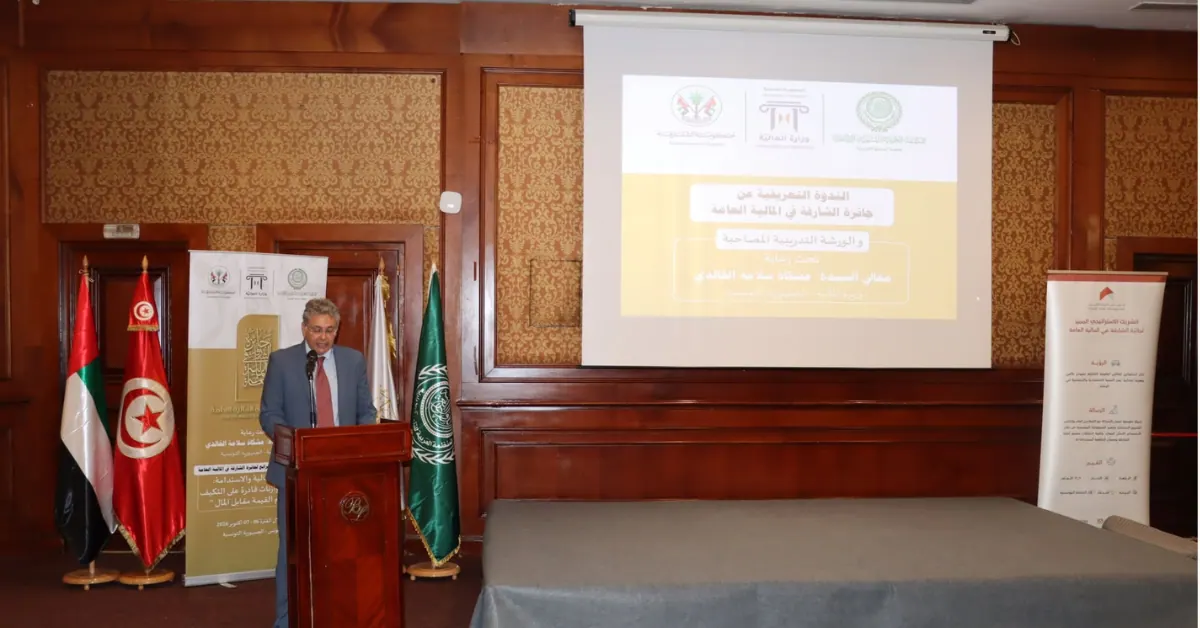
Tunisia's economy has demonstrated resilience in the face of global challenges, achieving positive growth rates and controlled inflation, deficit, and debt levels. According to Zehour Attallah, head of the finance ministry's cabinet, the country's institutions have played a significant role in navigating these exceptional circumstances. The government's efforts have enabled Tunisia to maintain a stable economic outlook.
The finance ministry has been working on a reform agenda to improve the country's economic framework. This includes developing legal, institutional, and regulatory structures, as well as enhancing human resources and promoting good governance. These efforts aim to improve the effectiveness and transparency of public policies. The ministry's initiatives were highlighted at the 4th Arab Financial Forum.
The forum, which took place in Tunis on October 6-7, focused on "Financial Resilience and Sustainability: Designing Adaptive Budgets and Maximizing Value for Money." The event was organized by the finance ministry in collaboration with the Arab Organization for Administrative Development and the Sharjah Central Finance Department. The discussions centered on strategies for achieving financial sustainability and resilience.
Attallah emphasized the importance of upgrading performance to achieve high-quality and efficient public spending. This involves promoting accountability and responsibility in managing public finances. The goal is to reorient public expenditure towards sectors with higher returns and prioritize essential spending. This approach is expected to enhance the country's economic competitiveness.
Tunisia has faced significant challenges, including the COVID-19 pandemic and natural disasters. However, the country's economy has shown signs of recovery, with a growth rate of 2.3% in 2022. The finance ministry has implemented measures to support economic growth, including investing in infrastructure and promoting private sector development.
The government's economic strategy also focuses on promoting trade and investment. Tunisia has been working to strengthen its trade relationships with other countries, including Senegal, where Tunisian companies have held around 200 meetings to market olive oil. The country's trade sector is expected to benefit from these efforts.
The finance ministry's efforts to promote economic growth and stability have been recognized by international organizations. The country's economic outlook is expected to improve in the coming years, driven by its resilience and adaptability in the face of global challenges. Key priorities for the government include sustaining economic growth and maintaining financial stability.
Key points
- Tunisia's economy has achieved positive growth rates despite global turmoil
- The government has implemented reforms to improve the country's economic framework
- The finance ministry is promoting accountability and responsibility in managing public finances