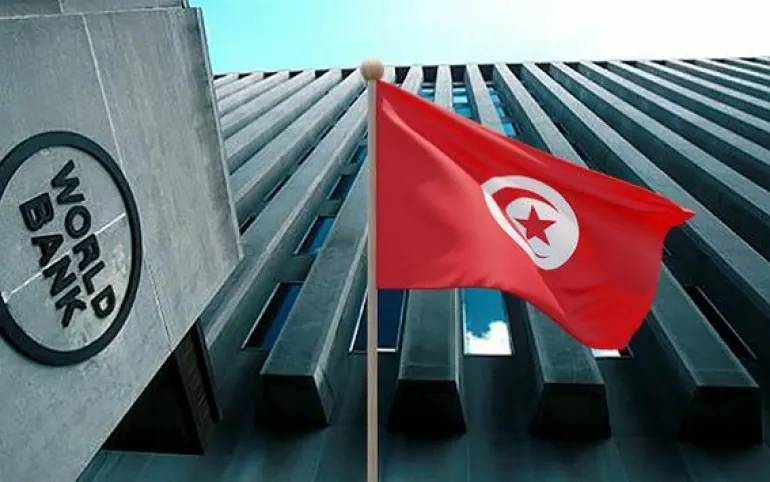
The World Bank has released its summer 2026 economic report on Tunisia, highlighting the country's ongoing economic recovery. Despite facing structural challenges and increasing pressure on water resources, Tunisia's economy has shown resilience. The report notes that Tunisia's real GDP growth reached 2.7% in 2025 and 2.4% in the first half of 2026. This growth has allowed the country's GDP to surpass pre-COVID-19 levels, returning to 2019 levels in the last quarter of 2024 and continuing to improve in 2025 and 2026.
The report highlights a mixed performance across various economic sectors. Industries such as food processing, mechanical and electrical industries, hotels, and restaurants have contributed to growth, while sectors like hydrocarbons, textiles, and finance have experienced decline. In the first half of 2026, the agricultural sector grew by 6.4%, and the food industry by 8.9%. Conversely, energy, textile, and construction activities decreased by 3.9%, 3.3%, and 1.6%, respectively.
The labor market has also shown signs of improvement, with the unemployment rate dropping to 14.9% in the second quarter of 2026. However, the World Bank cautions that this decline is largely due to changes in labor market participation rates rather than the creation of new job opportunities. The report also notes that Tunisia's external balances have been affected by rising oil prices and the conflict in the Middle East, leading to an increase in the energy deficit and a 49% rise in the current account deficit.
The World Bank projects that Tunisia's economic growth will reach 2.3% in 2026 and an average of 2.1% between 2027 and 2028, assuming no significant structural reforms. The report also forecasts a current account deficit of 4.1% of GDP in 2026 and a budget deficit of 6% of GDP, with public debt expected to reach 84.2% of GDP before gradually decreasing to 81.9% by 2028.
Water scarcity has been identified as a significant structural challenge for Tunisia's economy. The World Bank notes that the country's freshwater resources are below the absolute scarcity threshold of 500 cubic meters per person per year. Although rainfall has improved in recent years, the report warns that this is a temporary reprieve and not a long-term solution. The World Bank estimates that the economic losses due to water scarcity could reach 6.4% of GDP by 2050 if no action is taken.
The agricultural sector, which employs 14% of the workforce and up to 50% of rural workers, is particularly vulnerable to water scarcity. The World Bank emphasizes that investing in the water sector can create jobs and is essential for economic growth and food security. To address these challenges, the report recommends developing a legal framework, improving institutional performance, and adopting suitable investment models.
The World Bank suggests that Tunisia's "Water 2050" plan provides a strategic foundation for addressing water scarcity, but its implementation is crucial. The report proposes several measures, including updating the water code, establishing a legal framework for wastewater reuse, and adjusting water tariffs. By addressing these challenges, Tunisia can mitigate the impact of water scarcity and promote sustainable economic growth.
Key points
- Tunisia's economy shows resilience with 2.7% GDP growth in 2025
- Water scarcity poses significant structural challenges to Tunisia's economy
- The World Bank recommends investing in the water sector to create jobs and promote sustainable growth