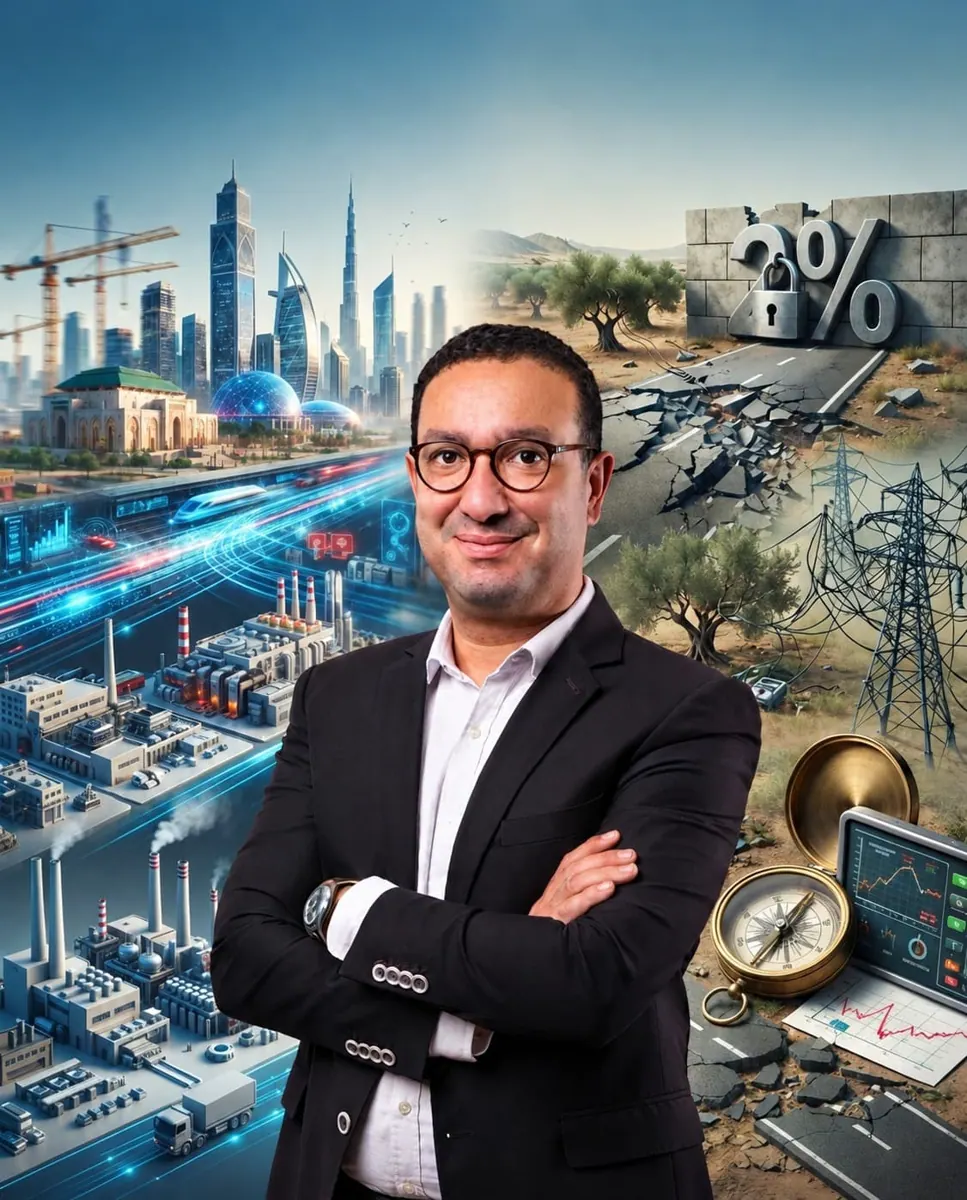
Tunisia's economic growth has been struggling to gain momentum, with a stagnant rate of around 2%. This is in contrast to several economies in the region, which are advancing at a more sustained pace. According to economist Anis Wahabi, the issue lies not in the lack of promising sectors, but in an economic model that needs to evolve. He emphasizes the need to move beyond mere investment and focus on creating more value.
The country's competitive advantage in certain industries, such as textiles and cabling, is largely based on production costs. However, this position is becoming increasingly difficult to defend as other countries offer competitive costs while developing higher-value-added activities. Wahabi stresses that Tunisia needs to shift away from this logic and focus on transforming, designing, developing, and valorizing its products and services.
This transformation requires the development of high-value-added activities, particularly those that mobilize research and development. The goal is to attract projects that bring more technology, skills, and value, rather than solely focusing on competitive production costs. This also involves better connecting universities to industries, as companies need skills to accompany this transformation, and research needs more outlets in the productive fabric.
The regional comparison is also relevant in this context. Countries such as Morocco, Algeria, Egypt, and Jordan have worked on attracting investment and building ecosystems around industrial and service projects. Egypt's experience, for instance, has focused on attracting investments and implementing structuring projects, creating conditions necessary for their development, including industrial zones, logistics zones, and port and airport infrastructure.
Tunisia has public structures dedicated to investment, but the question remains whether it can generate sufficient structuring projects and replicate this ecosystem logic. The problem of Tunisia's growth is not just about volume; it's about knowing where to invest, in which activities, and for what value created. As long as the economy remains heavily dependent on activities where competitiveness relies mainly on costs, its ability to scale up will be limited.
The challenge for Tunisia is to no longer seek only to attract investment but to attract and develop investment that transforms the economy. With neighbors accelerating and competitors no longer content to produce cheaper, the status quo is becoming increasingly untenable. To regain a higher growth rate, Tunisia must succeed in producing more value from its own assets.
The transformation of the economic model is not just about sectoral repositioning; it also concerns the country's ability to create an environment favorable to investment and innovation. The goal is to produce more value from what Tunisia already produces, rather than just increasing the number of visitors or exporting raw products. This requires a shift in focus towards higher-value-added activities and a more innovative approach to investment.
Key points
- Tunisia's economic growth model needs to be reinvented to focus on creating more value.
- The country's competitive advantage is largely based on production costs, which is becoming increasingly difficult to defend.
- The goal is to attract projects that bring more technology, skills, and value, rather than solely focusing on competitive production costs.