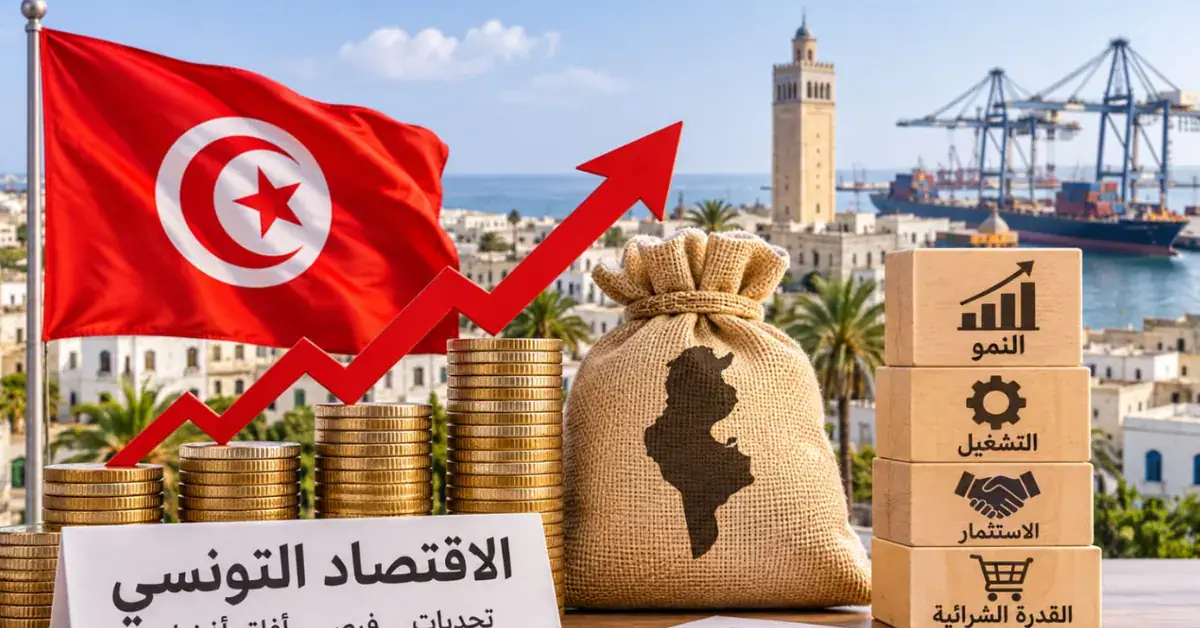
The Tunisian government's development plan for 2026-2030 aims to achieve a growth rate of 4.2% per annum, with a focus on social development, balanced regional growth, and improved infrastructure. The plan, which was approved by law on July 20, 2026, outlines five main objectives, including promoting social justice, balancing regional development, and enhancing economic competitiveness. However, the plan's implementation faces significant financing challenges, with a projected budget of 68.895 billion dinars and revenue of 54.280 billion dinars.
The government's economic strategy is built around three main pillars: promoting social development, boosting investment, and developing productive sectors. The plan aims to increase investment to 32.6304 billion dinars in 2027, up from 28.6033 billion dinars in 2026. However, the country's economic growth prospects have been revised downward, with a growth rate of 3.1% expected in 2027, down from 3.8% in the original development plan. This revision reflects the challenges facing the country's economy, including fluctuations in oil prices and uncertain investment prospects.
The government's budget for 2027 has been criticized for being overly optimistic, with some analysts questioning its ability to achieve the projected growth rate. The budget is based on a number of assumptions, including improved performance in the agriculture and extractive industries, as well as increased foreign demand. However, these sectors face significant challenges, including production and structural issues, as well as external factors such as climate change and global market trends.
To address these challenges, the government has proposed a number of measures to boost investment and promote economic growth. These include a line of credit worth 10 million dinars to support start-ups, as well as a line of credit worth 5 million dinars for young entrepreneurs. Additionally, the government has allocated 20 million dinars for interest-free loans to low-income households. While these measures aim to promote economic inclusion and support small businesses, they may not be sufficient to achieve the country's growth objectives.
The development plan's success will depend on the government's ability to implement its policies and attract investment. The plan includes a number of projects and programs aimed at promoting economic growth and social development, including infrastructure development, education and training, and healthcare. However, the plan's implementation faces significant challenges, including bureaucratic hurdles, corruption, and limited resources.
The government's economic strategy has been criticized for being overly focused on short-term goals, rather than long-term sustainable development. Some analysts argue that the government's policies may not address the underlying structural issues facing the economy, including low productivity, corruption, and limited competitiveness. To achieve its growth objectives, the government will need to implement a range of policies and reforms aimed at promoting economic diversification, improving the business environment, and enhancing competitiveness.
The Tunisian government's development plan faces significant financing challenges and uncertain investment prospects. While the plan aims to promote economic growth and social development, its success will depend on the government's ability to implement its policies and attract investment. The government will need to address a range of challenges, including bureaucratic hurdles, corruption, and limited resources, to achieve its growth objectives and promote sustainable development.
Key points
- The Tunisian government's development plan for 2026-2030 aims to achieve a growth rate of 4.2% per annum, with a focus on social development, balanced regional growth, and improved infrastructure.