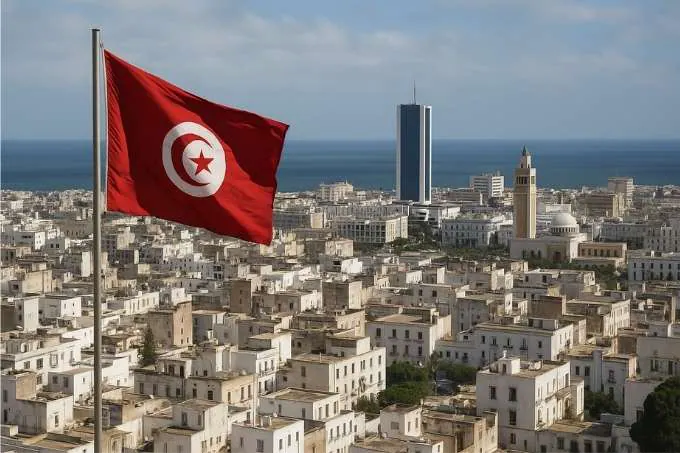
Tunisia is grappling with a significant challenge: ensuring the quality of public decision-making in a system where counter-powers are weakening, the administration remains stagnant, and talent is beginning to look elsewhere. The country's economic and institutional future depends on its ability to address these issues. The question arises as to whether the problem lies with those in power or the way they are chosen.
Philosopher Plato, through Socrates, identified a danger in giving power to those who speak well rather than those who know best. This raises questions about the need for a democracy that demands more from citizens and candidates. A possible solution could be a democracy where every citizen has a minimum level of civic and economic culture, and candidates for high office demonstrate a genuine understanding of economics, public finances, and institutions.
A comparison with the USSR is drawn, not ideologically but mechanically, highlighting the risks of a large, centralized, bureaucratic state that is unable to reform. Tunisia has experienced rapid succession of prime ministers since 2021, with each new leader discovering the administration, acting, and then leaving. Meanwhile, the bureaucracy remains, leading to a concentration of power at the top and a slowdown in decision-making.
The country's recent defections, including those of its delegation to the Mediterranean Games in Taranto, 2026, are a cause for concern. This phenomenon is reminiscent of the Soviet era, where athletes took advantage of international travel to leave the bloc. The loss of talent and confidence can have significant consequences for the country.
Tunisia's economic situation is not dire, but its margins for maneuver are decreasing. The International Monetary Fund (IMF) projects a public debt of around 85% of GDP and a deficit of 7.4% in 2026. Two extreme scenarios are possible: a Russian-style crisis with brutal devaluation, inflation, and debt restructuring, or a Lebanese-style gradual degradation.
A third way forward is through reform, including reforming public enterprises, liberalizing private investment, investing in energy and water, and combating corruption through institutions. However, this will require new people and a fresh approach. Tunisia has the necessary skills, companies, tourism, exports, and human capital to avoid these scenarios, but time is running out.
A modern economy is not just measured by its GDP but also by its ability to provide basic services such as water, electricity, and healthcare. Tunisia needs an anticipatory state, corrective institutions, and a lucid democracy. The country's future depends on its ability to address these challenges and implement meaningful reforms.
Key points
- The country's economic and institutional future depends on its ability to address issues of governance and decision-making.
- A possible solution to Tunisia's problems is a democracy that demands more from citizens and candidates, with a focus on civic and economic culture.
- The country needs to reform public enterprises, liberalize private investment, and combat corruption through institutions to avoid economic crisis.