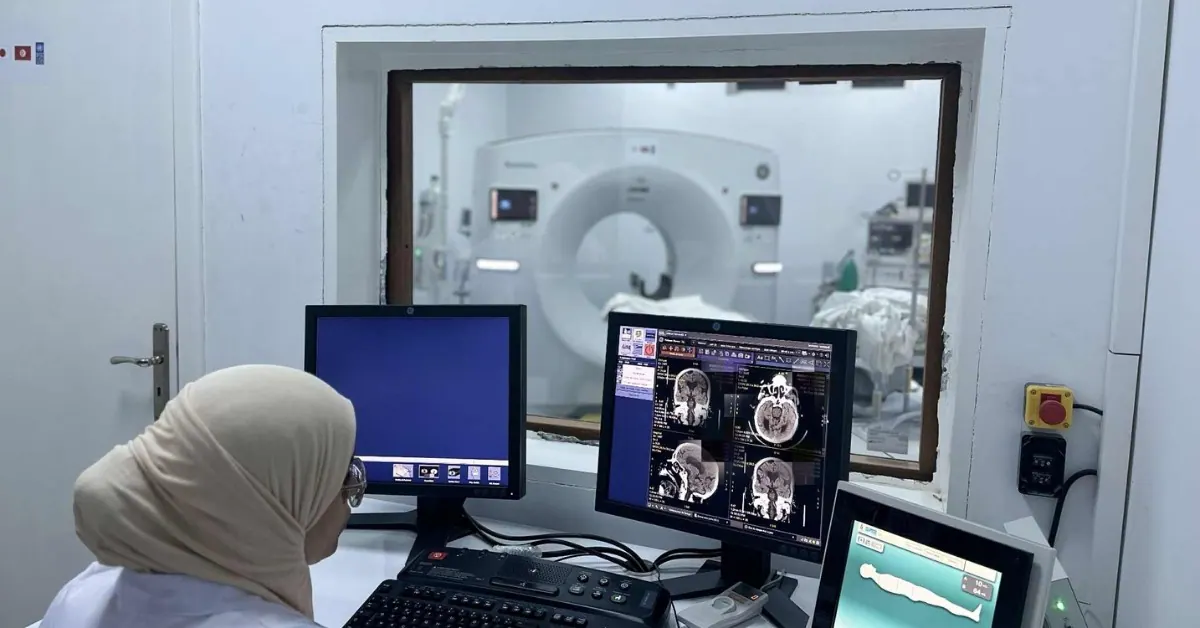
Tunisia's digital hospital has successfully met 100% of regional hospitals' requests for medical imaging using ultrasound and magnetic resonance imaging since October 1, 2025. According to Habiba Mizouani, head of the medical imaging department at the hospital, the digital hospital has completed nearly 120,000 diagnoses, highlighting the importance of adopting digital technologies and telemedicine in supporting regional health institutions and bringing medical services closer to citizens.
The digital hospital's achievements demonstrate the potential of technology in bridging the healthcare gap in Tunisia. By providing medical imaging services remotely, the hospital has reduced the need for patients to travel to urban areas for diagnosis, improving access to healthcare and reducing costs. The hospital's use of digital technologies has also enhanced the efficiency and accuracy of medical diagnoses.
Mizouani announced the launch of a pioneering experiment between the digital hospital in Tunis and the health authority in Tozeur, which relies on telemedicine and artificial intelligence to bring breast cancer screening services closer to women in the region. This experiment aims to enhance early detection of breast cancer and facilitate patient care by organizing and collecting patients' medical data, enabling faster diagnosis and treatment.
The experiment in Tozeur is part of a broader effort to strengthen breast cancer screening and care in Tunisia. By leveraging digital technologies and telemedicine, the country's healthcare system aims to improve health outcomes and reduce disparities in access to healthcare services. The digital hospital's collaboration with regional health authorities is expected to expand in the coming months.
The digital hospital's success has significant implications for Tunisia's healthcare sector, which has been working to improve the quality and accessibility of medical services. The hospital's use of digital technologies has set a precedent for the adoption of innovative solutions in healthcare, and its collaboration with regional health authorities is expected to drive further improvements in healthcare delivery.
According to Mizouani, the digital hospital's achievements are a testament to the potential of digital technologies in transforming Tunisia's healthcare system. The hospital's use of telemedicine and artificial intelligence has enhanced the efficiency and effectiveness of medical diagnoses, and its collaboration with regional health authorities has improved access to healthcare services for patients in remote areas.
The digital hospital's impact on Tunisia's healthcare sector is expected to continue growing in the coming months. With its ability to meet 100% of regional hospitals' medical imaging needs, the hospital is poised to play a critical role in driving improvements in healthcare delivery and health outcomes in the country.
Key points
- The digital hospital has completed nearly 120,000 diagnoses since October 1, 2025.
- The hospital's use of digital technologies has enhanced the efficiency and accuracy of medical diagnoses.
- The hospital is launching a pioneering experiment in Tozeur to bring breast cancer screening services closer to women in the region.