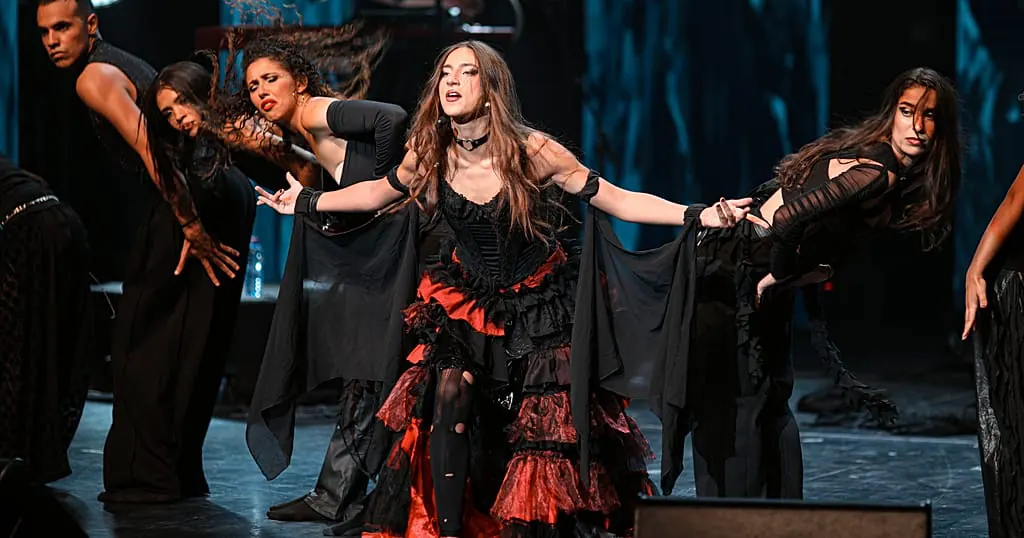
The Carthage Music Festival has made a comeback in the cultural life of Tunisia's capital city, following an almost two-year break. The eleventh edition of the festival drew in a predominantly young audience, eager to see their favorite artists perform live. The event took place at the Théâtre de l’Opéra, where a 1,800-seat auditorium was packed for a show featuring Tunisian rapper VIPA and 20 musicians.
Tunisian rapper VIPA, also known as Kaïs Kekli, performed songs from his latest album, “OBOS”, in front of a sold-out crowd. He described the album as a collective project, stating, “One Band One Sound” is a group project where we were missing one member from the line-up, the audience. The audience's presence added to the energy of the show. VIPA's performance was one of the highlights of the festival, which focused on showcasing local talent.
Another performer that caught the audience's attention was the Tunisian band Saharage. The group blends heavy metal with traditional North African sounds, and they unveiled their new show, “Apex Africa”. According to Zaher Ben Abdallah, the band's bassist and lead singer, the show is a project that combines distorted guitars with African sounds. The band's music tells the story of a post-apocalyptic future where a tribe, known as Saharage, fights to preserve its traditions.
Singer, dancer, and actress Molka Aouij also performed at the festival with her show “Back To My Roots”. Aouij is known for her roles in television series and is the daughter of the Tunisian diva Amina Fakhet. Her show is a blend of Arabic music, electronic and pop, with dance and visual narrative. Aouij stated that her inspiration comes mainly from Tunisia and its roots, and she aimed to showcase the country's artists and performers.
The eleventh edition of the Carthage Music Festival put a strong emphasis on the local music scene, with at least 60 per cent of the artists being Tunisian. Fifteen countries and 26 groups were selected from 378 applications to participate in the festival. The event provided a platform for local artists to showcase their talents and connect with a wider audience.
The festival's focus on local talent was a deliberate choice, aimed at promoting Tunisia's music scene. By providing a platform for local artists, the festival organizers hoped to encourage the growth of the music industry in the country. The event's success suggests that this approach may be paying off, with many local artists receiving a warm reception from the audience.
Overall, the Carthage Music Festival's eleventh edition was a celebration of Tunisia's rich musical heritage. With its focus on local talent and its eclectic lineup of performers, the festival provided a unique and enjoyable experience for attendees. The event's return after a two-year hiatus was a welcome development for the country's cultural scene, and it is likely that the festival will continue to thrive in the years to come.
Key points
- The festival featured a predominantly local lineup, with at least 60 per cent of artists being Tunisian.