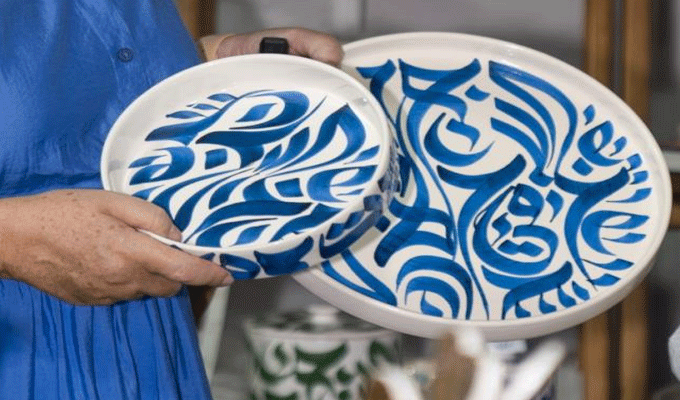
The third edition of ArtiCrea, a professional exhibition for handicrafts and design, will take place from October 5 to 11, 2026, at the Kram Exhibition Palace in Tunisia. This year's event focuses on four key economic challenges: protecting creations, improving commercialization, accelerating digitalization, and accessing foreign markets. The exhibition aims to help Tunisian artisans overcome obstacles and turn their products into competitive brands.
The exhibition's program includes workshops on October 5, 6, 8, and 9, which will cover topics such as protecting designs, models, and brands, export procedures, accessing foreign markets, commercialization, e-commerce, and digital transformation. These themes are designed to help artisans develop a comprehensive approach to creating and exporting their products. By addressing these challenges, ArtiCrea seeks to support the growth of Tunisia's handicraft sector.
One of the key challenges facing Tunisian artisans is protecting their intellectual property. The exhibition's program highlights the importance of safeguarding designs, models, and brands, which are essential assets for any business. By protecting their creations, artisans can prevent copying and ensure that their products are unique and competitive in the market.
Commercialization is another significant challenge for Tunisian artisans. Simply producing high-quality products is not enough; artisans must also organize their commercialization strategies and reach clients beyond traditional exhibition circuits. The exhibition's focus on digitalization and e-commerce aims to help artisans expand their customer base and increase their sales.
The third edition of ArtiCrea is expected to attract over 150 enterprises, according to the Office National de l'Artisanat (ONA). The exhibition will provide a platform for artisans to showcase their products and connect with potential buyers, both locally and internationally. The event's organizers hope that ArtiCrea will facilitate exchanges between artisans and actors in local and international markets.
While the exhibition's program is ambitious, its success will ultimately depend on the number of foreign buyers present, the number of B2B deals concluded, and the proportion of exhibitors who already sell their products online or export them. These indicators will be crucial in assessing the economic impact of ArtiCrea and its ability to support the growth of Tunisia's handicraft sector.
The ArtiCrea exhibition takes place at a critical time for Tunisia's economy, which is seeking to diversify its sectors and increase its exports. By supporting the development of the handicraft sector, the exhibition aims to contribute to the country's economic growth and job creation. The event's success will depend on its ability to help artisans overcome the challenges of commercialization, digitalization, and exportation.
Key points
- The ArtiCrea exhibition aims to help Tunisian artisans transform their products into exportable brands by addressing key economic challenges such as protection of creations, commercialization, digitalization, and access to foreign markets.