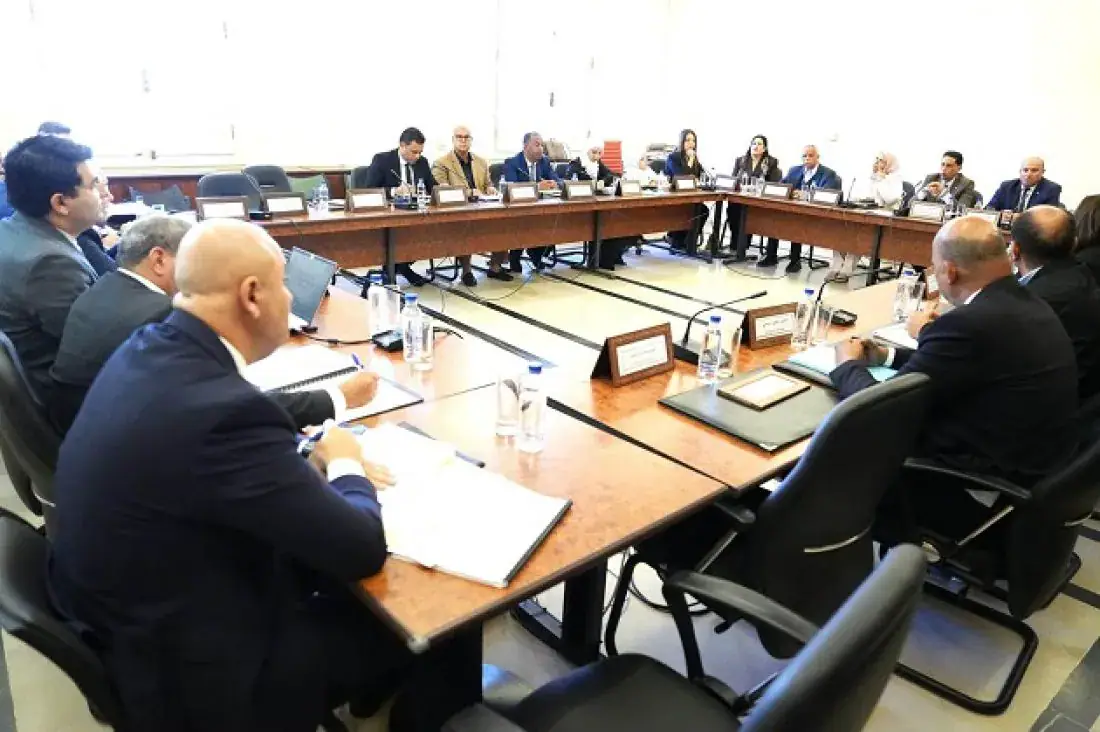
Tunisia's Committee on General Legislation and the Internal Affairs, Immunity, and Legal Affairs Committee convened jointly to review the 2027 justice budget. The proposed budget for the Ministry of Justice is 1.61% of the state's total public expenditure, representing an 8.43% increase from 2026. This session aimed to discuss the ministry's strategic orientations, judicial activity indicators, and allocated credits for 2027.
The justice budget is divided into three main programs: the Justice Program, accounting for 42.12% of total credits; the Prisons and Reform Program, making up approximately 50.97%; and the Leadership and Support Program, constituting 6.92%. The budget is primarily allocated to rental expenses, totaling around 78.98%, and operating expenses, which reached about 120.4 million dinars.
A notable increase was observed in investment commitments, rising from 90 million dinars in 2026 to 329 million dinars in the 2027 budget. Most of these funds are dedicated to covering annual expenses related to equipment and ongoing projects. The Ministry of Justice representatives presented an overview of completed and ongoing projects from 2021 to 2026, as well as planned projects for 2027.
Key projects for 2027 include digital transformation initiatives, such as digitizing judicial procedures and archives, and implementing integrated information systems. Additionally, new court buildings are planned, including a Court of Cassation with an estimated cost of 250 million dinars and a Tunis Court of First Instance at approximately 300 million dinars.
The Ministry of Justice is also working on implementing an e-justice system, developing a citizenship information system, and establishing electronic archiving for judgments and notary documents. Other initiatives include an electronic signature system and a new information system for penal matters to digitize procedures and track files and decisions online.
The committees' review highlights the government's focus on judicial and prison reforms through infrastructure development and digitalization. These projects aim to improve access to judicial services and enhance the efficiency of the justice system. The proposed budget reflects the government's commitment to addressing the needs of the justice sector.
The review of the 2027 justice budget demonstrates Tunisia's efforts to strengthen its judicial system and improve public services. The implementation of these projects is expected to have a positive impact on the country's justice sector, promoting transparency, efficiency, and accessibility.
Key points
- The 2027 justice budget in Tunisia is set at 1.61% of total public expenditure, with a focus on judicial and prison reforms.