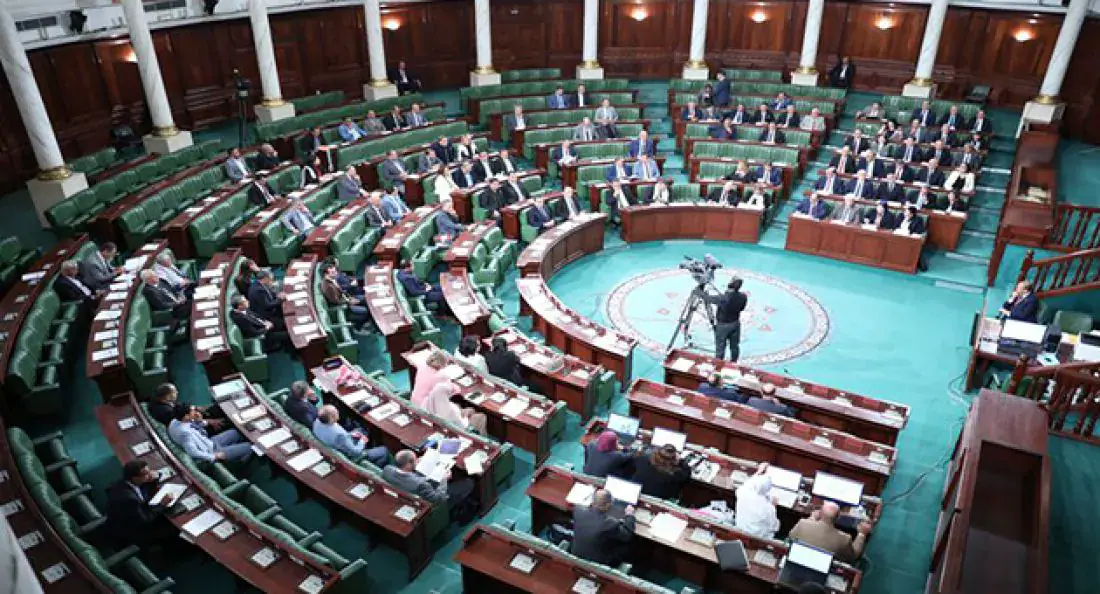
The Tunisian parliament, along with the National Council of Regions and Districts, began discussing the 2027 budget for the Ministry of Higher Education and Scientific Research in a joint session on Monday evening. The proposed budget for higher education and scientific research is approximately 2.484 billion dinars. This includes 1.725 billion dinars for higher education programs, which is a 4% increase from 2026.
The higher education program budget has been allocated 1.725 billion dinars, a 4% increase from 1.666 billion dinars in 2026. This breakdown includes 1.550 billion dinars for rental expenses, a 4.39% increase from 2026. Additionally, 43.112 million dinars have been allocated for operating expenses, 42.307 million dinars for intervention expenses, and 60.120 million dinars for investment expenses, which has decreased by 21%.
The rental expenses are intended to cover the financial implications of salary increases, promotions, and new recruitments. Operating expenses will cover mandatory university expenditures. Intervention expenses include 26.830 million dinars for development projects in scientific and technological universities, enabling them to complete planned infrastructure and equipment projects.
Investment expenses are divided into 51.375 million dinars for ongoing projects and 8.745 million dinars for new investment projects. Key statistics show that 278,789 students are currently enrolled in higher education institutions. The second region has the highest number of students, accounting for 38.9% of the total.
The distribution of students across regions is as follows: the third region accounts for 25.5%, the fourth region for 18.4%, the first region for 9.2%, and the fifth region for 8%. The Tunis region alone has 60,361 students, making up 21.7% of all students. In terms of graduates, 60,237 students graduated from the public sector in the 2025-2026 academic year.
The public sector graduate numbers show that 70.9% are female, and the second region has the highest number of graduates at 38.4%. This region had 23,151 graduates. The strategic goals of the higher education program focus on improving the quality of university education by reviewing programs and curricula.
The program aims to adopt modern pedagogical approaches based on competencies, skills, and innovation. It also seeks to enhance employability and align education with job market requirements and new profession demands. Improving education quality and promoting international university rankings are also priorities.
Key points
- The 2027 budget for Tunisia's higher education and scientific research is 2.484 billion dinars.
- The higher education program budget has increased by 4% from 2026.
- 278,789 students are currently enrolled in higher education institutions in Tunisia.
Reporting sources
- Jawhara FM · Jawhara FM