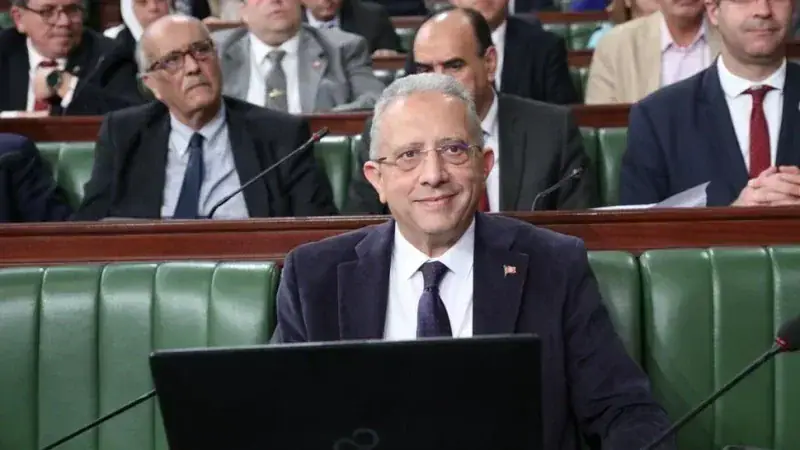
Tunisia's Ministry of Health is set to receive 6.035 billion dinars in the 2027 budget, marking a 9% increase from the 5.548 billion dinars allocated in 2026. This represents an increase of 487 million dinars. The budget was presented by Health Minister Mustapha Ferjani to the Assembly of People's Representatives and the National Council of Regions and Districts.
Minister Ferjani emphasized that the ministry's priorities include promoting health equity, improving the quality of care, and increasing access to healthcare services, particularly in interior regions. He stressed that the challenge goes beyond modernizing hospital infrastructure and mobilizing human resources, but also involves achieving concrete results for citizens.
The results-oriented approach includes increasing the availability of specialist doctors, ensuring regular healthcare services, reducing waiting times, and improving the supply of medication. To achieve these goals, the ministry has created 36 new university services within regional and university hospitals. Additionally, several intensive care units have been renovated and equipped with additional resources.
The renovation and equipment program included the addition of six beds in Bizerte, eight beds in Béja, Nabeul, and Sidi Bouzid, and twelve beds in the Sahloul hospital. The program also involved the development and extension of several emergency services. Furthermore, the intensive care unit at the Trauma and Burns Center is being reinforced and is expected to be operational by the end of 2026.
The Ministry of Health is also working to expand hemodialysis services by launching new units. The goal is to improve patient care, reduce travel requirements, and increase access to healthcare services in regions with limited access. This development is part of the ministry's efforts to address healthcare disparities and improve overall healthcare outcomes.
In related news, over 2,000 doctors gathered in Mahdia for the 9th National Congress on General and Family Medicine. The congress aimed to promote the development of general and family medicine in Tunisia. Additionally, the city of Sfax has launched new specialized consultations via telemedicine, expanding access to healthcare services in several regions.
The Tunisian government has also been working to strengthen its cooperation with Saudi Arabia in the healthcare sector, with a focus on accelerating hospital projects and implementing new medical programs. These initiatives aim to improve healthcare outcomes and increase access to quality healthcare services for Tunisian citizens.
Key points
- The 2027 budget for Tunisia's Ministry of Health has increased by 9% to 6.035 billion dinars.
- The ministry's priorities include promoting health equity and improving the quality of care.
- The ministry has created 36 new university services within regional and university hospitals.
Reporting sources
- Budget 2027 : Le ministère de la Santé bénéficiera de 6,035 milliards de dinars, en hausse de 9 % · Radio Tunis Chaîne Internationale