The Tunisian parliament's finance and budget committees have rejected several articles in the proposed 2027 finance law. These articles aimed to provide tax incentives for solar panels, batteries, and biodegradable products. The committees, comprising members from the Assembly of People's Representatives and the National Council of Regions and Districts, voted against articles 49, 50, and 63 of the bill. The rejected articles focused on reducing customs duties and taxes on imported solar panels and batteries.
The rejection of article 49, which proposed exempting batteries from customs duties, value-added tax, and professional tax, was justified by concerns over the impact on local industries. Tunisia has around 17 battery manufacturing factories, and exempting imported batteries could harm the local industry and lead to job losses. The committees emphasized the need to preserve local value-added production, ensure the quality and safety of imported batteries, and maintain consistency with the 2026 finance law, which granted tax benefits to local manufacturers.
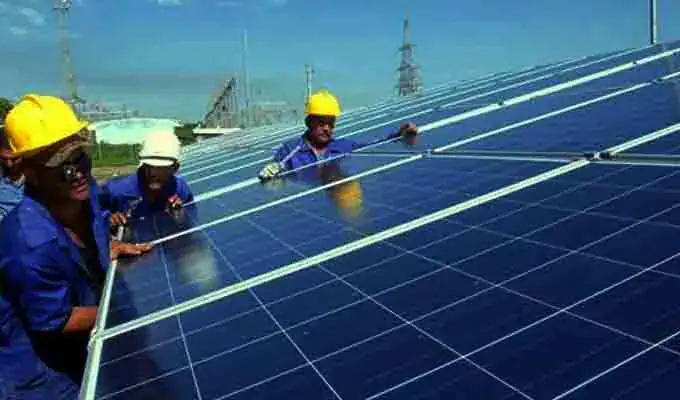
Article 50, which aimed to reduce customs duties on imported solar panels from 30% to 10%, was also rejected. The committees noted that a reduction in customs duties could make solar panels more affordable for consumers but could also affect the competitiveness of local manufacturers. The committees requested a detailed impact study on the costs of production, industrial integration, exports, and employment before considering any changes to the current tax regime.
The rejection of article 63, which sought to impose an environmental tax on biodegradable products, was due to the lack of technical standards and specialized laboratories in Tunisia to verify the conformity and biological characteristics of these products. The representative of the Ministry of Environment explained that biodegradable products require specific industrial composting conditions and source separation. Several deputies expressed concerns that reimposing a tax on biodegradable products would contradict the policy of encouraging ecological alternatives and penalize companies that have invested in biodegradable production.
The committees suggested that instead of providing tax incentives, the government could offer direct subsidies to citizens to install solar equipment. This approach would encourage the adoption of renewable energy sources while minimizing the impact on local industries. The committees also emphasized the need to establish technical standards, control laboratories, and recycling circuits for biodegradable products before imposing any taxes.
The 2027 finance law is being closely watched by various stakeholders, including businesses, investors, and environmental groups. The law's provisions will have a significant impact on Tunisia's economic and environmental policies. The rejection of the articles on solar panels, batteries, and biodegradable products reflects the complex balancing act that policymakers face in promoting economic growth, protecting local industries, and encouraging sustainable practices.
The Tunisian government is expected to continue working on the finance law, taking into account the concerns and suggestions raised by the parliamentary committees. The law is likely to be debated and voted on in the coming weeks. The outcome will have significant implications for Tunisia's economic and environmental future.
Key points
- The Tunisian parliament's finance and budget committees rejected articles promoting solar panels, batteries, and biodegradable products in the 2027 finance law.
- The rejection was due to concerns over the impact on local industries, the need for technical standards and laboratories, and the potential effects on competitiveness and employment.
- The committees suggested alternative approaches, including direct subsidies for solar equipment and the establishment of technical standards and recycling circuits for biodegradable products.