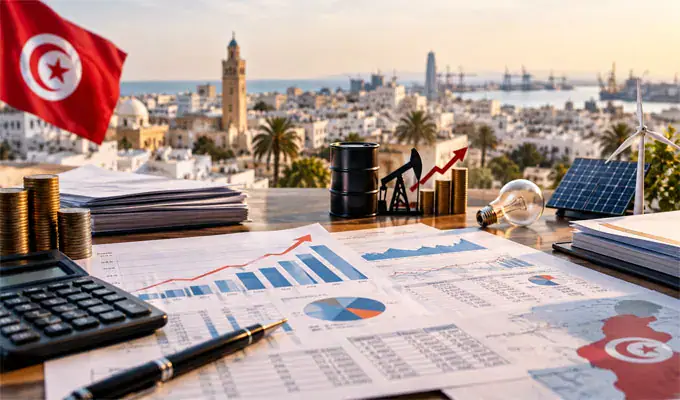
The President of the Finance and Budget Committee of Tunisia's Assembly of People's Representatives, Maher Kettari, emphasized on October 28, 2026, the need for a deeper examination of the economic assumptions and development goals adopted in the 2027 budget. He stressed the importance of ensuring the concrete feasibility of these data, particularly in light of the lack of clear statistics on the country's economic performance in 2026.
Kettari made these remarks during a joint hearing session held at the initiative of the Finance and Budget Committee of the Assembly of People's Representatives and the National Council of Regions and Districts. The session was dedicated to discussing the 2027 economic budget. He highlighted that there are no available figures for 2026 to inform the planning for 2027, underscoring the necessity of relying on precise and updated indicators to evaluate economic results.
The committee head also emphasized the importance of assessing progress toward set objectives and identifying any discrepancies between initial estimates and actual results. This assessment is crucial for determining the feasibility of growth and investment projections. Kettari pointed out the need to evaluate the contribution of private and foreign investment to economic activity, the expansion of the productive sector, and the creation of wealth and new jobs.
To achieve these goals, Kettari stressed the need to mobilize appropriate mechanisms to improve the business climate. This improvement is essential to regain the trust of private and foreign investors in the economic environment. He also discussed the challenges related to enhancing external balances, particularly controlling the trade deficit, and combating unemployment to stimulate economic growth.
The 2027 economic budget is under intense scrutiny as Tunisia faces significant economic challenges. The country's ability to manage its trade deficit and reduce unemployment will be critical in determining the success of the budget. Lawmakers are calling for a more detailed analysis of the budget's assumptions and goals to ensure that they are realistic and achievable.
Kettari's comments reflect the concerns of many Tunisians who are eager to see the country's economy grow and improve. The 2027 economic budget is seen as a crucial step in achieving this goal. By carefully examining the budget's assumptions and goals, lawmakers hope to ensure that Tunisia's economy is on a path to sustainable growth and development.
The discussion of the 2027 economic budget is ongoing, with lawmakers and experts weighing in on its potential impact on the country's economy. As Tunisia continues to navigate its economic challenges, the 2027 budget is expected to play a significant role in shaping the country's economic future.
Key points
- The 2027 economic budget is under scrutiny amid concerns over unemployment and trade deficit.
- Lawmakers are calling for a more thorough analysis of economic assumptions and development goals.
- The budget's success will depend on Tunisia's ability to manage its trade deficit and reduce unemployment.