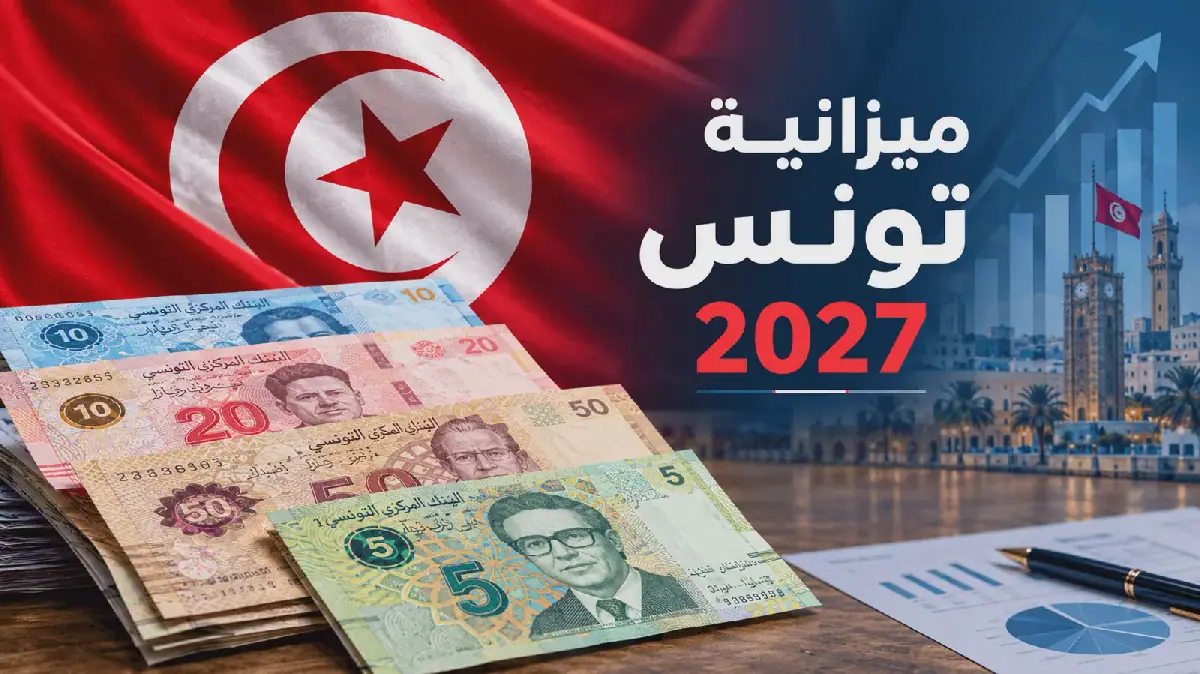
Tunisia's 2027 budget plan has been making headlines, with economist Safwan Ben Issa weighing in on the country's financial situation. The budget plan estimates a total size of 82.4 billion dinars, which includes not only expenses but also debt repayment and financing needs. Ben Issa emphasizes the importance of distinguishing between the total budget size and actual state expenditures, as well as self-financing and financing needs.
According to Ben Issa, the total budget size of 82.4 billion dinars includes 68.895 billion dinars in state expenditures and 54.280 billion dinars in total revenues. Of the total revenues, 49.6 billion dinars come from tax revenues, 4.33 billion dinars from non-tax revenues, and 350 million dinars from aid. He notes that self-financing, mainly from tax and non-tax revenues, covers around 78.3% of budget expenditures.
Ben Issa stresses the need to differentiate between the budget deficit and total financing needs. The budget deficit is estimated at 14.615 billion dinars, while total financing needs stand at 28.122 billion dinars. He explains that the difference arises from the state's need to borrow not only to cover the budget deficit but also to repay previous debts and provide loans and net advances to the treasury.
The economist highlights that a significant portion of new borrowing is allocated to refinancing existing debts, rather than solely financing additional expenditures. He believes that evaluating the debt situation should not be limited to the size of borrowing but should also consider its cost, maturity, and distribution between internal and external financing.
Ben Issa analyzes the composition of public expenditures, noting that the wage bill and subsidy expenditures account for around 57% of total budget expenditures. He argues that this significant share of current expenditures limits the authorities' room for maneuver, particularly in enhancing public investment, infrastructure development, and improving public services.
The 2027 budget plan programs internal borrowing of 19.845 billion dinars, compared to 6.877 billion dinars in external borrowing. Ben Issa notes that increased reliance on internal borrowing may reduce exposure to exchange rate risks associated with external debt but raises concerns about crowding out private sector access to available financial resources.
Ben Issa emphasizes that achieving a 3.1% economic growth rate is crucial in improving financial balances, as growth expands the tax base and increases state self-financing. He believes that Tunisia's long-term economic prospects depend on promoting investment, improving productivity, and creating jobs, which can be achieved through a combination of economic policies and reforms.
Key points
- Economist Safwan Ben Issa emphasizes the need for a clear understanding of Tunisia's 2027 budget plan and its implications for the country's economy.
- The budget plan's focus on internal borrowing and debt repayment has raised concerns about crowding out private sector access to financial resources.
- Achieving a 3.1% economic growth rate is crucial in improving Tunisia's financial balances and promoting sustainable economic development.