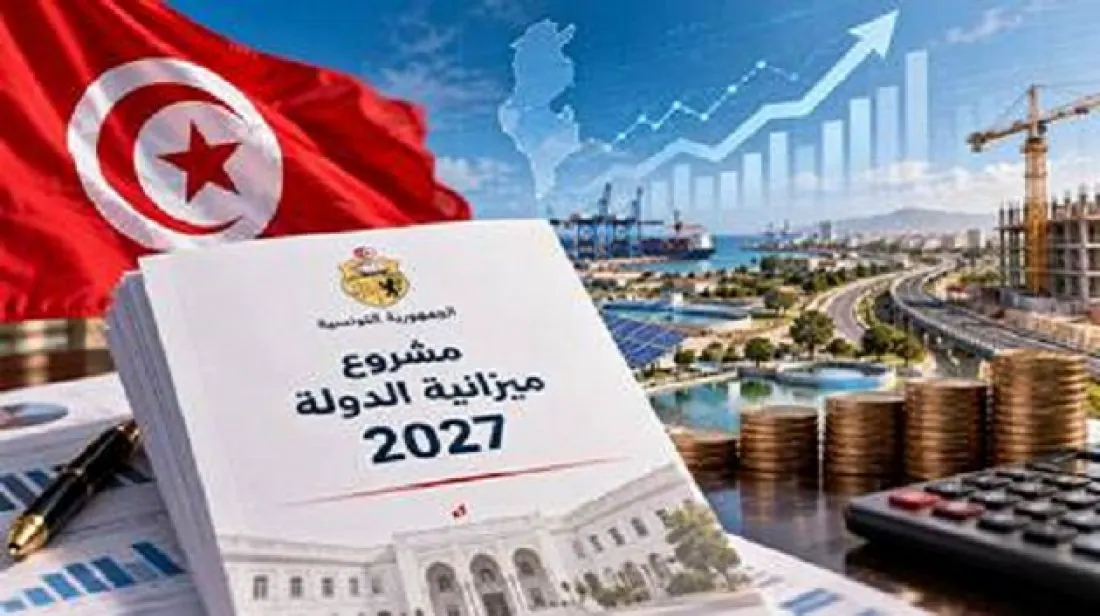
The Tunisian government has released its 2027 budget plan, which focuses on sustaining economic growth, maintaining exchange rate stability, and controlling inflation. The plan aims to accelerate project implementation to boost economic and social returns on public investments. According to the Finance Ministry, the budget is based on a global economic outlook of 3.4% growth in 2027, up from 3% in 2026, and a 1.2% growth in the Eurozone, up from 0.9%.
The budget plan assumes a decline in global inflation to 3.9% and an average crude oil price of $75-80 per barrel. The government aims to reduce the budget deficit and increase non-tax revenues. The plan also focuses on enhancing transparency and governance in public financial management. This includes implementing a digital system for tax and financial management, increasing non-tax revenues, and promoting public-private partnerships.
The 2027 budget is part of Tunisia's 2026-2030 development plan, which aims to drive economic growth and social development. The budget plan is based on a presidential decree issued in April 2026, which sets out the government's priorities for economic and social development. The decree emphasizes the need for a balanced approach to economic growth, social development, and financial sustainability.
The government aims to prioritize public investment in key sectors, including infrastructure, industry, and services. This includes projects to develop industrial zones, improve transportation networks, and provide basic services. The goal is to improve the business climate, attract investment, and drive economic growth.
The Finance Ministry is currently preparing the 2027 budget and finance bills, which will be submitted to the Council of Ministers for discussion and then to the Parliament for approval. The budget plan must be approved by the Parliament by October 15, as per the constitutional deadline.
The 2027 budget plan reflects the government's commitment to economic reform and investment in key sectors. The plan aims to promote economic growth, improve living standards, and enhance Tunisia's competitiveness. The government will focus on implementing the budget plan and monitoring its progress to ensure that it achieves its objectives.
The budget plan also focuses on supporting public institutions and enhancing their competitiveness. This includes measures to improve the performance of public enterprises and promote their contribution to economic growth and social development.
Key points
- The 2027 budget plan aims to improve economic growth, control inflation, and enhance public investment.
- The plan assumes a decline in global inflation to 3.9% and an average crude oil price of $75-80 per barrel.
- The budget plan is part of Tunisia's 2026-2030 development plan, which aims to drive economic growth and social development.