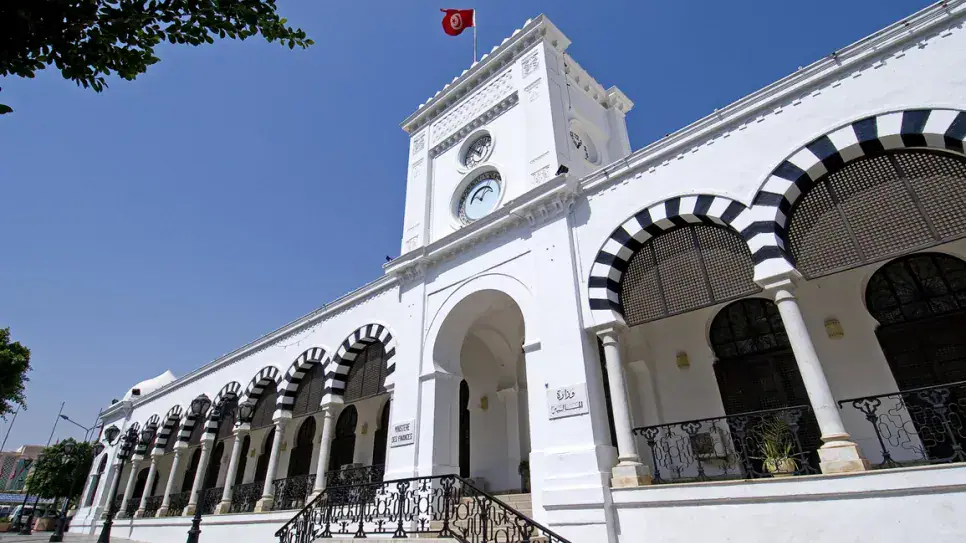
The Tunisian Parliament began discussing the 2027 budget for the Ministry of Finance in a joint session between the Assembly of People's Representatives and the National Council for Regions and Districts. The budget is estimated at 1668.728 million dinars, considering self-financing resources of public institutions. This represents an increase from 1523.044 million dinars in 2026 and 1380.050 million dinars in 2025.
The budget for 2027 is part of a medium-term expenditure framework for 2027-2029, with estimated budgets of 1692.128 million dinars for 2028 and 1802.128 million dinars for 2029. The 2027 budget is allocated across six main programs: Customs, Taxation, Public Accounting, Budget Services, Public Debt, and Leadership and Support. These programs have specific objectives, such as facilitating trade, improving resource mobilization, and enhancing public finance management.
According to the program-based budget, 654.167 million dinars will be allocated to the Customs program, 355.010 million dinars to Taxation, and 495.582 million dinars to Public Accounting. The remaining allocations include 15.885 million dinars for Budget Services, 4.115 million dinars for Public Debt, and 143.969 million dinars for Leadership and Support. The budget also outlines projected expenditures, including 1338.835 million dinars for rent and 129.038 million dinars for operating expenses.
The Ministry of Finance's 2027 budget aims to promote sustainable public finances, maintain economic and financial balances, and improve resource mobilization. The strategic objectives also include enhancing tax fairness, combating tax evasion, and integrating the informal economy. Furthermore, the budget seeks to improve the efficiency of public expenditure management and the quality of public investment.
The budget for the Ministry of Finance is structured around six main programs, each with specific objectives and targets. The Customs program aims to facilitate trade, support investment, and combat smuggling and fraud. The Taxation program focuses on expanding the tax base, combating tax evasion, and developing risk-based monitoring. The Public Accounting program is responsible for mobilizing state and local resources, executing expenditures, and preparing reliable state accounts.
The 2027 budget for the Ministry of Finance reflects the government's commitment to enhancing public finance management and promoting economic growth. The budget's focus on sustainability, efficiency, and effectiveness is expected to contribute to improved economic outcomes and better public services. The Ministry's strategic objectives align with the government's broader economic development goals.
Key priorities for the Ministry of Finance in 2027 include enhancing tax compliance, improving public expenditure management, and promoting transparency and accountability. The budget provides a framework for achieving these objectives and supporting Tunisia's economic development.
Key points
- The 2027 budget for Tunisia's Ministry of Finance is estimated at 1668.7 million dinars.
- The budget focuses on enhancing public finance sustainability, improving resource mobilization, and promoting economic growth.
- The Ministry's strategic objectives include enhancing tax fairness, combating tax evasion, and integrating the informal economy.