Tunisia's government has outlined its economic and financial plans for 2027, with a focus on enhancing energy security and diversifying production sources. Prime Minister Sara Al-Zafrani Al-Zanzeri stated that the country is working to improve oil production and resume exploration and development activities. This comes after years of decline, with the goal of supporting national resources and boosting local production. The government expects oil production to improve in 2027 with the start of production at the "Cosmos" field.
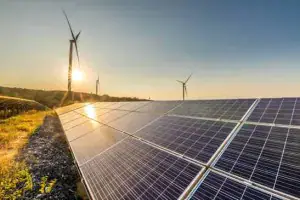
In terms of energy transition, Al-Zafrani Al-Zanzeri announced that three solar energy projects began operating in the first half of 2026, with a total production capacity of 200 megawatts. Additionally, efforts are underway to accelerate the construction of solar power plants in Sidi Bouzid, Gafsa, and Gabes, with a combined capacity of around 600 megawatts. The government has also announced a new round of licensing for solar energy projects with a total capacity of approximately 455 megawatts.
Tunisia is also participating in regional projects, including the Southern Hydrogen Corridor, which will allow the country to leverage its location and energy infrastructure through partnerships based on joint investment, technology transfer, and development of national added value. Furthermore, the country is continuing to work on the submarine electrical interconnection project between Tunisia and Italy.
To address peak demand periods, Al-Zafrani Al-Zanzeri emphasized that the government has put in place a comprehensive plan to enhance available electricity capacity and improve the performance of existing production units. This includes the restart of the first unit at the Borj El Amri power plant with a capacity of 312 megawatts in September 2026, as well as plans to expand the plant with a third gas turbine with a capacity of 300 megawatts.
The government's plans also include expanding the Radès (B) power plant and converting it into a dual-cycle power plant with a production capacity of between 650 and 750 megawatts. Another project involves building the Sousse (H) power plant to produce electricity in a dual cycle, with a capacity of between 400 and 650 megawatts. These projects aim to improve the performance of existing power plants and ensure a stable energy supply.
In addition to these projects, the government is working to update the electrical infrastructure by continuing the national smart grid project, which aims to digitize distribution networks and improve the quality of services provided to customers. This includes the widespread adoption of smart meters. The government is also implementing incentive measures to support the energy transition, including reducing customs duties on imported fuel.
The 2027 budget plans reflect Tunisia's commitment to enhancing its energy sovereignty, diversifying production sources, and developing infrastructure to support the growing demand for energy. The government aims to address the challenges associated with supply and fluctuations in international markets. Key initiatives include increasing oil production, accelerating renewable energy projects, and modernizing the electrical infrastructure.
Key points
- Tunisia aims to boost oil production and accelerate renewable energy projects as part of its 2027 budget plans.
- The government expects oil production to improve in 2027 with the start of production at the "Cosmos" field.
- Tunisia is participating in regional projects, including the Southern Hydrogen Corridor and the submarine electrical interconnection project with Italy.