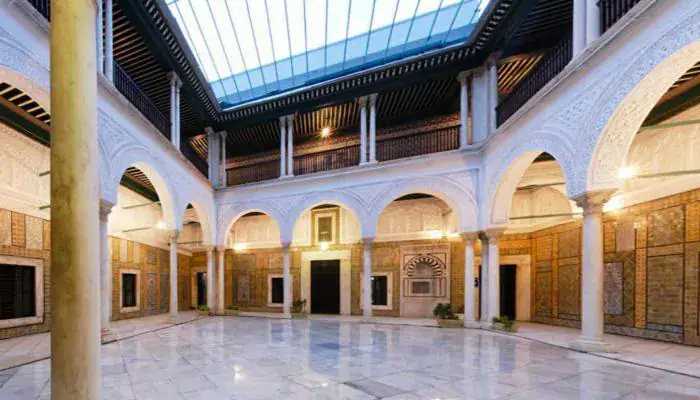
In a significant cultural achievement, Tunisia has successfully registered two historic sites, Dar Hussein palace and Husseinite Tombs, with the Arab League's list of architectural and urban heritage. This recognition is a testament to the country's rich cultural heritage and its efforts to preserve and promote its historical landmarks. The registration was announced during the 11th meeting of the Arab League's Observatory for Architectural and Urban Heritage, held in Cairo from October 25 to 27, 2026.
The Dar Hussein palace, which houses the National Heritage Institute, is a prime example of traditional Tunisian architecture, showcasing the country's rich cultural and artistic heritage. The palace's unique architectural and decorative features reflect the country's history and cultural significance. Similarly, the Husseinite Tombs are a historic and cultural landmark that document an important period in Tunisia's history, highlighting the country's architectural and artistic achievements.
The registration of these sites with the Arab League's cultural heritage list is a significant achievement for Tunisia, as it recognizes the country's cultural and historical significance in the Arab world. This recognition also underscores the importance of preserving and promoting Tunisia's cultural heritage, not only for future generations but also for the country's economic and social development.
The Ministry of Cultural Affairs has emphasized that this registration is not only a recognition of the cultural significance of these sites but also an opportunity to promote Tunisia's cultural heritage and encourage cooperation and exchange of expertise with other Arab countries. The ministry has also highlighted the importance of preserving and promoting Tunisia's cultural heritage, particularly in the context of sustainable development and tourism.
The registration of Dar Hussein palace and Husseinite Tombs with the Arab League's cultural heritage list is also expected to boost cultural tourism in Tunisia, promoting the country's rich cultural heritage and unique architectural styles. This recognition is also seen as a testament to the country's efforts to preserve its cultural heritage and promote its cultural significance in the Arab world.
The National Heritage Institute has played a crucial role in the registration of these sites, demonstrating its commitment to preserving and promoting Tunisia's cultural heritage. The institute's efforts have been instrumental in documenting and promoting Tunisia's cultural and historical landmarks, both domestically and internationally.
The recognition of Dar Hussein palace and Husseinite Tombs with the Arab League's cultural heritage list is a significant achievement for Tunisia, highlighting the country's rich cultural heritage and its efforts to preserve and promote its historical landmarks. This recognition is also expected to promote cultural cooperation and exchange between Tunisia and other Arab countries, further solidifying the country's position as a cultural and historical hub in the region.
Key points
- Tunisia registers two historic sites with Arab League's cultural heritage list
- Recognition promotes cultural heritage and encourages cooperation with Arab countries
- Registration expected to boost cultural tourism and promote sustainable development