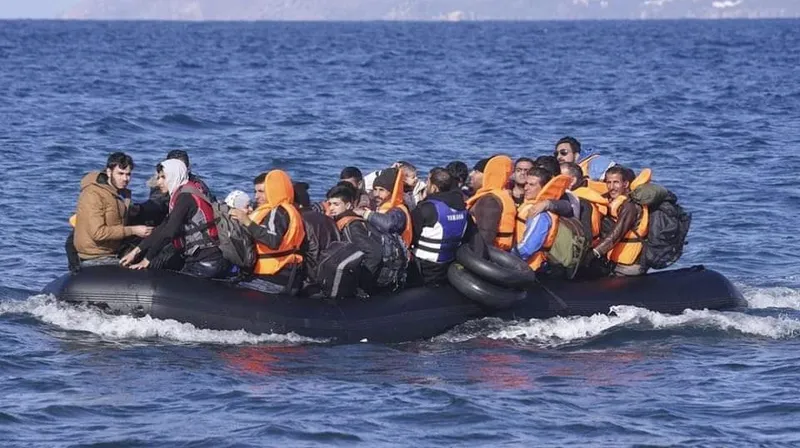
The 81st session of the United Nations General Assembly, held from September 22 to 29, has brought together world leaders to address pressing global issues. Amidst the high-level meetings, Tunisia's Foreign Minister engaged in several bilateral and multilateral discussions with counterparts from friendly and brotherly countries, as well as representatives from international organizations. These interactions focused on topics of mutual interest, including irregular migration.
On September 22, the head of Tunisia's delegation met with the Director-General of the International Organization for Migration (IOM) to assess cooperation relations between Tunisia and the IOM. They reviewed the results of the voluntary return and reintegration mechanism, which has facilitated the voluntary return of 5,077 irregular migrants since January 1, 2026. This brings the total number of beneficiaries to 25,351 since the mechanism's inception.
The voluntary return and reintegration mechanism has been instrumental in supporting irregular migrants. In addition to those who have returned through this mechanism, many others have opted for voluntary return via regular commercial flights. Tunisia and the IOM have emphasized the importance of sustaining coordination among all parties to accelerate voluntary returns and ensure sustainable reintegration in countries of origin.
Tunisia's Foreign Minister has reiterated the country's commitment to a comprehensive approach to irregular migration. This approach prioritizes shared responsibility, respect for state sovereignty, human dignity, and human rights. It also emphasizes the need to combat human trafficking networks and address the root causes of irregular migration. The Minister stressed that Tunisia will not serve as a transit or settlement country for irregular migrants.
The comprehensive approach advocated by Tunisia seeks to strike a balance between combating irregular migration and promoting regular migration channels. The Minister highlighted the need for a more effective response to irregular migration, one that acknowledges the interconnectedness of global challenges. This approach has been welcomed by the international community as a crucial step towards addressing the complexities of irregular migration.
Tunisia's stance on irregular migration is rooted in its history and geography. The country does not share borders with sub-Saharan countries, which are the primary countries of origin for irregular migrants. Nevertheless, Tunisia has consistently demonstrated its commitment to addressing the issue through cooperation with international organizations and countries of origin.
The discussions at the UN General Assembly have underscored the need for a collective response to irregular migration. Tunisia's emphasis on a comprehensive approach has resonated with the international community, and the country's experience in addressing irregular migration has been recognized as a valuable contribution to the global dialogue on this issue.
Key points
- Tunisia reaffirms its commitment to a comprehensive approach in combating irregular migration, emphasizing shared responsibility and respect for state sovereignty and human rights.