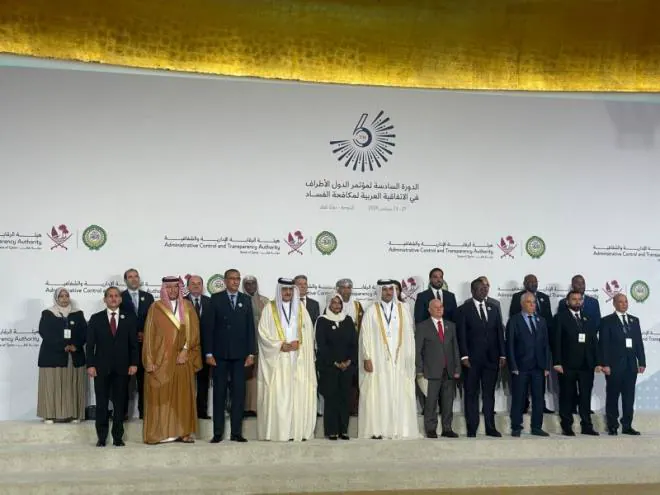
Tunisia's top administrative and financial watchdog, the Higher Authority for Administrative and Financial Control, has reaffirmed the country's commitment to combating corruption. The authority's head, Imad Al-Hazqi, made the statement during the sixth session of the Conference of States Parties to the Arab Convention against Corruption, held in Doha from September 21 to 23, 2026. Al-Hazqi emphasized that Tunisia's efforts to combat corruption involve continuous work to enhance law enforcement and promote values of integrity in both the public and private sectors.
The Tunisian government's efforts to combat corruption include reviewing and revising several legislative and regulatory texts, simplifying administrative procedures and paths, and digitizing public services. The goal is to reduce the scope for human intervention and promote transparency. According to Al-Hazqi, these efforts also involve supporting oversight structures, activating accountability and auditing mechanisms at all levels of government, and combating the culture of impunity.
The Higher Authority for Administrative and Financial Control is also working to promote a culture of integrity and awareness of the risks of corruption in society. This includes reviving the path of judicial reconciliation and ensuring that those involved in corruption cases are held accountable, regardless of their position or status. Al-Hazqi stressed the importance of international cooperation in combating corruption, particularly through the exchange of experiences and best practices.
The Arab Convention against Corruption aims to promote cooperation and coordination among Arab states in the fight against corruption. Al-Hazqi emphasized the need for Arab countries to work together to develop effective mechanisms for combating corruption, including the implementation of the United Nations Convention against Corruption. He also highlighted the importance of facilitating the recovery of stolen assets.
On the sidelines of the conference, Al-Hazqi held bilateral talks with his Arab counterparts, focusing on ways to enhance bilateral and Arab cooperation in preventing and combating corruption. The discussions also touched on the challenges and opportunities presented by modern digital technologies and artificial intelligence.
The Conference of States Parties to the Arab Convention against Corruption brought together representatives from Arab countries to discuss ways to enhance cooperation and coordination in combating corruption. The conference aimed to promote the implementation of the convention and to develop effective strategies for preventing and combating corruption.
Tunisia's commitment to combating corruption has been reaffirmed at a time when the country is facing several challenges, including corruption and economic instability. The government's efforts to promote transparency and accountability are seen as crucial in addressing these challenges and promoting sustainable development.
Key points
- Tunisia's top watchdog reaffirms commitment to combating corruption
- The country is working to enhance law enforcement and promote integrity in the public and private sectors
- International cooperation is seen as crucial in the fight against corruption