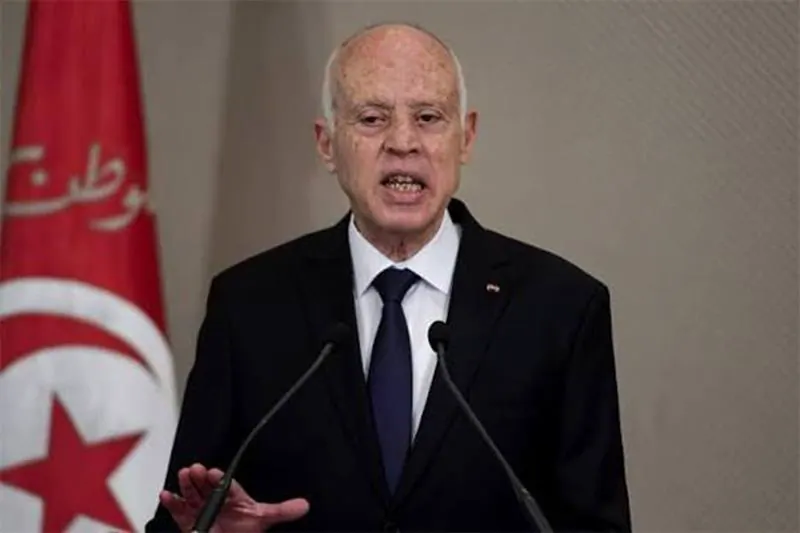
Tunisian President Kais Saied has softened a widely criticized cybercrime decree by eliminating a five-year prison sentence for disseminating "fake news". The decree, introduced in 2022, allowed for sentences of up to five years in prison and fines of up to 50,000 dinars ($17,000) for those using information and communications systems to spread false information. Rights groups have regularly condemned the decree, claiming it has been used to prosecute dissenting voices.
The revised decree reduces the maximum sentence to six months in prison for repeat offenders and eliminates prison time for first-time offenders. Reporters Without Borders (RSF) has welcomed the change, but noted that it is not enough to make the text compliant with international standards on press freedom. RSF regional director for North Africa Oussama Bouagila stated that the revision is a step in the right direction, but more work is needed.
Several public figures have been prosecuted under the law, including lawyer and commentator Sonia Dahmani, former judge Ahmed Souab, party leader Abir Moussi, and Franco-Tunisian journalist Mourad Zeghidi. These cases have raised concerns about the rollback of freedoms in Tunisia since President Saied's power grab in 2021. Tunisia was the only democracy to emerge from the Arab Spring demonstrations of 2011.
Rights groups have criticized the decree for its potential to stifle critical voices and undermine press freedom. The original decree had provided for increased sentences if the offence targeted a public official. The revised decree still allows for fines and prison sentences, but with reduced penalties.
President Saied's move has been seen as a response to criticism from rights groups and international organizations. The Tunisian government has faced pressure to reform the decree and ensure that it complies with international human rights standards. The revision has been welcomed as a step towards greater press freedom, but concerns remain about the decree's impact on critical voices.
The cybercrime decree is one of several issues that have raised concerns about Tunisia's democratic trajectory. Since President Saied's power grab in 2021, rights groups have criticized a major rollback of freedoms. The situation has sparked concerns about the country's commitment to democracy and human rights.
The revised decree is a significant development in Tunisia's ongoing debate about press freedom and human rights. While the change has been welcomed, concerns remain about the decree's impact on critical voices and the country's democratic trajectory. The international community will likely continue to monitor the situation closely.
Key points
- Tunisian President Kais Saied revises cybercrime decree to scrap 5-year prison sentence for spreading "fake news".
- Revised decree reduces maximum sentence to six months in prison for repeat offenders and eliminates prison time for first-time offenders.
- Rights groups welcome the change but express concerns that the decree still falls short of international standards on press freedom.