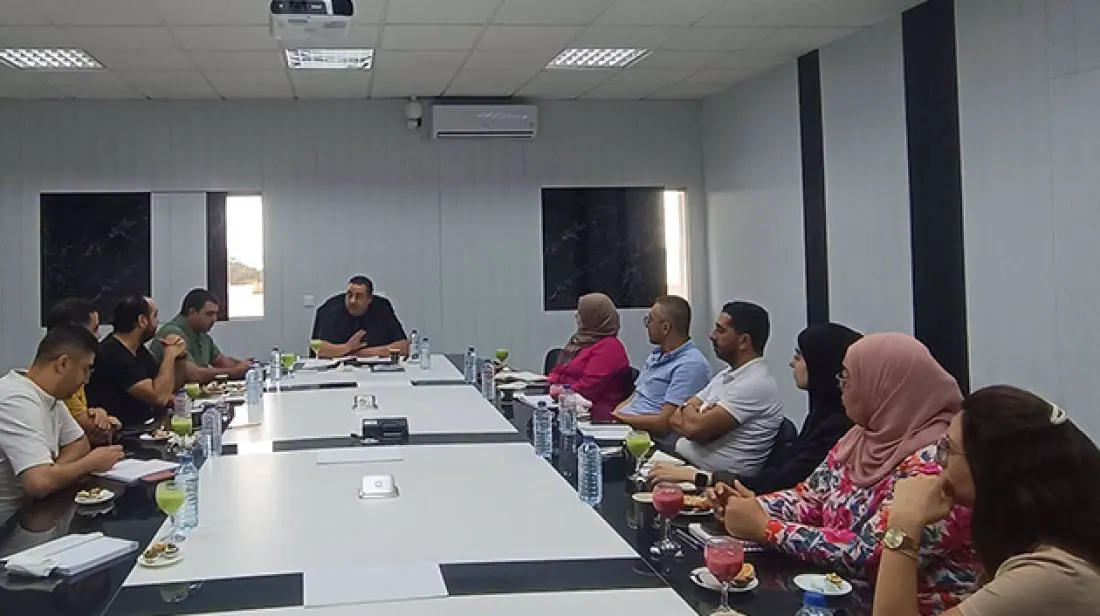
Tunisia is preparing to present its health monitoring and control programs for aquaculture products to the European Union's Food and Veterinary Office (OAV) during a visit scheduled for November 2026. The visit is crucial for the sector, as the European market accounts for around 50% of the total value of Tunisian aquaculture exports. A working session was held to review preparations for the visit, focusing on the readiness of aquaculture institutions, particularly in terms of health safety systems.
The working session, attended by the General Director of the Joint Professional Association for Marine Fishing Products and several institutions active in aquaculture, aimed to ensure that Tunisian institutions meet the necessary health and technical requirements for exporting to the European market. The meeting also discussed the association's program to establish the "ASC" global sustainability and quality label, which can enhance the competitiveness of Tunisian products and open up new markets.
The ASC label, developed in partnership with the Swiss Cooperation project SIPPO, aims to promote sustainable and responsible aquaculture practices. The label's guidelines were updated in 2025 to reflect new technical, health, and environmental requirements. The meeting emphasized the need to continue preparing for an information day for aquaculture product exporters to raise awareness about the ASC label and its requirements.
The aquaculture sector in Tunisia faces several challenges, and the meeting provided a platform for stakeholders to discuss solutions to support institutions and improve their ability to meet health and technical requirements. The sector's exports have shown growth, with a 2.9% increase in quantity and 1.9% in value during the first half of 2026 compared to the same period in 2025.
According to the General Directorate of Statistics, Tunisian aquaculture exports reached 14,000 tons worth 329 million dinars during the first half of 2026, up from 13,600 tons worth 323 million dinars in the same period of 2025. The main exported products were fish, followed by canned and semi-canned products, and crustaceans. Italy, Spain, Libya, and Algeria were the top destinations for Tunisian aquaculture exports.
The meeting concluded with a call for continued coordination among stakeholders to ensure the sector's readiness for the upcoming EU visit and to maintain access to international markets for Tunisian aquaculture products. The sector's growth and competitiveness depend on its ability to meet international health and technical standards.
The Tunisian government is working to support the aquaculture sector, which has shown resilience and growth in recent years. The sector's development is crucial for the country's economy, and efforts to enhance its competitiveness and sustainability will continue to be a priority.
Key points
- The European market accounts for around 50% of the total value of Tunisian aquaculture exports.
- Tunisia is preparing to present its health monitoring and control programs for aquaculture products to the European Union's Food and Veterinary Office (OAV) during a visit scheduled for November 2026.
- The sector's exports have shown growth, with a 2.9% increase in quantity and 1.9% in value during the first half of 2026 compared to the same period in 2025.