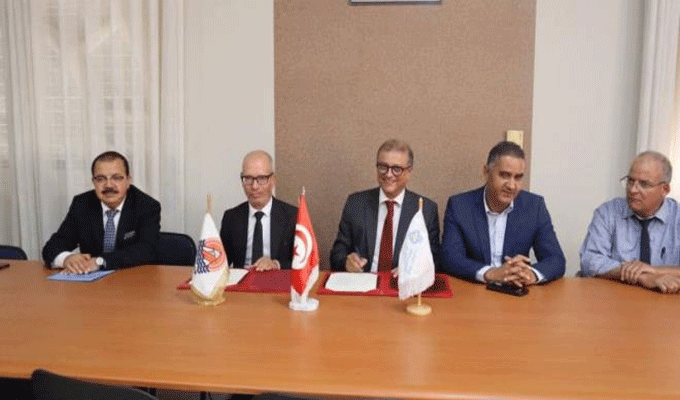
Tunisia has taken a step towards electric mobility with the delivery of five electric vehicles to the municipalities of Sfax and Djerba. The vehicles were handed over on October 8 and 9, 2026, and mark the beginning of a program aimed at reducing municipal costs and promoting environmentally friendly transportation. The program is being implemented by the National Agency for Energy Management (ANME) in partnership with the United Nations Industrial Development Organization (ONUDI) and funded by the Global Environment Facility.
The municipalities of Sfax and Djerba are the first to benefit from the program, with Sfax receiving two electric vehicles and Djerba's municipalities of Ajim, Houmt Souk, and Midoun each receiving one vehicle. The program plans to expand to other municipalities, including Bizerte, which will receive electric cars and motorcycles. A total of 75 electric motorcycles will be provided to Sfax, while six electric utility vehicles will be distributed among the three municipalities of Djerba.
The electric mobility program is designed to reduce municipal costs, particularly those related to fuel and vehicle maintenance. However, it remains to be seen whether the switch to electric vehicles will result in significant cost savings. To evaluate the program's impact, a comparison of the total cost of ownership of electric and thermal vehicles will be necessary, taking into account factors such as purchase price, energy expenses, maintenance, and infrastructure costs.
The program also includes the installation of fast-charging stations powered by photovoltaic systems in the pilot municipalities. This infrastructure is crucial to ensuring the regular use of electric vehicles. The deployment of these charging stations will be an essential element in the program's success and will help to reduce greenhouse gas emissions.
The ANME and the Ministry of Environment designed the program, which is being implemented in partnership with ONUDI and funded by the Global Environment Facility. The program's success will depend on its ability to demonstrate the economic benefits of electric mobility for municipalities. If the program is successful, it could lead to a wider rollout of electric vehicles in Tunisian municipalities.
The municipalities of Sfax and Djerba will play a key role in testing the program's effectiveness. The results of the program will be closely monitored, and the data collected will be used to evaluate the impact of electric mobility on municipal costs. This information will be essential in determining whether the program should be expanded to other municipalities.
The introduction of electric mobility in Tunisia is part of a broader effort to promote sustainable development and reduce the country's environmental footprint. The program is also expected to contribute to the country's economic growth and development by reducing municipal costs and promoting the use of clean energy. The program's success will depend on the continued support of the government and international partners.
Key points
- The program aims to reduce municipal costs and promote environmentally friendly transportation in Tunisia.
- The municipalities of Sfax and Djerba are the first to benefit from the program.
- The program's success will depend on its ability to demonstrate the economic benefits of electric mobility for municipalities.