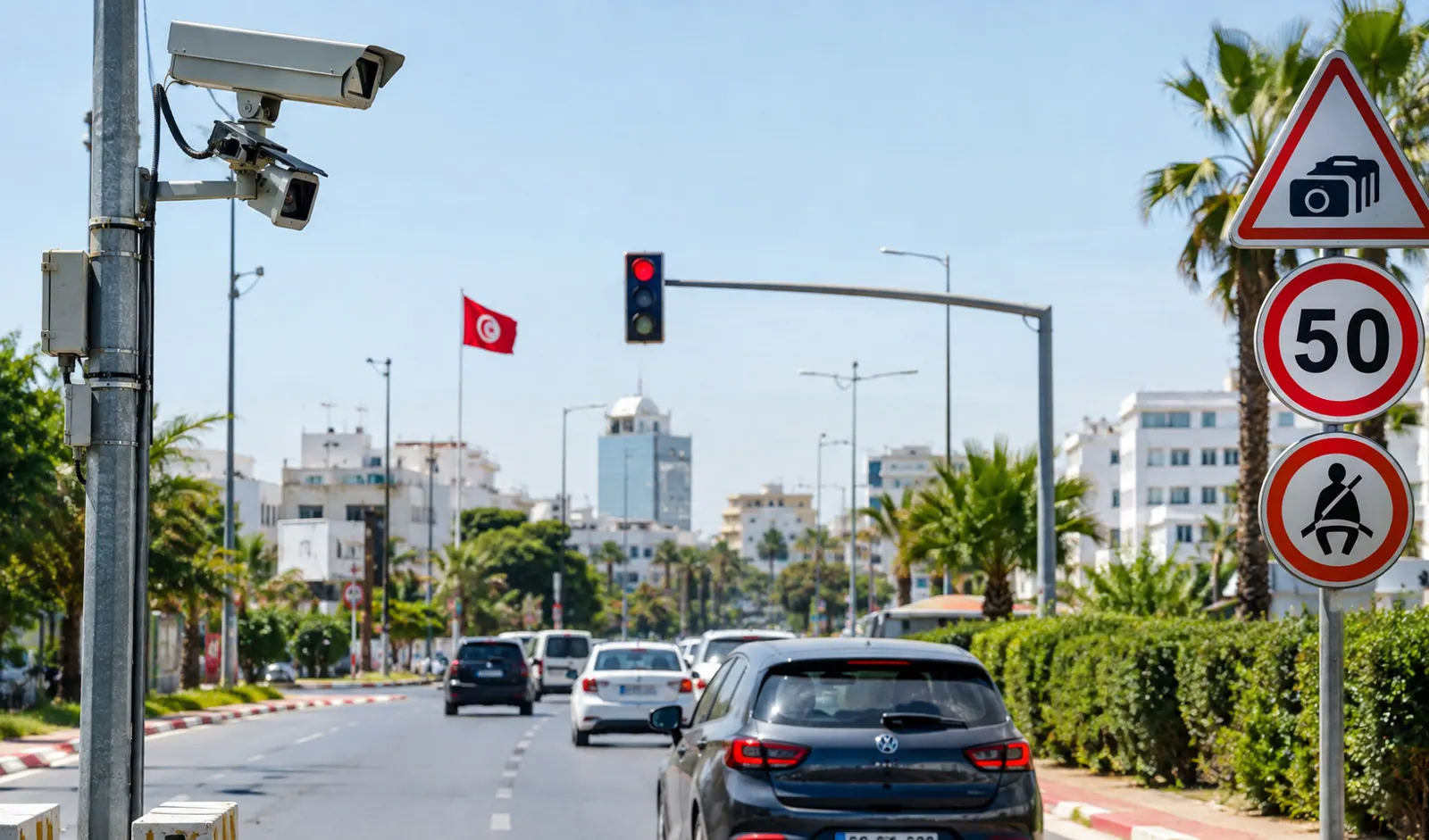
The Tunisian government is preparing to bolster road safety measures with the introduction of new equipment and cameras. However, their deployment is not yet imminent as several regulatory texts must first complete their administrative process and be published. The National Road Safety Council plans to acquire equipment and cameras after the adoption and publication of the necessary regulatory texts. These devices will be used to detect infractions such as running a red light, using a phone while driving, not wearing a helmet, and not wearing a seatbelt.
The proposed changes go beyond the installation of cameras, encompassing reforms to the Road Code, the introduction of a points-based driving license system, and updated regulations regarding drunk driving. For drivers, these projects must be distinguished from rules that have already come into effect. The challenge will be to monitor their adoption and publication before determining their practical consequences. The changes are part of a broader strategy to improve road safety.
The new measures are part of Tunisia's National Road Safety Strategy 2025-2034, which includes 84 programs and 168 operational projects. One of the primary objectives is to reduce accidents by 20% by the end of 2027 compared to 2023. In the long term, the strategy aims to decrease accidents by 50% by 2034. These targets describe policy objectives rather than achieved results.
The strategy involves not only technological upgrades but also a comprehensive review of existing traffic laws and regulations. The introduction of a points-based driving license system is expected to encourage safer driving practices. Additionally, the updated Road Code will likely include stricter penalties for infractions such as speeding and reckless driving.
According to the information provided, four specific infractions will be targeted by the new equipment: running a red light, using a phone while driving, not wearing a helmet, and not wearing a seatbelt. The effective deployment of these measures will depend on the timely completion of the regulatory process and the acquisition of the necessary equipment.
The next milestone in the process will be the regulatory stage, involving the adoption and publication of the necessary texts, followed by the acquisition and effective deployment of the equipment. It is at this point that motorists will be able to gauge the practical impact of the new system. The government has emphasized that the proposed changes are designed to enhance road safety, but their success will depend on effective implementation.
The new road safety measures are part of a broader effort to improve public safety and reduce the number of accidents on Tunisian roads. The government has set ambitious targets for reducing accidents, and the success of these measures will be closely monitored. The introduction of new cameras and regulations is expected to contribute significantly to this effort, but their effectiveness will depend on various factors, including public awareness and cooperation.
Key points
- The new road safety strategy aims to reduce accidents by 20% by the end of 2027 and 50% by 2034.
- The strategy includes 84 programs and 168 operational projects to enhance road safety.
- The introduction of a points-based driving license system and updated traffic laws are key components of the new strategy.