Tunisia is seeking to mobilize approximately $55 billion, or around 164 billion dinars, to finance its nationally determined contributions (NDCs) for 2026-2035. This effort aims to address climate change and implement the country's transition to a more sustainable economy. The funds will be crucial in supporting Tunisia's goals to reduce greenhouse gas emissions and adapt to the impacts of climate change.
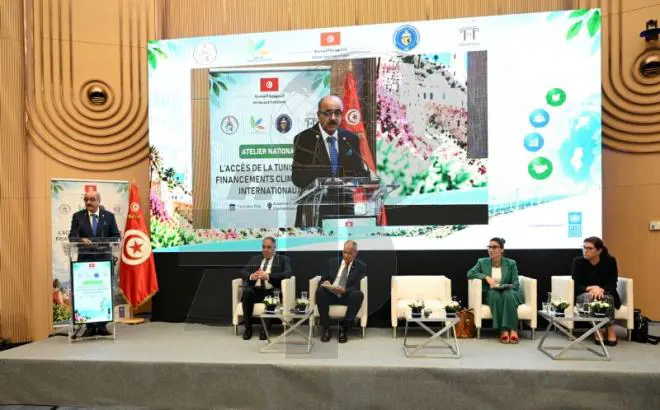
A national workshop was held in Tunis to discuss ways to accelerate Tunisia's access to climate finance and mobilize necessary resources. The event, organized by the ministries of environment, finance, economy, and planning, in partnership with the United Nations Development Programme (UNDP), brought together several international partners. These partners include the German Development Cooperation, the Japanese International Cooperation Agency, the French Development Agency, the German Development Bank, and the European Bank for Reconstruction and Development.
The workshop aimed to enhance coordination among various stakeholders and partners, identifying mechanisms to mobilize more resources for Tunisia's climate and development priorities. The country's efforts to address climate change are critical, as the issue is no longer just an environmental challenge but also a threat to food, water, and energy security. Minister of Foreign Affairs, Mohamed Ali Nafti, emphasized that climate finance is not only an environmental issue but also a developmental, investment, and economic transformation matter.
Nafti highlighted the evolution of Tunisia's approach to mobilizing finance, shifting from seeking project financing to preparing projects that can attract and integrate multiple funding sources. The goal is to convert climate ambitions into tangible investments, prioritizing projects that can be translated into concrete results for the economy, regions, and populations. Tunisia's diplomatic network plays a significant role in mobilizing climate and environmental financing.
Minister of Environment, Habib Oueid, called on foreign partners to support the Green Belt program, which aims to achieve tangible results by 2030. The program involves reclaiming around 260,000 hectares of degraded land, preventing significant carbon emissions, and creating thousands of green job opportunities in rural areas. Oueid stressed that climate change is a threat to the country's natural resources, economy, and national security.
The UNDP Resident Coordinator in Tunisia, Rana Taha, emphasized that working on climate finance also means financing development and growth in Tunisia. She highlighted the importance of integrating various stakeholders to achieve inclusive and equitable development, leveraging international cooperation and experiences from other countries. The UNDP and other partners are committed to supporting Tunisia in its efforts to address climate change and achieve sustainable development.
Tunisia aims to reduce its carbon intensity by 31% by 2035 and, for the first time, cut its net greenhouse gas emissions by 34% compared to 2010 levels. The country is committed to accelerating its energy transition by promoting energy efficiency and developing renewable energy sources. The national energy transition policy, adopted in 2023, targets a share of at least 50% of renewable energy in the energy mix.
Key points
- Tunisia requires $55 billion to fund its climate change contributions.
- The country aims to reduce carbon intensity by 31% and net greenhouse gas emissions by 34% by 2035.
- International cooperation and partnerships are crucial in supporting Tunisia's climate and development priorities.