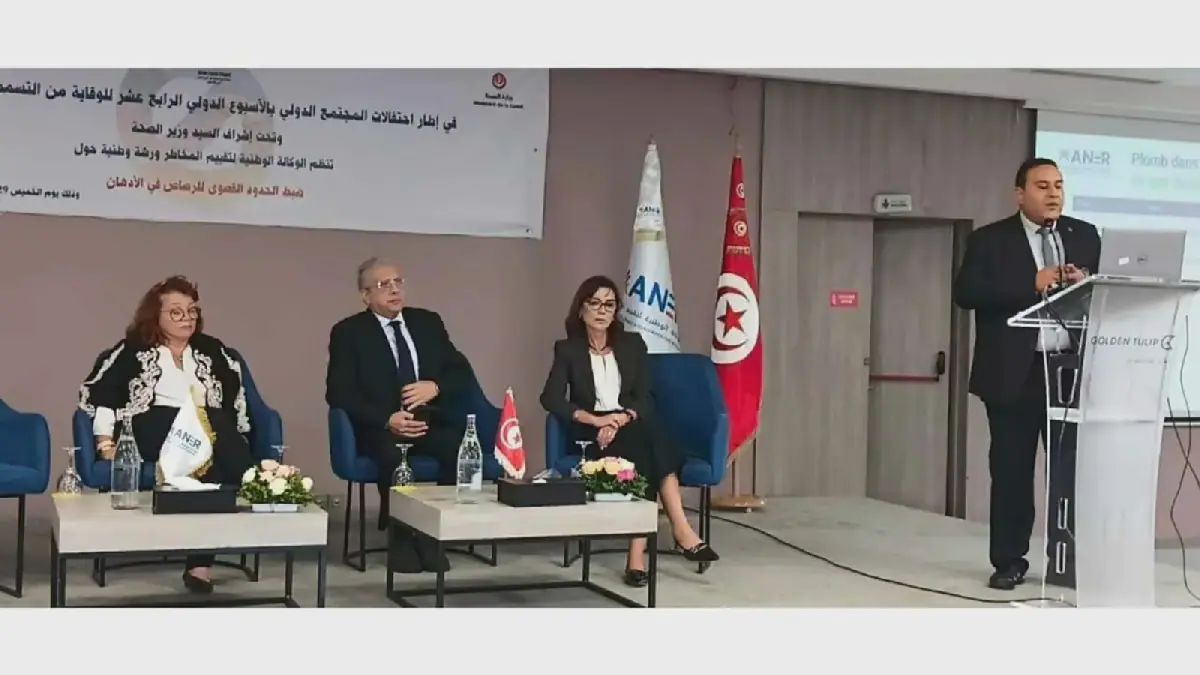
Tunisia is taking steps to ban the use of lead in paints, with a national workshop held in Tunis to discuss the implementation of the ban. The event was organized by the National Agency for Risk Assessment and is part of the World Week of Prevention of Lead Poisoning, which is observed by the World Health Organization (WHO) and the United Nations Environment Programme (UNEP). The ban on lead-based paints is expected to be implemented through a decree that will set maximum thresholds for lead in paints.
The use of lead in paints has been a concern in Tunisia, with studies showing that 10 out of 12 paint brands in the country contain lead. The National Agency for Risk Assessment has conducted seven studies on the presence of lead in various products, including cosmetics, paint, toys, and food. The agency's director, Mohamed Wassim El Heni, said that 50% of countries have not set maximum thresholds for lead, and that Tunisia aims to join the 50% of countries that have established their own thresholds.
The proposed threshold for lead in paints in Tunisia is 9mg/dcl, which is in line with international standards. El Heni said that the ban on lead-based paints will be enforced through a decree that will make manufacturers and distributors responsible for ensuring compliance. The Ministry of Commerce will also play a role in enforcing the ban by preventing the importation of non-compliant products.
Lead poisoning has serious health consequences, including neurological, pulmonary, and bone damage. The WHO and UNEP have highlighted the need for countries to take action to reduce lead poisoning, which can occur through exposure to lead-based paints, contaminated water and soil, and other sources. In Tunisia, the Ministry of Health, Environment, and Industry are working together to implement the ban on lead-based paints.
Experts say that lead poisoning can have serious effects on children's health, including cognitive impairment and behavioral problems. Dr. Jalila El Ati, a representative of the National Institute of Nutrition and Food Technology, said that lead poisoning can cause silent but detectable effects on the body. She recommended that pregnant women and children be screened for lead poisoning and that measures be taken to reduce exposure to lead.
The implementation of the ban on lead-based paints in Tunisia is expected to have a positive impact on public health. The country is taking a proactive approach to reducing lead poisoning, which will help to protect the health of its citizens, particularly children and pregnant women. The ban on lead-based paints is part of a broader effort to reduce the risks associated with lead poisoning and to promote a healthier environment.
Key stakeholders, including government agencies, manufacturers, and distributors, are working together to ensure a smooth transition to lead-free paints. The goal is to have a comprehensive system in place to regulate the use of lead in paints and to prevent the importation of non-compliant products.
Key points
- The proposed threshold for lead in paints in Tunisia is 9mg/dcl.
- 10 out of 12 paint brands in Tunisia contain lead.
- The ban on lead-based paints will be enforced through a decree that will make manufacturers and distributors responsible for ensuring compliance.