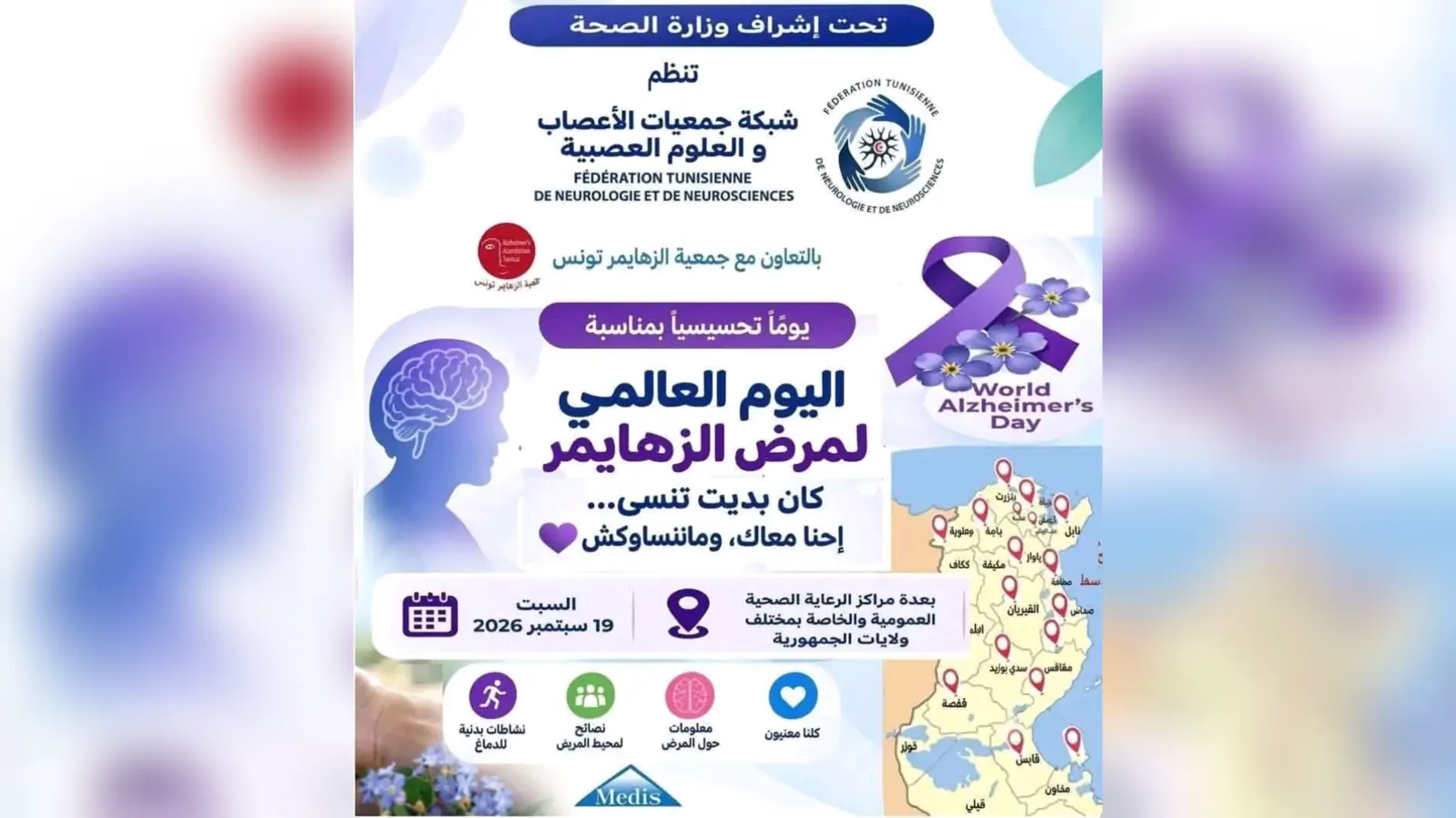
In commemoration of World Alzheimer's Day, the Regional Health Administration, in coordination with the Neurology and Neurosciences Network and the Alzheimer's Association of Tunisia, organized an awareness day at a private clinic in Banzart. The event, held under the slogan "Kan bedet tansa ahna maak wama nansawksh," aimed to educate families and healthcare providers about the disease and its effects on patients and their loved ones.
According to statistics from 2025, approximately 55.1 million people worldwide suffer from Alzheimer's disease, with around 70,000 cases reported in Tunisia. Despite the significant number of cases, the country lacks a formal registry to track and record Alzheimer's cases. The disease, first discovered by German physician Alois Alzheimer in 1906, has become a major public health concern, ranking as the seventh leading cause of death globally.
Alzheimer's disease progresses through five stages, starting with a preclinical phase where symptoms are not apparent but can be detected through detailed medical tests. As the disease advances, patients experience cognitive decline, memory loss, and changes in behavior. In the later stages, patients may forget important details, such as their address, phone number, and daily routines, and eventually lose the ability to communicate and care for themselves.
The lack of a cure for Alzheimer's disease poses significant challenges for families and healthcare providers, particularly in Tunisia where the disease is expected to affect a growing number of people, mostly elderly individuals. With 5% of cases reported in people under 65, the disease requires a comprehensive approach to manage and care for patients, including maintaining a regular routine, providing balanced nutrition, and conducting regular medical check-ups.
The awareness day, which benefited around 50 people, was seen as a positive step in supporting patients and their families, providing them with necessary information and guidance on how to cope with the disease. Healthcare providers emphasized the importance of adopting strategies to locate patients who may wander, assist with communication, and provide emotional support during sleep disturbances.
As the number of Alzheimer's cases is expected to rise to 139 million by 2025, mostly among older adults, Tunisia's healthcare system faces significant challenges in providing adequate care and support for patients and their families. The event highlighted the need for continued awareness and education about Alzheimer's disease, as well as the importance of developing effective strategies to manage and care for those affected.
The Regional Health Administration and partnering organizations plan to continue their efforts to raise awareness about Alzheimer's disease and provide support for patients and their families. By working together, they aim to improve the quality of life for those affected and promote a better understanding of the disease.
Key points
- Alzheimer's disease affects approximately 70,000 people in Tunisia, with the number expected to rise in the coming years.
- The disease lacks a cure, posing significant challenges for families and healthcare providers in caring for patients.
- The awareness day aimed to educate families and healthcare providers about Alzheimer's disease, its effects, and strategies for managing and caring for patients.