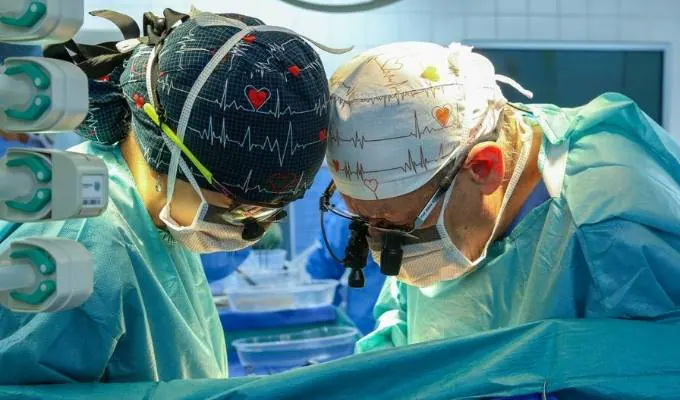
Tunisia has recently witnessed significant advancements in organ transplantation, showcasing the country's growing medical capabilities. A multidisciplinary team at the Fattouma Bourguiba University Hospital in Monastir successfully performed a liver transplant on a child suffering from a severe liver disease. This operation was supported by the Ministry of Health and the National Center for the Promotion of Organ Transplantation.
Another significant development in Tunisia's medical field is the introduction of the LifePort system at Charles Nicolle Hospital. This system allows for the preservation of organs for transplantation through hypothermic perfusion, enabling a more controlled and dynamic conservation process. While this innovation enhances the technical aspects of organ transplantation, it does not address the primary challenge: the shortage of available organs for transplant.
In 2025, Tunisia reported a total of 73 kidney transplants, 11 liver transplants, and 12 heart transplants. As of August 2026, approximately 1,600 patients were still waiting for a kidney transplant, with around 50 patients each waiting for liver and heart transplants. Between April and mid-August 2026, organs from 11 deceased donors facilitated the transplantation of 31 patients.
Historically, there has been a fluctuation in the number of transplant procedures performed in Tunisia. In 2015, 127 renal transplantations were conducted, compared to 73 in 2025, representing a decrease of about 42.5%. However, this comparison is not part of an annual series, as publicly available data remains fragmented.
The Ministry of Health has reported that in 2025, 50 living donors and 23 deceased donors contributed to the 73 kidney transplants. Additionally, 16 deceased donors enabled 46 transplants in 2025. These numbers highlight the ongoing efforts to increase organ donation and transplantation in the country.
Despite the progress made in medical technology and the increase in transplant procedures, Tunisia still faces significant challenges in meeting the demand for organ transplants. The shortage of available organs remains a major obstacle, emphasizing the need for increased awareness and mobilization of potential donors.
Moving forward, the true measure of progress in Tunisia's organ transplantation efforts will be seen in the increase in the number of donors, more regular transplant activities, and a sustained reduction in waiting lists for transplants. The country's advancements in medical technology are a positive step, but addressing the organ shortage will be crucial to achieving significant growth in this field.
Key points
- 73 kidney transplants were performed in Tunisia in 2025.
- Approximately 1,600 patients were waiting for a kidney transplant in August 2026.
- Organs from 11 deceased donors enabled 31 transplants between April and mid-August 2026.