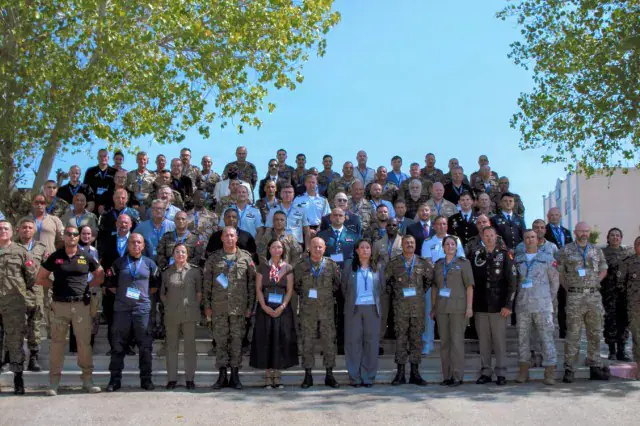
The US military's SETAF-AF has been working with Tunisia to enhance its capabilities in countering improvised explosive devices (IEDs). This partnership has led to the establishment of the Tunisian Center of Excellence for Countering Improvised Explosive Devices (C-IED), which recently hosted its inaugural conference in Bizerte. The event brought together around 70 professionals from Africa, Europe, and the US to discuss evolving explosive threats and security challenges.
The conference, themed "New IED War and Evolving Threats: Challenges and Strategies for a Changing Security Landscape," reflected years of collaboration between SETAF-AF, the US Africa Command, and Tunisian partners. The goal is to develop Tunisia's capacity as a regional leader in counter-IED operations. Discussions focused on new IED threats, hybrid warfare, autonomous systems, and the challenges posed by these evolving technologies on the battlefield.
The forum highlighted opportunities for multilateral cooperation and knowledge sharing among IED countermeasures specialists. Judson Strom, SETAF-AF's C-IED planner, stated that the conference demonstrated Tunisia's growing ability to train and sensitize partner countries while contributing to regional stability and security. The aim is to create a permanent forum for IED specialists to exchange ideas and develop solutions for future conflicts.
This event is part of a series of initiatives to strengthen the Tunisian C-IED Center and develop its institutional capacities. Earlier this year, SETAF-AF's C-IED directorate organized a visit for four Tunisian deminers to the Redstone Arsenal in Alabama. The delegation met with experts from the FBI's Terrorist Explosive Device Analytical Center (TEDAC) and the Bureau of Alcohol, Tobacco, Firearms and Explosives' (ATF) National Center for Explosives Training and Research (NCETR).
The visit provided insights into how US agencies analyze explosive devices, share intelligence, and manage centralized databases on threats. These lessons will support Tunisia's efforts to develop its own laboratory capabilities and enhance collaboration between its military, law enforcement, and security agencies. The partnership between SETAF-AF and Tunisia demonstrates the value of a collaborative approach to security cooperation.
The success of the conference shows that the partnership is yielding results, with Tunisia taking the lead in addressing common security challenges. SETAF-AF remains committed to supporting its partner's initiatives that improve operational readiness, enhance interoperability, and promote regional security in Africa. The conference has laid the groundwork for future cooperation and knowledge sharing among IED countermeasures specialists.
The partnership between Tunisia and SETAF-AF has made significant progress in strengthening the country's ability to counter IEDs. With the establishment of the C-IED Center, Tunisia is well-positioned to play a leading role in regional counter-IED efforts. The US military's continued support and collaboration with Tunisia will be crucial in addressing the evolving threats posed by IEDs.
Key points
- The partnership between SETAF-AF and Tunisia aims to develop Tunisia's capacity as a regional leader in counter-IED operations.
- The Tunisian Center of Excellence for Countering Improvised Explosive Devices (C-IED) has been established to enhance the country's capabilities in countering IEDs.
- The conference hosted by the C-IED Center brought together professionals from Africa, Europe, and the US to discuss evolving explosive threats and security challenges.