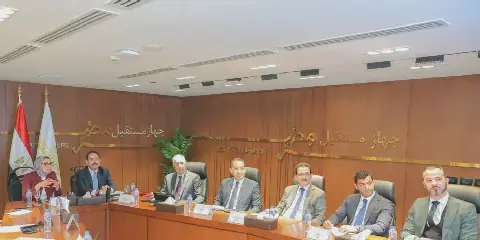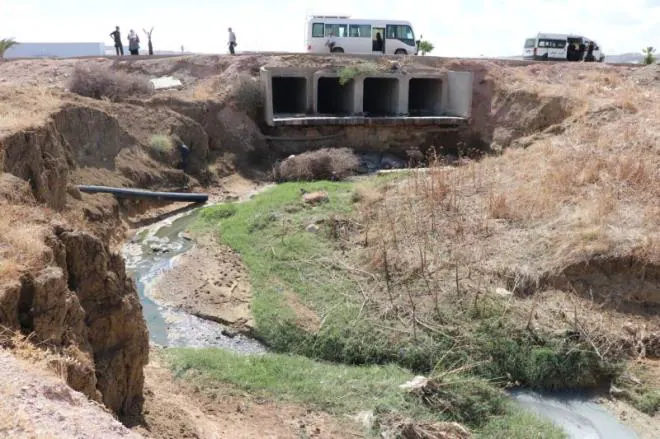
A multi-disciplinary team comprising representatives from Tunisia's ministries of environment, interior, agriculture, and health has been conducting monitoring operations at several industrial sites and activities. The goal is to protect the Majerda and Melian valleys from pollution. According to the environment ministry, the team monitored 18 sites in the governorate of Manouba, resulting in 11 environmental violations, proposals to temporarily close three sites, and four samples taken from pollution sources.
The monitoring operations in Manouba were conducted due to non-compliance with national standards and maximum discharge limits into the receiving environment. The team's work will continue in the governorates of Jundubah and Bajah, which are part of the Majerda valley catchment area. The Majerda valley spans across Jundubah, Bajah, and Manouba governorates. The team aims to ensure that industrial activities do not harm the environment and public health.
In addition to the Majerda valley, the team also monitored pollution sources in the Melian valley. The National Environment Protection Agency monitored 10 industrial facilities near the Melian valley and recorded violations. A plan of action was established with facility owners to improve environmental compliance and install or upgrade wastewater treatment plants. The agency also monitored ongoing and completed work on six wastewater treatment plants in the Melian valley.
One of the wastewater treatment plants being constructed is the South Melian 2 plant, which has a capacity of 90,000 cubic meters per day and is 60% complete. The integrated industrial wastewater treatment plant in South Melian is 70% complete and expected to be operational by the end of 2026. Another plant, the Khalidia wastewater treatment plant, has a capacity of 2,400 cubic meters per day and is already operational.
The Melian valley catchment area spans across Ben Arous, Zaghouan, and Siliana governorates. The valley is approximately 160 km long and originates from Jebel Bergou in Siliana governorate, flowing into the Gulf of Tunis. The valley's water flow varies depending on rainfall, reaching up to 200 cubic meters per second during flood periods.
The multi-disciplinary team's efforts aim to protect the environment and public health in the regions. The team's work includes monitoring industrial activities, enforcing environmental regulations, and promoting sustainable practices. By working together, the team hopes to mitigate the impact of pollution on the Majerda and Melian valleys.
The Tunisian government has emphasized its commitment to environmental protection and sustainable development. The monitoring operations and wastewater treatment plant projects demonstrate the government's efforts to address environmental challenges and promote eco-friendly practices. The projects are expected to improve the overall environmental quality and public health in the regions.
Key points
- A multi-disciplinary team is monitoring industrial sites to protect the Majerda and Melian valleys from pollution.
- The team has recorded environmental violations and proposed measures to mitigate pollution.
- Wastewater treatment plant projects are underway to improve environmental compliance and protect public health.