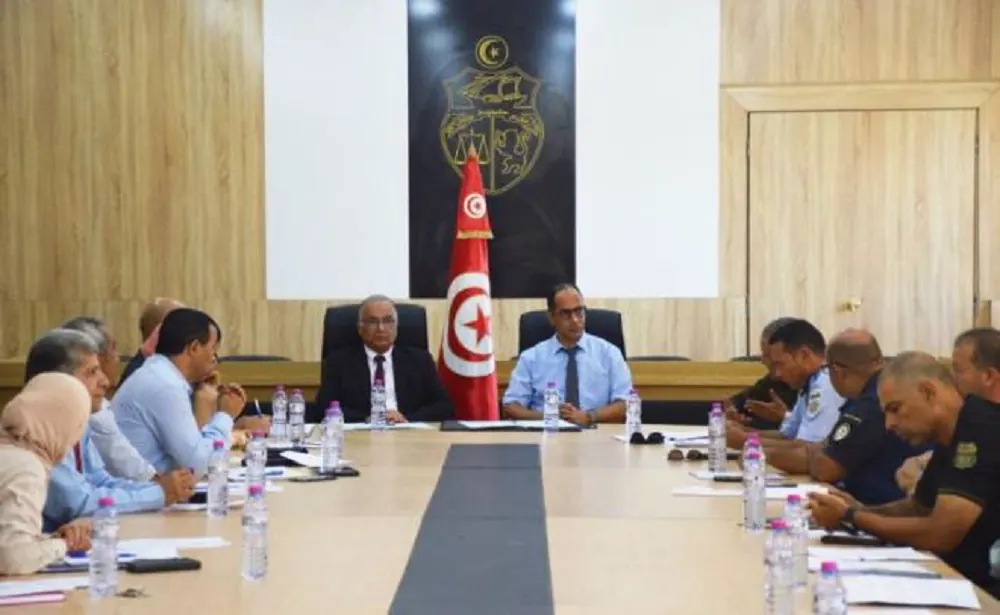
Tunisia's regional commission for monitoring prices, supply, and combating smuggling and parallel trade held a working session in the Kef governorate. The meeting focused on the region's economic situation, market supply, price levels, and the activities of economic control teams. Various stakeholders, including the regional trade directorate, the regional agricultural development commission, security services, customs, and the regional food safety authority, presented their reports on infractions and seizures made in September.
The meeting was attended by Kef Governor Walid Kaabia, who emphasized the need for enhanced coordination among stakeholders and a more intensive joint control program. This program would target production sites, distribution circuits, and sales points. Kaabia stressed the importance of fairly distributing subsidized products to prevent speculation. He recommended setting quotas, controlling prices, penalizing offenders, and increasing product quantities during periods of high demand.
Governor Kaabia also called for sustained joint control campaigns on roads and distribution circuits, particularly in weekly markets across the region's delegations. The goal is to effectively monitor and regulate the flow of goods, preventing illicit trade and ensuring a stable supply of essential products. By doing so, the authorities aim to protect consumers and maintain market stability.
The regional commission's efforts to combat parallel trade and smuggling are crucial for Tunisia's economy. The country's strategic location and porous borders make it vulnerable to illicit trade, which can have significant impacts on the national economy and public health. By strengthening controls and coordination among stakeholders, the authorities can better address these challenges.
In recent months, Tunisian authorities have intensified their efforts to combat smuggling and parallel trade. The country has implemented various measures, including increased border controls, improved intelligence gathering, and stricter penalties for offenders. These efforts have led to significant seizures of contraband goods and a decrease in illicit trade activities.
The Kef region, where the meeting took place, is a significant hub for trade and commerce in northwest Tunisia. The region's economic situation and market dynamics have a substantial impact on the country's overall economic stability. By addressing the challenges posed by parallel trade and smuggling in Kef, the authorities can help ensure a more stable and prosperous economic environment for the region and the country as a whole.
The joint anti-fraud controls launched in Kef are part of a broader effort to promote economic stability and security in Tunisia. The country's authorities have pledged to continue working together to address the complex challenges posed by parallel trade and smuggling, and to protect the country's economy and citizens from the negative impacts of these illicit activities.
Key points
- Tunisia's authorities have launched joint anti-fraud controls in Kef to combat parallel trade and smuggling.
- The controls aim to target production sites, distribution circuits, and sales points.
- The efforts are part of a broader strategy to promote economic stability and security in Tunisia.