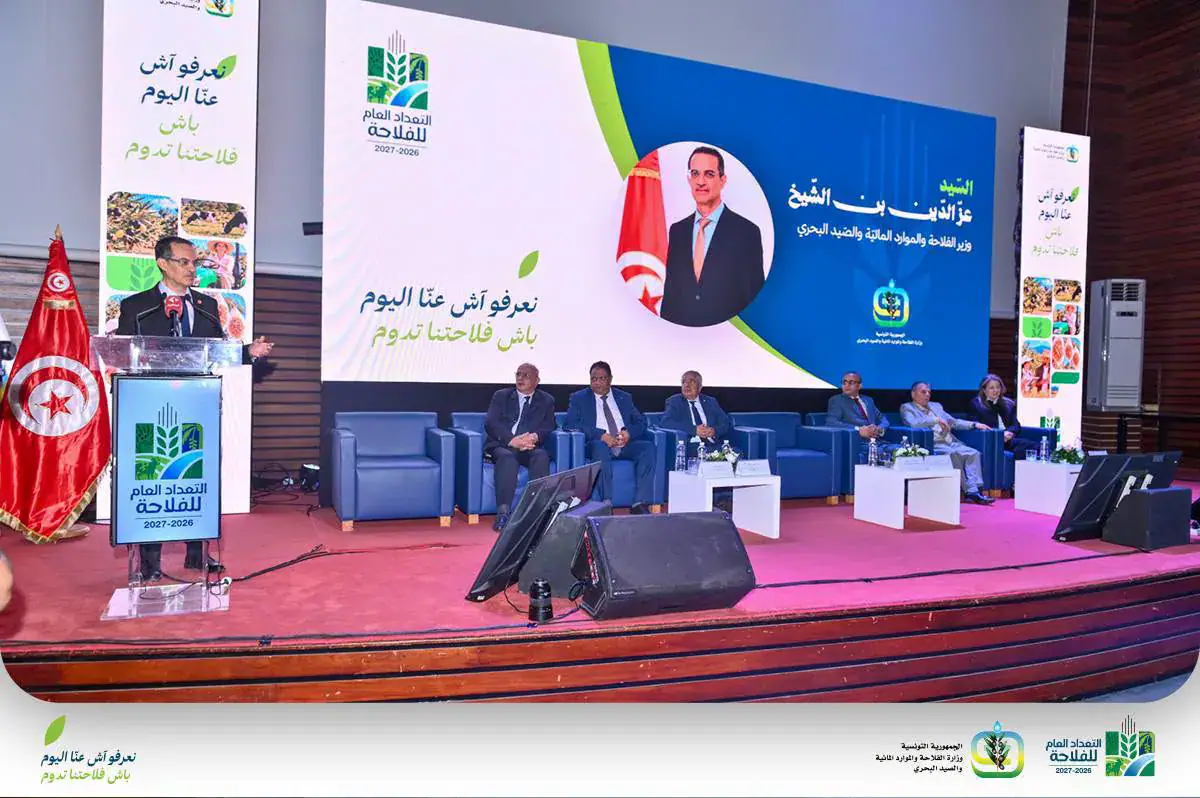
Tunisia's Minister of Agriculture, Ezzeddine Ben Cheikh, officially launched the country's first general agriculture census on October 30, 2026. This initiative aims to create a reliable statistical system to guide public action, target investments, and ensure the sustainability of the agricultural sector. The census is a significant step towards modernizing the sector and promoting food sovereignty.
The census, which will run from 2026 to 2027, is a strategic project that will provide accurate and precise data to inform national policies and optimize the allocation of funding. Minister Ben Cheikh emphasized that the project goes beyond mere data collection, as it will enable the country to address the challenges of climate change and economic resilience. The census will also help ensure the sustainable management of natural resources, particularly water and soil.
The Minister of Agriculture has called on farmers to fully engage with the census team, assuring them that the information collected will be kept confidential and used exclusively for planning and the general interest of the sector. The census will provide a comprehensive overview of the country's agricultural sector, enabling policymakers to make informed decisions and develop targeted strategies.
The launch of the census was attended by the Minister of Trade, Samir Abid, and marks a significant milestone in Tunisia's efforts to modernize its agricultural sector. The project is expected to have a positive impact on the country's food sovereignty, security, and economic resilience. By providing accurate data, the census will help Tunisia to better manage its resources and address the challenges facing the sector.
The census is part of a broader effort to promote sustainable agriculture and ensure food security in Tunisia. The country's agricultural sector is a significant contributor to the economy, and the census will provide valuable insights into the sector's performance and potential. The data collected will be used to develop targeted strategies and policies to support the growth and development of the sector.
Minister Ben Cheikh has emphasized the importance of the census in achieving Tunisia's food sovereignty goals. The project is expected to have a positive impact on the country's ability to produce and distribute food, ensuring that citizens have access to safe and nutritious food. The census will also help to identify areas for improvement and opportunities for growth in the sector.
The launch of the census has been welcomed by stakeholders, who see it as a crucial step towards promoting sustainable agriculture and food security in Tunisia. The project is expected to have a lasting impact on the country's agricultural sector, enabling it to address the challenges of climate change, economic resilience, and food sovereignty.
Key points
- The census aims to create a reliable statistical system to guide public action and target investments in the agricultural sector.
- The project will provide accurate data to inform national policies and optimize the allocation of funding.
- The census will help ensure the sustainable management of natural resources, particularly water and soil.