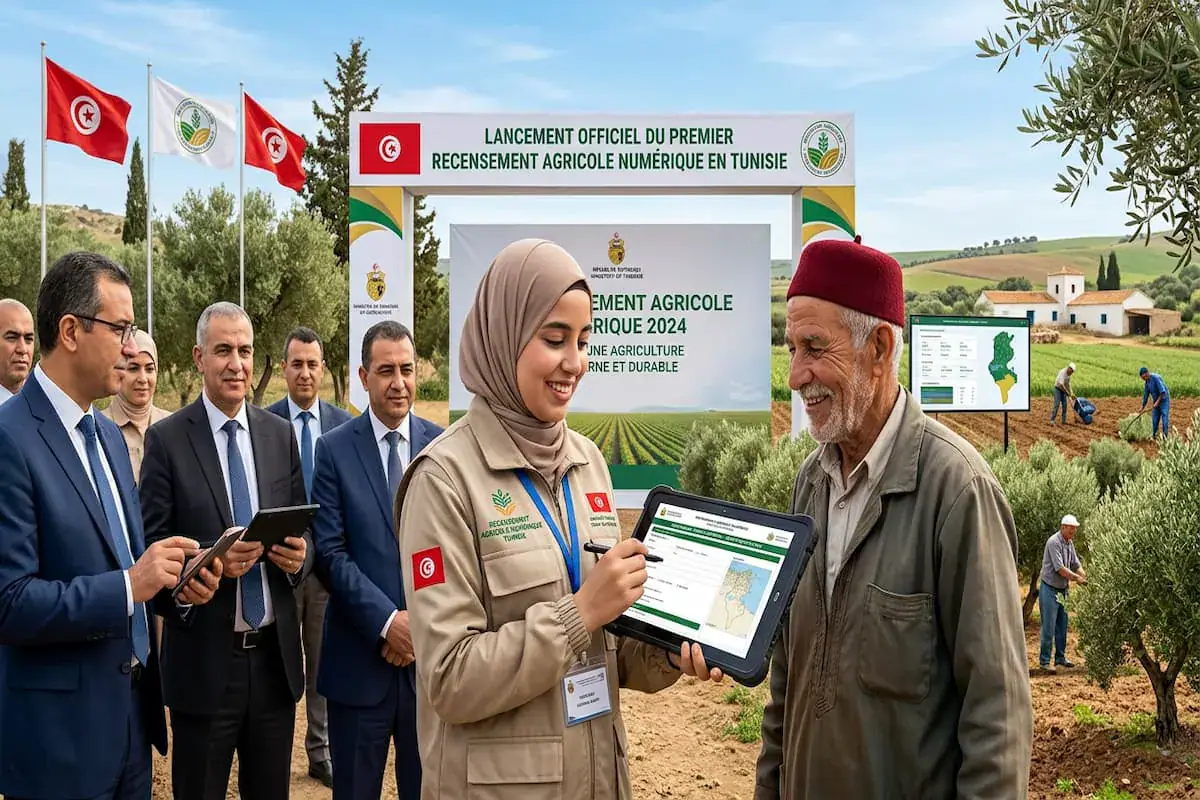
Tunisia's Minister of Agriculture, Ezzeddine Ben Cheikh, announced on October 30, 2026, the launch of the country's first digital agricultural census. The census, set to take place from 2026 to 2027, aims to create a comprehensive and up-to-date database of agricultural activities across the country. This initiative is expected to provide valuable insights into the sector, enabling informed decision-making and strategic planning. The census will cover various aspects, including the location, production, and resources of agricultural exploitations.
The data collection process is scheduled to begin in November 2026 and will be conducted in all regions of Tunisia. The census will utilize modern digital tools, including electronic tablets, geolocation, and geographic information systems (GIS). These technologies will facilitate the precise location of agricultural exploitations, improve data quality, and accelerate processing. The successful implementation of the project relies on the mobilization of all stakeholders, as emphasized by Minister Ben Cheikh.
The digital agricultural census is a collaborative effort between the Ministry of Agriculture, the Office des céréales, the Institut national de la statistique (INS), and the Direction générale des études et du développement agricole. According to Emna Jellouli from the Direction générale des études et du développement agricole, the census will enable the development of strategies based on scientific evidence, better management of development programs, and stimulation of investment in the sector.
The census is expected to provide accurate indicators on the national and regional levels, allowing for the transformation of data into concrete decisions and programs. These initiatives aim to improve working conditions for farmers, enhance production, and promote investment in the agricultural sector. By addressing the challenges faced by the sector, the census will contribute to the country's economic, climate, and food security.
The use of digital tools will enable the collection and processing of data in real-time, reducing the time and resources required for data analysis. The data collected will be used to evaluate agricultural policies, manage natural resources, and plan projects effectively. This will ultimately support small and medium-sized agricultural enterprises, as well as community-based initiatives.
The Ministry of Agriculture has emphasized the importance of stakeholder engagement in the success of the project. The census will provide a comprehensive understanding of the agricultural sector, enabling policymakers to make informed decisions about resource allocation and investment. This, in turn, is expected to drive growth and development in the sector.
The digital agricultural census is a significant step towards modernizing Tunisia's agricultural sector. By leveraging technology and data, the country aims to improve its agricultural productivity, enhance food security, and promote sustainable development. The project's outcomes will be closely monitored, and its impact is expected to be felt in the coming years.
Key points
- The census will use modern digital tools, including electronic tablets and GIS, to collect and process data.
- The project aims to improve working conditions for farmers, enhance production, and promote investment in the agricultural sector.
- The census will provide accurate indicators on the national and regional levels, enabling informed decision-making and strategic planning.