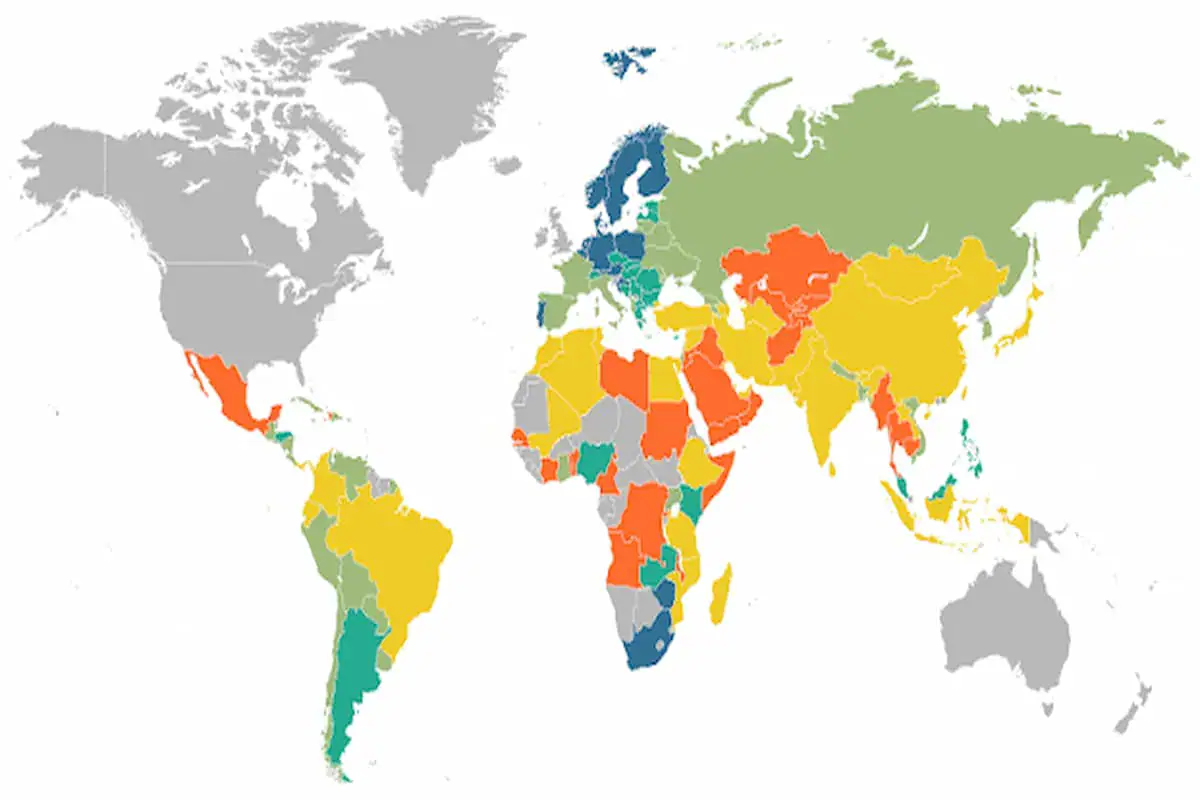
Tunisia has improved its ranking in English proficiency, according to the 2026 EF English Proficiency Index (EF EPI). The country now occupies the 61st place globally and 9th position in Africa, with a score of 490 points out of 800. This represents a gain of five places compared to 2025, and the score slightly exceeds the global average of 485 points. However, Tunisia remains in the category of "low proficiency" nations.
The EF EPI evaluates adult language skills based on over 2.3 million participants worldwide. In Tunisia, analysis of the results reveals disparities between different skills. The country excels in written comprehension, scoring 512 points, a nine-point increase from the previous year. In contrast, spoken comprehension declined by eleven points to 480 points, indicating persistent difficulties with spoken English.
The study also highlights a significant gap between men and women, with men scoring around 510 points and women scoring approximately 480 points. Age-wise, individuals between 21 and 25 years old achieved the best results. Furthermore, there are notable disparities in skills, with written expression showing the most substantial improvement, increasing by 27 points to 479 points.
On the African continent, South Africa leads the ranking with 588 points, followed by Zimbabwe (587), Kenya (582), and Nigeria (578). Tunisia trails behind several English-speaking economies in Africa. Notably, some African countries with English as an official language, such as Gambia, Sierra Leone, and Ghana, are not among the top performers.
Globally, European countries dominate the top spots, with Sweden ranking first at 615 points, followed by Austria (613) and Denmark (612). The EF EPI report emphasizes that English proficiency is crucial for employability, investment attractiveness, and integration into the global economy.
Despite progress, the results underscore the need for Tunisia to strengthen English language instruction, particularly in oral skills, to better prepare young people and professionals for international market demands. Interestingly, some countries with lower English proficiency, such as Guinea, Ethiopia, and Côte d'Ivoire, attract more foreign direct investment than many English-speaking nations.
As Tunisia continues to develop its English language capabilities, it faces the challenge of addressing the disparities in language skills and promoting more widespread proficiency. This will be essential for enhancing the country's competitiveness and integration into the global economy. The next EF EPI report will likely provide further insights into Tunisia's progress and challenges in English language instruction.
Key points
- Tunisia scores 490/800 in EF English Proficiency Index, climbing 5 places globally
- Country remains in low proficiency category, despite progress
- English proficiency crucial for employability, investment attractiveness, and global integration
Reporting sources
- Maîtrise de l’anglais : la Tunisie gagne cinq places, mais… · L'Économiste maghrébin