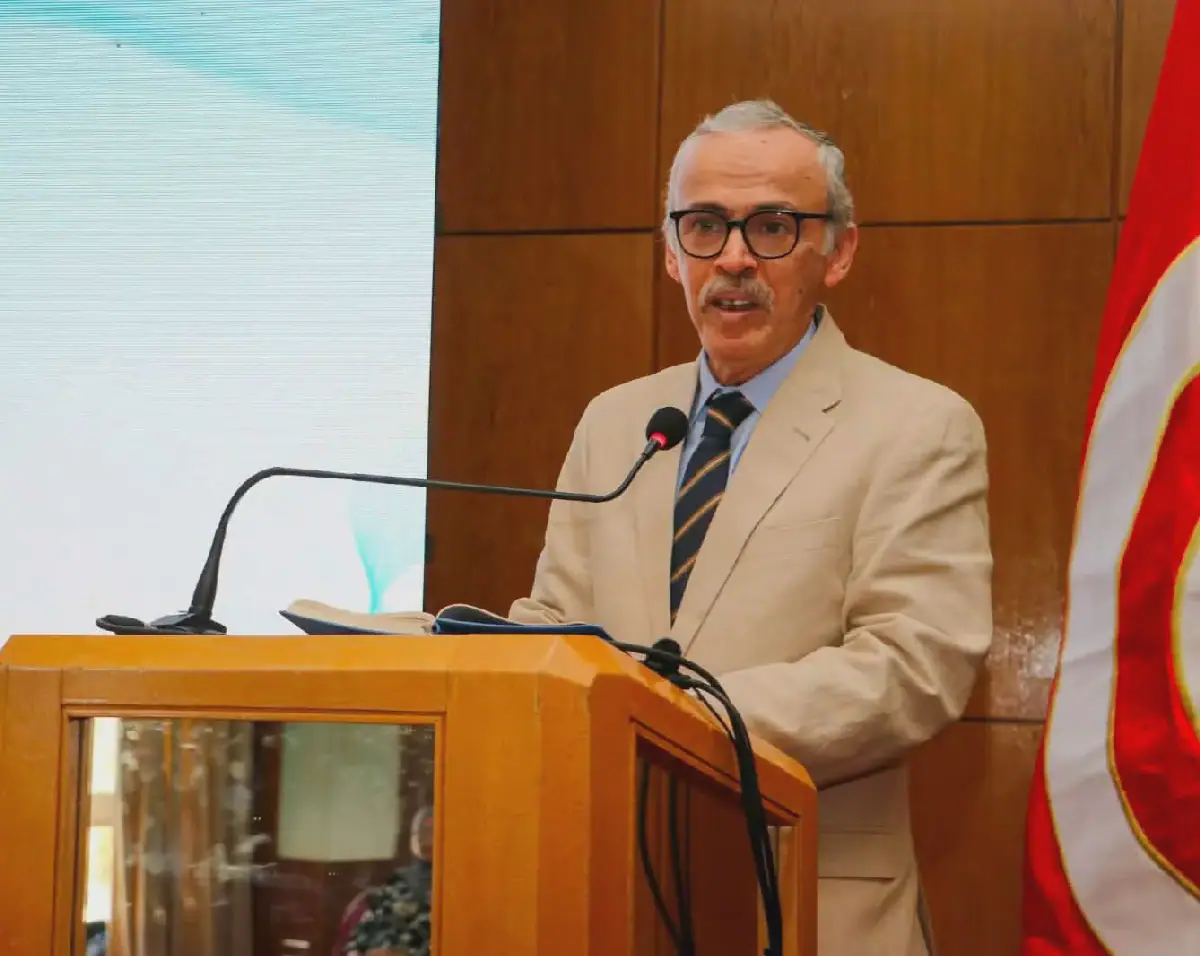
On Thursday, October 8, 2026, Tunisian Minister of Social Affairs, Essam Al-Ahmar, inaugurated a two-day scientific meeting in Hammamet to discuss the future of labor law in the face of digital challenges. The meeting, organized by the Tunisian Association of Labor Inspectors, aims to examine the difficulties and prospects for reform. The event is attended by the association's president, a representative of the International Labor Organization, several university professors, experts, and labor inspectors.
Minister Al-Ahmar emphasized that the meeting is part of the government's efforts to develop and update the labor code to keep pace with technological advancements, particularly artificial intelligence. He highlighted that the current labor code has undergone several revisions but is no longer compatible with new concepts and patterns of work. The minister stressed the need to develop the code to respond to the requirements of managing labor relations and the aspirations of future generations.
The minister revealed that the Ministry of Social Affairs has prepared draft laws related to remote work and platform economy, as well as the basic principles of labor law and guarantees for workers in various sectors. He emphasized that the new laws will enable Tunisia to adapt to digital and technological developments, contributing to economic growth and social development. The minister also discussed the government's program to reform the social security system to ensure sustainability and social justice.
Professor Nouri Mzid from the Faculty of Law in Sfax emphasized that the world is experiencing a digital revolution that requires urgent reform of labor law. He stressed the need for all stakeholders to participate in the reform process. Professor Hafez Al-Amouri highlighted the importance of developing a flexible legal framework to protect various professions in the face of digital transformation and artificial intelligence.
The meeting's participants aim to develop practical recommendations to contribute to the development of the legislative framework for labor law. The event's organizer, Hatem Hilal, president of the Tunisian Association of Labor Inspectors, emphasized that the meeting provides an opportunity to explore the future of labor law in the face of rapid digital transformation. The two-day meeting will conclude with recommendations to enhance the protection of workers and adapt to new challenges.
The scientific meeting is part of Tunisia's efforts to enhance its legislative framework and adapt to international standards. The country's labor market is facing significant challenges, including the need to address the informal economy and ensure social protection for all workers. The meeting's outcomes are expected to contribute to the development of a more effective and equitable labor law.
Key stakeholders, including government officials, experts, and representatives of international organizations, are participating in the meeting. The event is expected to conclude with a set of recommendations to guide future reforms and enhance cooperation between stakeholders. The Tunisian government has emphasized its commitment to social dialogue and cooperation with all stakeholders to address the challenges facing the labor market.
Key points
- The meeting aims to develop practical recommendations to contribute to the development of the legislative framework for labor law.
- The Tunisian government is committed to social dialogue and cooperation with all stakeholders to address the challenges facing the labor market.
- The meeting's outcomes are expected to contribute to the development of a more effective and equitable labor law.