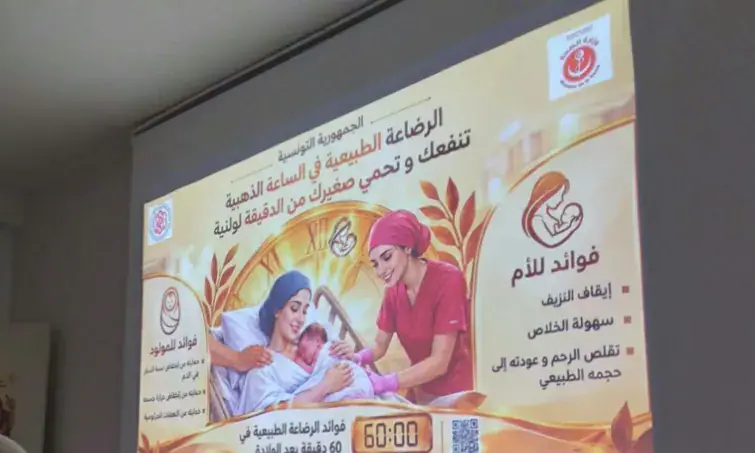
A scientific day was held at the University Hospital in Ben Arous, Tunisia, to promote awareness about the importance of breastfeeding and its role in enhancing the health of mothers and children. The event, organized by the Regional Health Administration of Ben Arous in collaboration with the Primary Health Care Administration, featured scientific presentations by specialists in the field. Medical and paramedical staff from various health centers in the region attended the event.
The event was held in conjunction with the celebration of World Breastfeeding Week and is part of a series of awareness-raising activities carried out by health services in various settings during the first week of November. The activities include a sensitization campaign at the hospital, as well as awareness-raising campaigns in all basic health centers in the region. The goal of the scientific day is to contribute to supporting a culture of breastfeeding to preserve the health of future generations.
The event aimed to promote the knowledge and practices of health professionals around the importance of skin-to-skin contact between mothers and their newborns and early initiation of breastfeeding. This aims to provide the best conditions for breastfeeding and its continuity, as well as to raise awareness among pregnant women about the importance of these practices and their role in making breastfeeding a success.
A presentation was given by Professor Asma Bouaziz, a pediatrician at the University of Medicine in Tunis and responsible for the National Child Health Program at the Ministry of Health. She discussed the various approaches taken by the ministry to support a culture of breastfeeding, including health education and awareness-raising, as well as the legal framework for supporting breastfeeding.
According to statistics from 2023, the rate of breastfeeding in Tunisia using skin-to-skin contact is around 15.4%, while the rate of early breastfeeding or "golden hour" breastfeeding is 34%. The rate of breastfeeding during the first six months of life is around 17.8%, which is considered low compared to the global target set by the World Health Organization for 2025 of over 50%.
The Ministry of Health has launched a study in all health centers in the country to determine the indicators of breastfeeding and to identify the percentage accurately in Tunisia. This aims to develop programs to improve these indicators. The law also provides for a unified leave in the public and private sectors, with a minimum of 14 weeks of maternity leave, including a paid leave for the period before delivery and two hours of breastfeeding time per day for a year.
The event included training sessions and interactive workshops on breastfeeding, as well as a visit to the maternity ward to introduce the protocol for the "golden hour." The goal of these activities is to promote a culture of breastfeeding and to provide support for mothers and children in the region.
Key points
- The event aimed to promote awareness about the importance of breastfeeding and its role in enhancing mother and child health.
- The rate of breastfeeding in Tunisia is considered low compared to the global target set by the World Health Organization.
- The Ministry of Health has launched a study to determine the indicators of breastfeeding and to develop programs to improve these indicators.