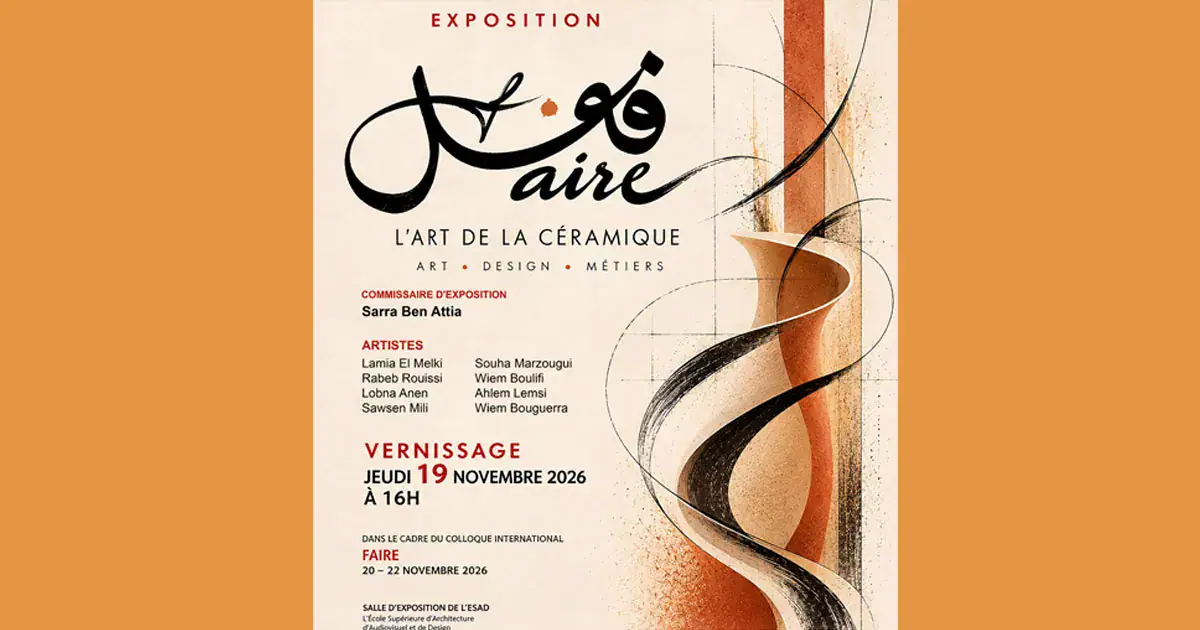
The international colloquium "فِعْل · Faire: when the hand thinks" was held in Tunis from November 20 to 22, 2026, at the National Library of Tunisia. This event brought together 49 experts from eight countries to discuss the epistemology of projects in art, architecture, urban planning, and design. The meeting aimed to challenge traditional hierarchies between theory and practice, and explore the relationship between knowledge and action.
The colloquium questioned the conventional separation between thinking and doing, and explored the idea that making and creating can be forms of knowledge production. The event's organizers drew on the work of philosophers such as John Dewey, Donald Schön, and Hannah Arendt, who have challenged the dichotomy between reflection and experience. This perspective argues that practitioners and designers think and learn through action and interaction with materials and environments.
The event's title, "فِعْل · Faire," combines the Arabic word for "act" or "deed" with the French word for "to do" or "to make." This bilingual title reflects the colloquium's aim to explore the relationship between language, culture, and knowledge. The use of the Arabic term "fi'l" also opened up a discussion on the concepts of "sana'a," "amal," and other notions of work, fabrication, and action in Arab intellectual traditions.
The colloquium highlighted the importance of considering the local context and cultural heritage in understanding project knowledge. Tunis, the Maghreb, and the Mediterranean region offer a rich repository of knowledge and experience that can inform contemporary debates on architecture, urban planning, and design. The event showcased various examples of traditional Tunisian architecture, such as the medina of Tunis, old neighborhoods in Sousse, and ksour in the south.
These traditional forms of architecture and urban planning were not simply the result of abstract models or imported ideas but rather the product of accumulated experience, practical knowledge, and social cooperation. They reflect a deep understanding of local materials, climate, and environmental constraints. The colloquium argued that these heritage sites can be seen as archives of knowledge that can inform contemporary practices and help address environmental challenges.
One of the key interventions at the colloquium focused on the ksour of southern Tunisia, highlighting their social and ecological significance. The approximately 150 ksour documented in the region are not just defensive structures or architectural curiosities but also reflect collective identities, social pacts, and systems of regulation. Their ecological architecture, based on adaptation to natural conditions and resource conservation, offers valuable lessons for contemporary societies seeking sustainable solutions.
The colloquium concluded that rethinking project knowledge requires a deeper understanding of the complex relationships between theory and practice, culture and environment, and local and global contexts. By exploring these relationships and learning from the past, participants aimed to develop new perspectives on the nature of knowledge and creativity in art, architecture, urban planning, and design.
Key points
- The colloquium challenged traditional hierarchies between theory and practice, highlighting the importance of practical knowledge and experience in project development.