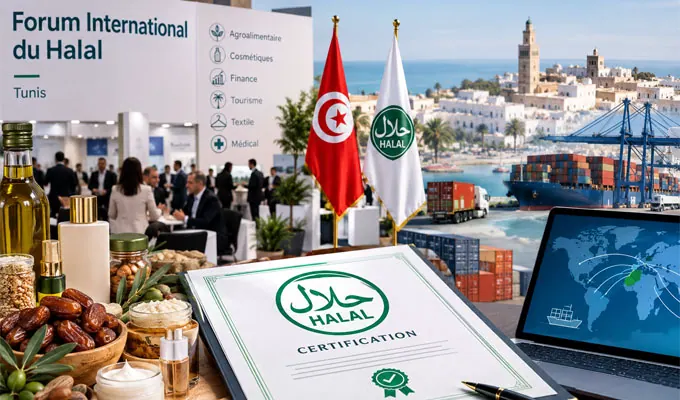
The first edition of the International Halal Forum took place in Tunis on September 29-30, bringing together institutions, standardization and certification bodies, companies, investors, and financial actors. The event, organized by FIBGN Global Business Network in coordination with the CEPEX, aims to facilitate meetings between Tunisian companies and foreign partners. The forum covers various sectors, including finance, tourism, textiles, and healthcare, in addition to food and cosmetics.
According to the CEPEX, Tunisia currently has around 50 certified halal companies, primarily in the food and cosmetics sectors. However, this number is subject to variation, as in 2020, the INNORPI reported 70 certified companies. The discrepancy may be due to differences in certification periods, scopes, or validity. Despite this, the number of certified companies remains a crucial indicator of the sector's growth.
One of the main challenges facing Tunisia is the lack of reliable data on the total value of its halal exports. Public sources do not provide a clear breakdown of halal exports from Tunisia's overall export figures. As a result, it is difficult to assess the country's market share in the global halal market. The certification process, which includes document examination, on-site audits, sampling, testing, and analysis, is a necessary step for companies seeking to export halal products.
The INNORPI obtained recognition for its halal certification system from the Malaysian JAKIM in December 2019, facilitating access to the Malaysian market for certified Tunisian products. However, two essential pieces of information for exporting companies remain unclear: the cost of the certification process and the time it takes to complete. These factors will significantly influence the competitiveness of Tunisian companies in the halal market.
The success of the forum will be measured by the number of qualified contacts made, contracts signed, and markets targeted during the B2B meetings. More importantly, the actual export figures resulting from these meetings will indicate the effectiveness of the forum in boosting Tunisia's halal exports. The country's ability to capitalize on the growing demand for halal products will depend on its capacity to provide high-quality products and navigate the certification process efficiently.
The halal market offers significant opportunities for Tunisia, extending beyond the food sector to include finance, tourism, and textiles. The certification process serves as a commercial passport, enabling companies to access new markets. As the country seeks to increase its halal exports, it must address the existing data gaps and provide clearer information on the certification process to support the growth of this sector.
The International Halal Forum marks a crucial step in Tunisia's efforts to expand its presence in the global halal market. As the country looks to build on the momentum generated by the forum, it will need to focus on creating a more favorable business environment for halal companies, improving data collection, and streamlining the certification process to facilitate increased exports.
Key points
- The first International Halal Forum took place in Tunis on September 29-30.
- Tunisia has around 50 certified halal companies, primarily in the food and cosmetics sectors.
- The country's halal export figures are not reliably reported, making it difficult to assess its market share.