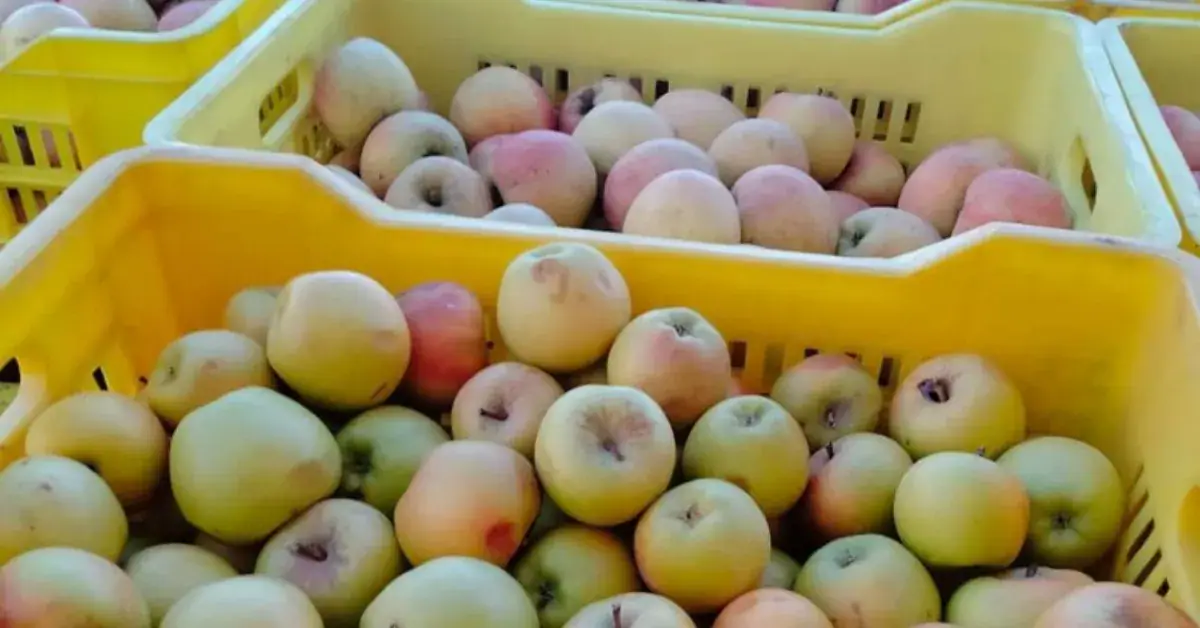
The Tunisian government has decided to halt apple imports until the national stock is sold. This decision was made in coordination between the Ministries of Trade and Interior. The move aims to protect local apple producers who were facing difficulties due to the influx of imported apples. According to the Regional Director of Trade and Export Development in Kasserine, Mabrouk Abbad, the decision was made to address the concerns of local producers.
The imported apples, which came from South Africa, totaled 40 tons and have already been sold in the local market. However, the remaining quantities that were scheduled to be imported will not enter Tunisia due to the lack of necessary permits. Abbad emphasized that the priority will be given to national and local products to protect producers and ensure the sale of their crops. The Regional Directorate of Trade is working with producers, farmers, and cold storage owners to find ways to sell apples through organized channels.
The Directorate is also negotiating to adopt differential prices that take into account the purchasing power of citizens and allow them to buy apples at reasonable prices. However, setting a reference price or fixed price for apples is not currently being considered, as sales prices are subject to the market's supply and demand mechanism. Local apple producers in the Foussana delegation expressed satisfaction with the decision to halt imports, seeing it as a step towards protecting local production.
Apple producers, including Mohamed Balti, welcomed the decision, describing it as a welcome step that they had been waiting for after the unrest caused by the importation of apples from abroad. However, they also called for intervention to address the issue of apple pricing, which they say does not reflect the prices they sell their products for. The current market price of apples is around 6 dinars per kilogram, which producers say is not sufficient to cover their production costs.
Issa Al-Idoudi, head of the Foussana Local Union of Agriculture and Fishing, considered that importing apples during the peak local production season would harm the interests of producers and threaten the livelihoods of many people in the region. He pointed out that apples are not a basic product and questioned why they are subject to price controls while other products, such as bananas, are not. Al-Idoudi called on the Minister of Trade and relevant central authorities to review this issue and consider the specificities of the sector.
Al-Idoudi stressed that apple cultivation is a vital economic activity in the Foussana delegation and Kasserine governorate, warning of the consequences of the practices of some large importers and traders on the activity of farmers who employ thousands of families. He pointed out that local apple producers, mostly small farmers and young entrepreneurs, still face financial difficulties, including debts to the Tunisian Electricity and Gas Company and banks, as well as rising prices of medicines, fertilizers, and energy costs.
The Foussana Local Union of Agriculture and Fishing head called on the authorities to intervene urgently to find structural solutions to the sector's problems and secure fair and organized marketing channels to protect local production and ensure the continuity of an economic and social activity that represents a wealth for the region, which has a population of around 80,000 people. Recently, some apple producers in the Foussana and Sbeiba delegations took part in a protest to denounce the importation of apples from abroad and demand protection for the national stock and addressing the challenges facing the sector.
Key points
- Tunisia stops importing apples to protect local producers and sell national stock.